The Huanggutun Incident and the Northeast Flag Replacement
Early on 4 June 1928 the special train of the Fengtian leader Zhang Zuolin, retreating to Manchuria as the Northern Expedition neared Beijing, was blown up near Huanggutun outside Mukden; Zhang was fatally injured. Japanese reference works attribute the bombing to the Kwantung Army staff officer Kōmoto Daisaku; the Japanese government concealed the truth, and the Tanaka cabinet later fell over its handling. Zhang Xueliang, succeeding his father, negotiated with the Nationalist government in Nanjing despite Japanese pressure, at one point agreeing not to fly the Nationalist flag for three months. On 29 December he declared allegiance to the National Government and the Northeast raised the Nationalist flag, giving Nanjing nominal unification of the country.
The Northern Expedition and Zhang Zuolin’s Withdrawal
In the spring of 1928 the National Revolutionary Army resumed the Northern Expedition, with the forces of Yan Xishan, Feng Yuxiang and Chiang Kai-shek advancing on Beijing. The U.S. legation reported that by the end of May, after repeated retreats by Fengtian units, “the Mukden party was preparing to yield to what was coming to be the inevitable.” In mid-May the Japanese foreign minister told the American, British, French and Italian representatives that Japan “was particularly interested in Manchuria, in which region it was determined to prevent hostilities,” and would send an identical note to Beijing and Nanjing; the legation reported that the note provoked protests in China, where the prevailing impression was that Japan sought to make the Three Eastern Provinces a protectorate. Early on 3 June Zhang Zuolin left Beijing’s Qianmen station by special train for Mukden (Shenyang).
The Bombing at Huanggutun
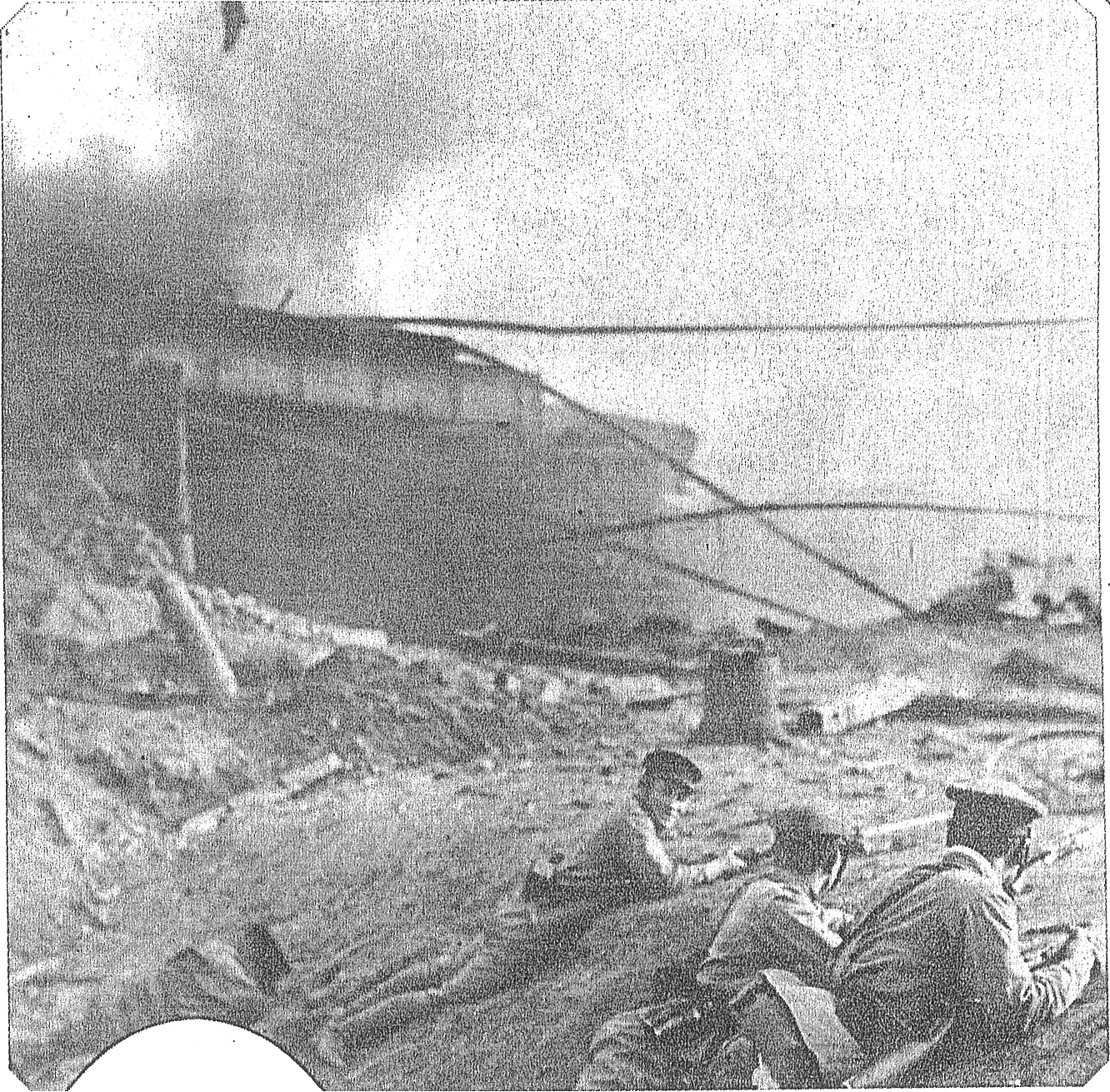
Early on 4 June, near Huanggutun on the outskirts of Mukden, Zhang’s train was wrecked by explosives as it passed beneath the South Manchuria Railway bridge where it crossed the Beijing–Mukden line; Zhang was gravely injured and soon died. The U.S. legation reported at the time that the explosion had been “mysteriously engineered by agencies as yet not determined.” The Japanese historian Eguchi Keiichi writes in the Nipponica encyclopedia that it was planned by Colonel Kōmoto Daisaku, a senior Kwantung Army staff officer: the Kwantung Army hoped to force Zhang from power and detach Manchuria from China and had prepared to move toward Jinzhou, but Prime Minister Tanaka Giichi did not approve the use of force, so Kōmoto blew up the train to create a pretext; after Zhang’s death the army, lacking prior coordination, did not move.
Zhang Xueliang, then in Beiping, withdrew from the city with Yang Yuting and other Fengtian officials on 4 June. According to China News Service, he kept his father’s death secret and decided to pull all Fengtian troops back beyond the Great Wall, reaching Luan County on 6 June. Zhang Zuolin’s death was not officially announced until 21 June, two days after Zhang Xueliang was installed as military governor of Fengtian; the U.S. legation reported that the delay reflected fears that the Japanese would seize Mukden. In July a Sino-Japanese committee investigating the bombing submitted its report, which the Chinese members “left unsigned.”
In Japan the truth was concealed from the public and the affair was referred to as “a certain grave incident in Manchuria.” According to Japanese reference works, in 1929 the opposition Minseitō pressed the government on it and the emperor and elder statesmen expressed dissatisfaction with its handling, and the Tanaka cabinet fell. A Chinese official documentary states that Japan, under international pressure, announced that Kōmoto had been relieved of his post; in October 1928, on Kōmoto’s recommendation, Ishiwara Kanji became a Kwantung Army staff officer, and in April 1929 Itagaki Seishirō succeeded Kōmoto.
Zhang Xueliang’s Succession and Japanese Obstruction
On 3 July a meeting of the Fengtian leadership chose Zhang Xueliang as commander-in-chief for Manchuria. He “stated his readiness to negotiate with the Nationalist authorities,” and many Fengtian leaders were prepared to hoist the Nationalist flag. His confidential secretary, Liu Mingjiu, later recalled Zhang telling him: “The Northeast alone cannot resist Japan; only with national unity is there hope of turning weakness into strength; otherwise being carved up like a melon will be hard to avoid.”
The Mukden–Nanjing talks were suspended in mid-July, “when on the verge of completion, as a result of Japanese representations.” On 9 August Tanaka told a Seiyūkai meeting that Japan had no ambition to interfere in China’s internal affairs but had to protect its acquired rights and maintain order in Manchuria; it was not opposed to a North–South compromise but “looked with disfavor upon the extension over Manchuria of a régime incapable of exercising international good faith.” On 13 August the U.S. legation learned that Japan and the Mukden faction had agreed that Mukden was “not to fly the Nationalist flag for three months,” after which Japan would not object. The legation also understood from Mukden that the delays were partly the result of “an attempt to force General Chang Hsueh-liang to establish an autonomous Manchuria.” When the National Government was reorganised in Nanjing on 10 October, Zhang was named a member of the State Council and reportedly telegraphed Chiang Kai-shek accepting the appointment.
The Flag Replacement
On 29 December 1928 Zhang Xueliang telegraphed the nation announcing that the Northeast would abide by the Three Principles of the People, obey the National Government and change its flag; the five-colour flag of the Beiyang government was lowered across the Northeast and the Blue Sky, White Sun and Wholly Red Earth flag raised. The American consul at Mukden had reported on 24 December that the region was adopting Nationalist governmental machinery “without any change of personnel” while keeping out Kuomintang organisations, a policy implying “a desire for close cooperation with Nationalist China together with the maintenance of the autonomy of the Three Eastern Provinces.” With the flag replacement the Nanjing government achieved nominal national unification.
Differing Accounts
Official mainland accounts treat the Huanggutun bombing as part of a Japanese design on the Northeast, saying “the Japanese army hoped to use the assassination of Zhang Zuolin to create turmoil in ‘Manchuria’ and seize the Northeast,” a plan upset by Zhang Xueliang’s flag change. A 2014 report by Taiwan’s Control Yuan says Zhang knew Japan regarded the Northeast as its preserve and that the flag replacement “formally unified the Republic of China and established Zhang Xueliang’s place in history.” In Japan the government of the day kept the truth secret; Japanese encyclopedias and historical dictionaries attribute the bombing to Kōmoto of the Kwantung Army.
Gallery
Narrative Comparison
| Source | Narrative |
|---|---|
| CCTV documentary Remember 18 September (12371.cn, 2021) | The official mainland account says the bombing was caused by explosives “planted in advance by the Japanese army,” which hoped “to use the assassination of Zhang Zuolin to create turmoil in ‘Manchuria’ and seize the Northeast,” only to be thwarted by Zhang Xueliang’s flag change; Japan later relieved Kōmoto under international pressure, and his recommendation of Ishiwara Kanji and Itagaki Seishirō is presented as a prelude to the Mukden Incident of 1931. |
| Control Yuan of the Republic of China, investigation report (2014) | The Control Yuan report says Zhang Xueliang knew that Japan treated the Northeast as its preserve and that his father’s death confirmed Japan’s designs; by pledging allegiance to Nanjing on 29 December 1928 he “formally unified the Republic of China and established Zhang Xueliang’s place in history.” |
| Tanaka Giichi’s statement of August 1928 (via FRUS); Nipponica encyclopedia | The Japanese government did not disclose the truth about the bombing, which was referred to at home as “a certain grave incident in Manchuria.” In August Prime Minister Tanaka said Japan had no ambition to interfere in China’s domestic affairs but had to protect its acquired rights and order in Manchuria and “looked with disfavor upon the extension over Manchuria of a régime incapable of exercising international good faith”; Japan also secured Mukden’s agreement not to raise the Nationalist flag for three months. The historian Eguchi Keiichi concludes that Kōmoto staged the bombing to give the Kwantung Army a pretext to act, and that Tanaka had not approved the use of force. |
| U.S. legation reports (FRUS 1928) | The U.S. legation described the explosion at the time as “mysteriously engineered by agencies as yet not determined,” judging Zhang Xueliang “a much less able man, but from the Nationalist point of view a more amenable one.” It attributed the suspension of talks to Japanese representations and to an attempt to force Zhang into an autonomous Manchuria dependent on Japanese arms. Just before the flag change the consul at Mukden saw in the Northeast’s policy “a desire for close cooperation with Nationalist China together with the maintenance of the autonomy of the Three Eastern Provinces.” |
Key Milestones
- Zhang Zuolin leaves Beijing
Zhang boards his special train for Mukden at Qianmen station.
- Huanggutun bombing
The train is blown up beneath the South Manchuria Railway bridge; Zhang is fatally injured. Zhang Xueliang leaves Beijing.
- Zhang Zuolin’s death announced
The death is announced two days after Zhang Xueliang takes office in Fengtian.
- Zhang Xueliang chosen commander-in-chief
The Fengtian leadership chooses Zhang, who declares readiness to negotiate with the Nationalists.
- Tanaka’s statement
Tanaka tells the Seiyūkai that Japan disfavours extending an unreliable regime over Manchuria.
- Japan–Mukden compromise
Mukden agrees not to fly the Nationalist flag for three months.
- Zhang named to the State Council
The reorganised National Government names Zhang to its State Council.
- Northeast Flag Replacement
Zhang declares allegiance to the National Government and the Nationalist flag is raised in Mukden and across the Northeast.
- Itagaki succeeds Kōmoto
Kōmoto leaves the Kwantung Army and is succeeded by Itagaki Seishirō.
Last verified:
Cite this page
Chronicles of Modern China. (2026, November 6). The Huanggutun Incident and the Northeast Flag Replacement. Retrieved November 6, 2026, from https://www.cmcarchive.org/events/huanggutun-incident-northeast-flag-replacement-1928
“The Huanggutun Incident and the Northeast Flag Replacement.” Chronicles of Modern China. Last modified November 6, 2026. Accessed November 6, 2026. https://www.cmcarchive.org/events/huanggutun-incident-northeast-flag-replacement-1928.
Chronicles of Modern China. The Huanggutun Incident and the Northeast Flag Replacement[EB/OL]. (2026-11-06)[2026-11-06]. https://www.cmcarchive.org/events/huanggutun-incident-northeast-flag-replacement-1928.