Henan Famine of 1942–43
Drought in the spring and summer of 1942 cut Henan's food production by about half; together with locusts and wartime grain requisitioning, it brought famine to the province until the spring harvest of 1943, across Nationalist, Japanese-occupied and Communist areas. The Ta Kung Pao was suspended for three days after reporting the famine in February 1943, and Theodore White's reporting drew international attention. Estimates of the dead range from under one million to more than five million.
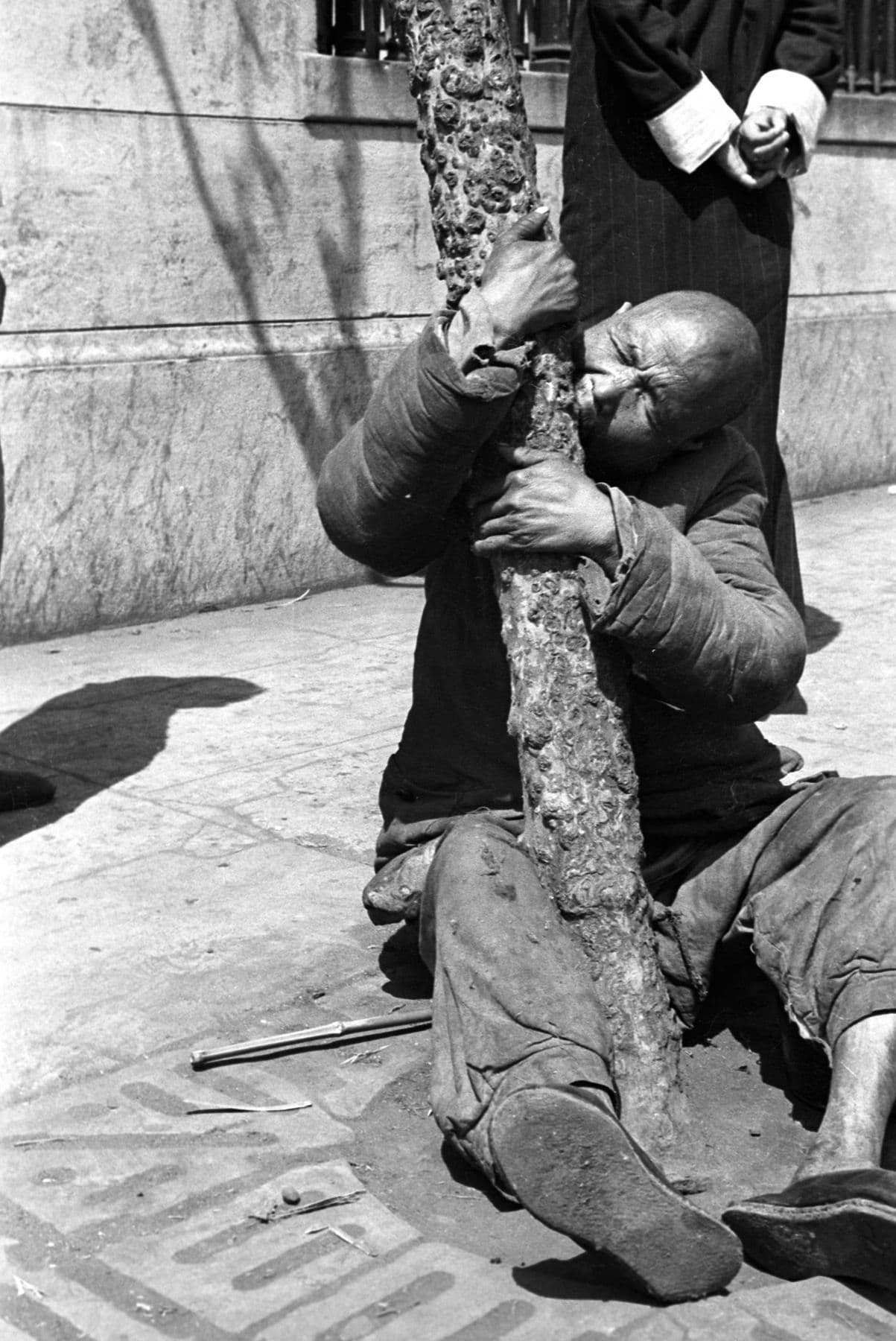
Drought, Locusts and Grain Requisitioning
In 1942 Henan was divided between Nationalist-held territory, Japanese-occupied areas and Communist base areas. According to the Oxford historian Mark Baker, drought in the spring and summer of 1942 cut the province's food production by around half compared with previous years, and locusts, hail and wind destroyed crops in some areas. A memorandum by John S. Service, Third Secretary of the U.S. Embassy, transmitted by Ambassador Clarence E. Gauss in November 1942 after Service visited the province, reported that Henan's farmers had for years been required to feed not only the ordinary population but the large military forces stationed there; the spring and summer crops had failed, and taxation in kind and military requisitioning had drained off most of a harvest of only 20 per cent, so that "more than two million persons may starve while some ten to eighteen million will be seriously affected"; the limited transport routes into the province were monopolised by military supplies. Baker argues that in the summer of 1942 military requisitioning and price rises turned weather-induced scarcity into widespread famine within weeks, and that both Nationalist and Japanese forces carried out sometimes violent requisitioning and grain seizures.
Official Recognition and Relief
Service's memorandum said the government "was slow in recognizing the famine situation." According to an investigative article from Tencent History, at a military conference at Wangqu near Xi'an in September 1942 Henan's military commanders reported the famine to Chiang Kai-shek, clashing with the provincial government, which had been concealing it; Chiang decided to cut Henan's 1942 army grain quota from 4.2 million to 2.5 million shi, and on 16 September Governor Li Peiji set up a provincial famine relief committee. The article argues that popular stories of Chiang berating the governor for reporting the famine, or of Chiang "simply not believing there was a famine in Henan" (from later recollections by Feng Yuxiang and Wang Yunsheng), are not supported by the record.
The Ta Kung Pao Suspension
In December 1942 the Chongqing Ta Kung Pao sent its correspondent Zhang Gaofeng to Henan. His report from Ye County and elsewhere, "Hungry Henan," was retitled "A True Record of the Henan Disaster" by editor-in-chief Wang Yunsheng and published on 1 February 1943; the next day Wang's editorial "Look at Chongqing, Think of the Central Plains" compared officials pressing famine victims for grain to the cruel tax collector of a Du Fu poem. According to the U.S. Embassy, the editorial criticised the continued collection of land taxes during the famine; the government suspended the paper for three days, and foreign correspondents who tried to report this were not allowed to send their despatches. On the reason for the suspension, the Tencent History article cites the 4 February 1943 diary of Wang Shijie, former head of the Nationalist Party's Propaganda Department, saying the paper was punished "for criticising the failure of price controls," and counts more than 40 reports on the famine in the Communist Xinhua Daily in Chongqing in the preceding six months. According to Shandong Business Daily, Zhang Gaofeng was later arrested on fabricated charges by the commander Tang Enbo.
Theodore White's Reporting and Grain Shipments
After travelling to Henan, Time correspondent Theodore H. White published his report on the famine in Time on 22 March 1943. A U.S. Embassy despatch of 23 April 1943 said that White and Harrison Forman had submitted personal reports to Chiang, and that this and the growing publicity were believed likely to occasion "some belated action"; fund-raising campaigns now appeared in the press almost daily, and on 10 April the Central News Agency reported that some 555,000 sacks of wheat had been sent from Shaanxi "under the instructions of the Central Government," with the Longhai Railway suspending ordinary traffic for several days to carry food to Henan. The Tencent History article argues that relief had begun before White's report, and cites Service's observation that the only railway from Shaanxi into Henan ran within range of Japanese guns, severely limiting how much grain could be moved.
The Occupied Areas
Baker notes that mass starvation also occurred in Japanese-occupied territory. The novel Remembering 1942 and the film based on it depict the Japanese army distributing military grain to famine victims; the Tencent History article says it found no record of the Japanese army doing so in Henan.
Aftermath and the Death Toll
On 30 June 1943 the U.S. Chargé, George Atcheson Jr., reported that American and other observers felt the worst of the famine was over and the wheat harvest was good, but that people were still dying in large numbers from malnutrition and recurrent fever; people had been scattered, much land had been bought up by wealthy landlords, homes destroyed and livestock slaughtered, and the heavy concentration of troops in Henan burdened the people "through their oppression of the population, heavy exactions and plundering."
Estimates of the dead vary. Baker puts starvation-related deaths at around one million, with perhaps three million more fleeing their homes — a slightly more pessimistic reading of Anthony Garnaut's estimate of "a little less than 1 million" — and notes that the commonly cited figure is three million. Guo Zhongkui, a member of the People's Political Council, later claimed that more than five million starved while Governor Li Peiji reported only 1,602 deaths (as quoted by Tencent History). In November 1942 Service had projected that more than two million might starve.
Narrative Comparison
| Source | Narrative |
|---|---|
| Shandong Business Daily (via China News Service, 2012); Tencent History investigative article | Mainland Chinese media accounts differ. A 2012 Shandong Business Daily article calls "Japan's invasion the root cause of the Henan famine," while saying Nationalist commanders in Henan "still forcibly requisitioned army grain, taking almost all the farmers' harvest," and quotes the saying "flood, drought, locusts and Tang." A Tencent History investigative article argues that popular claims — that Chiang refused to believe in the famine, or that the Ta Kung Pao was suspended for reporting it — are not borne out by the sources, noting that in September 1942 Chiang "decided to cut Henan's 1942 army grain quota from 4.2 million to 2.5 million shi." |
| U.S. Embassy reports (1942–43: Service, Gauss, Vincent, Atcheson) | U.S. Embassy reporting attributed the famine to crop failure compounded by requisitioning: "taxation in kind and the requisitioning of foodstuffs for military use have drained off most of the 20% crop," the government "was slow in recognizing the famine," and "the atmosphere of longing for peace and of dislike of the government and army … is unmistakable." A June 1943 telegram still cited troops' "oppression of the population, heavy exactions and plundering." |
| Mark Baker (2018) | Baker argues that drought was a "slow" element of the famine and that the "fast" elements of military requisitioning and price rises turned scarcity into famine; comparing Henan's twentieth-century famines, he argues that "the growing role of the state in causing famine led to faster temporalities of disaster." He adopts a death toll of around one million, lower than the commonly cited three million. |
| Theodore White and a Henan farmer (as quoted by Baker); Zhang Gaofeng and Wang Yunsheng (via Shandong Business Daily) | Theodore White described "the slow, winter-long agony of starvation." A farmer told the Ta Kung Pao: "When I dream, I do not think of cooked food, for it really is better to die early." Wang Yunsheng's editorial likened officials pressing famine victims for grain to the cruel tax collector of a Du Fu poem. |
Key Milestones
- Henan famine relief committee set up
After the Wangqu military conference, Governor Li Peiji sets up a provincial relief committee (per Tencent History).
- Embassy forwards Service memorandum
The memorandum warns that over two million may starve and that the government was slow to recognise the famine.
- Ta Kung Pao publishes famine report
Zhang Gaofeng's report appears; Wang Yunsheng's editorial follows the next day.
- Ta Kung Pao suspended for three days
After the editorial the government suspends the paper for three days.
- Theodore White's report in Time
Time publishes White's report on the Henan famine.
- Wheat shipped from Shaanxi
Central News reports some 555,000 sacks of wheat sent from Shaanxi on central government instructions.
- Embassy reports worst is over
Atcheson reports a good wheat harvest but continuing deaths from malnutrition and fever.
Last verified:
Cite this page
Chronicles of Modern China. (2026, November 3). Henan Famine of 1942–43. Retrieved November 3, 2026, from https://www.cmcarchive.org/events/henan-famine-1942
“Henan Famine of 1942–43.” Chronicles of Modern China. Last modified November 3, 2026. Accessed November 3, 2026. https://www.cmcarchive.org/events/henan-famine-1942.
Chronicles of Modern China. Henan Famine of 1942–43[EB/OL]. (2026-11-03)[2026-11-03]. https://www.cmcarchive.org/events/henan-famine-1942.