Shenzhou 5: China's First Crewed Spaceflight
At 09:00 on 15 October 2003 a Long March 2F rocket launched the Shenzhou 5 spacecraft and astronaut Yang Liwei from the Jiuquan Satellite Launch Center. After 14 orbits and 21 hours 23 minutes, the capsule landed in Siziwang Banner, Inner Mongolia, at 06:23 on 16 October, making China the third country, after the Soviet Union/Russia and the United States, to launch a human into space independently. The programme was approved in 1992 as "Project 921". President Bush sent congratulations, while US reports also weighed its military implications and its debt to Russia's Soyuz.
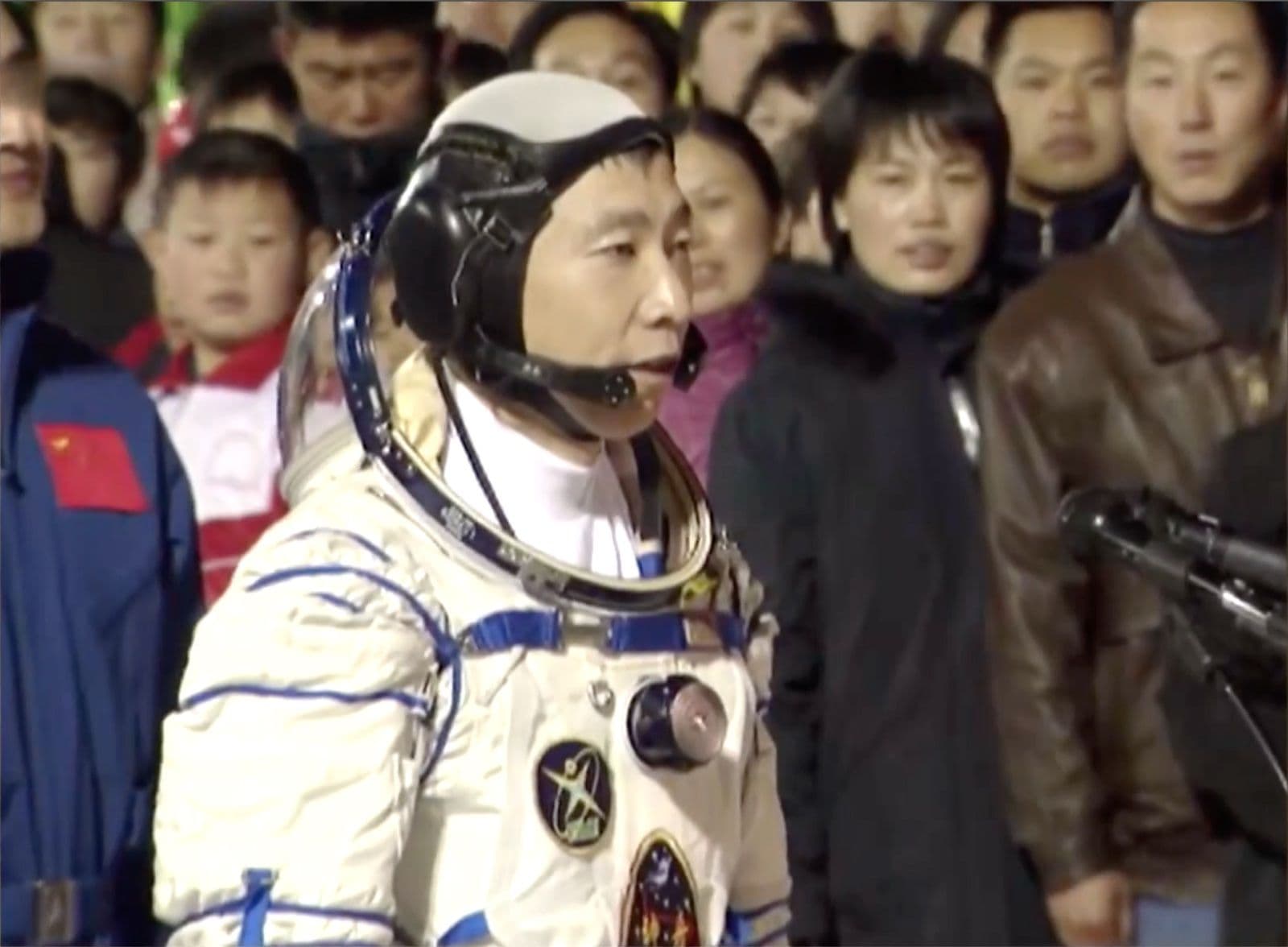
From the "863 Programme" to "Project 921"
According to a 2003 Congressional Research Service report, an earlier Chinese attempt at human spaceflight was abandoned under economic pressure. The "863 Programme" submitted to the Party Central Committee by scientists including Wang Daheng in March 1986 included a crewed-spaceflight field. On 21 September 1992 the crewed space programme was formally approved under the code name "921", with its launch site at the Jiuquan Satellite Launch Center, from which China's first satellite, Dongfanghong-1, had been launched in 1970; Chinese officials repeatedly described a "three-step" plan: put humans into Earth orbit, dock spacecraft to form a small laboratory, and ultimately build a large space station. The crewed launch site at Jiuquan was founded on 3 July 1994. The programme comprised seven systems: astronauts, space applications, spacecraft, launch vehicle, launch site, tracking and communications, and landing site.
According to the CRS report, Russia signed a space cooperation agreement with China in 1994, and a 1996 "joint understanding" provided for training two Chinese specialists at Star City near Moscow, which took place in 1997. In January 1998 Yang Liwei and 13 other air force pilots were selected from 886 initial candidates as China's first astronauts. Between 20 November 1999 and 30 December 2002 four uncrewed spacecraft, Shenzhou 1 to 4, were launched, the third and fourth carrying dummy astronauts. Shenzhou consists of a service module, a descent module and an orbital module, which can keep operating in orbit after the descent module returns.
The Flight
According to Xinhua's full record, at 05:20 on 15 October 2003 Hu Jintao met the first-flight team (Yang Liwei, Zhai Zhigang and Nie Haisheng) at the astronauts' quarters at the Jiuquan launch site. At 08:50 Hu and others watched from the launch command building, while Wu Bangguo, Wen Jiabao and others followed the launch at the Beijing Aerospace Command and Control Center. At 09:00 a Long March 2F rocket lifted off; about ten minutes later the spacecraft reached orbit and Yang reported, "I feel good." At 09:42 programme commander-in-chief Li Jinai declared the launch a success.
In flight Yang ate and slept for about three hours; the spacecraft changed orbit at 15:54. At 17:26 Defence Minister Cao Gangchuan spoke with him; around 18:40, on the seventh orbit, he displayed the Chinese flag and the UN flag and greeted the peoples of the world; at 19:58 he spoke with his wife and son. At 05:35 on the 16th the Beijing control centre sent the return command, and at 06:23 the descent module landed at the main landing site in Siziwang Banner, Inner Mongolia, 4.8 km from the planned point; Yang left the capsule unaided. The flight lasted 21 hours 23 minutes and completed 14 orbits. The orbital module stayed in orbit.
Yang Liwei's Account
In his memoir "Tiandi Jiuchong" and other recollections, Yang later revealed that when the rocket reached 30–40 km altitude a violent low-frequency resonance shook the rocket and spacecraft for about 26 seconds, during which he "felt he was going to die" and "my internal organs seemed about to shatter". Once in orbit he wrote in his log: "For the peace and progress of mankind, the Chinese have come to space." Looking down at the Earth, he recalled, "I felt very small," adding that "without the combined strength of the country and the nation, I could not have flown so high."
Reactions
After the launch Hu Jintao spoke at the Beijing control centre, calling the programme "a major strategic decision made by the third-generation central leadership with Comrade Jiang Zemin at its core". At 07:29 on the 16th Jiang Zemin, chairman of the Central Military Commission, telephoned Li Jinai to congratulate him, calling the flight "another great achievement of reform and opening and socialist modernisation". That year the Party Central Committee, State Council and Central Military Commission conferred on Yang the title "Space Hero" and the Aerospace Meritorious Medal.
NASA Administrator Sean O'Keefe called it "an important achievement in human exploration"; on 19 October President George W. Bush wrote to Hu calling the mission "an historic triumph for the Chinese people" and welcoming China as the third country to launch an astronaut. The Congressional Research Service set out differing views: some welcomed a new explorer, some saw a technological advance that could pose a threat, and some found it unremarkable, coming 42 years after the Soviet Union and the United States; it cited a 2003 Defense Department assessment that the crewed programme "almost certainly" would contribute to improved Chinese military space systems in 2010–2020, and noted that the United States had declined to bring China into the International Space Station. On the spacecraft's origins, the report recorded that Shenzhou was patterned after Russia's Soyuz and that a Russian space agency official called the design "100% Russian", while Chinese officials insisted it was built entirely in China and some Western experts pointed to differences. According to Xinhua, Xie Mingbao, director of the China Manned Space Engineering Office, said the five Shenzhou spacecraft launched so far had cost 18 billion yuan.
Afterwards
In October 2005 Shenzhou 6 carried Fei Junlong and Nie Haisheng on a five-day flight, landing on 17 October. In 2024 Yang Liwei received the Qian Xuesen Supreme Achievement Award.
Gallery
Narrative Comparison
| Source | Narrative |
|---|---|
| Xinhua, "Full Record of China's First Crewed Spaceflight" (16 Oct. 2003); China News Service (19 Oct. 2003) | Official Chinese accounts present the first crewed flight as the fruit of a strategic decision by the Party centre and of the socialist system's advantages, continuing the "Two Bombs, One Satellite" tradition. Hu Jintao called the programme "a major strategic decision made by the third-generation central leadership with Comrade Jiang Zemin at its core" that "wrote a magnificent chapter in the Chinese nation's ceaseless self-strengthening"; Jiang Zemin called it "another great achievement of reform and opening and socialist modernisation" and "another milestone in China's high-technology development", stressing "giving full play to the advantages of the socialist system, self-reliance and independent innovation". State media described it as "another unprecedented grand project of China's space industry after Two Bombs, One Satellite". |
| Bush letter to Hu Jintao (19 Oct. 2003); CRS report RS21641 (21 Oct. 2003) | The US government congratulated China publicly while remaining wary at the policy level. President Bush wrote that the mission was "an historic triumph for the Chinese people and a milestone in the continued exploration of space", and NASA Administrator O'Keefe wished China "a continued safe human space flight program". The Congressional Research Service called the implications "unclear", citing the Defense Department view that "political prestige" appeared to be "one of the strongest immediate motivations" but that the programme "almost certainly will contribute to improved military space systems in the 2010-2020 timeframe"; it also noted there was no government-to-government space cooperation and that Washington had declined to bring China into the ISS. |
| Johnson-Freese, YaleGlobal Online (1 Oct. 2003); Naval War College Review 56(3), 2003 (abstract) | Before the launch, Naval War College scholar Joan Johnson-Freese noted that US analysts were divided on China's motives: some saw a "Trojan Horse" concealing military space activities, others a prestige programme tied to domestic legitimacy and regional leadership, and the Chinese had "clearly read" the Apollo "play-book" in pursuing similar multiple goals. She argued that Shenzhou's resemblance to Soyuz did not mean China had "merely" copied it, since human-rated rocket engineering is highly complex, and that attributing the programme to military intent was "a conclusion drawn from analysis of intent, not technology". She also argued that China was "destined to be a competitor" if the United States continued to exploit space's military advantages and China felt compelled to respond. |
| Xinhuanet (15 Oct. 2024, quoting Yang's memoir "Tiandi Jiuchong") | Yang Liwei's own recollections combine personal experience with a national narrative. He revealed that about 26 seconds of violent low-frequency resonance during ascent made him "feel he was going to die", with "my internal organs seemed about to shatter"; in orbit he wrote, "For the peace and progress of mankind, the Chinese have come to space"; looking at the Earth he "felt very small", saying "without the combined strength of the country and the nation, I could not have flown so high". Accepting an award in 2024 he called crewed spaceflight "an undertaking of ten thousand people holding one rifle", the honour belonging to "the many thousands of space workers". |
Key Milestones
- Crewed space programme approved
China's crewed space programme is formally approved under the code name "921" with a "three-step" plan.
- Jiuquan crewed launch site founded
The crewed launch site is founded at the Jiuquan Satellite Launch Center.
- Shenzhou 1 uncrewed test flight
The first test spacecraft is launched and returns to Siziwang Banner after about a day.
- Shenzhou 4 launched
The fourth uncrewed flight, carrying a dummy astronaut, in a configuration close to the crewed version.
- Shenzhou 5 launches with Yang Liwei
A Long March 2F lifts off at 09:00 and reaches orbit about ten minutes later; on the seventh orbit Yang displays the Chinese and UN flags.
- Descent module lands
Lands at 06:23 at the main landing site in Siziwang Banner after 21 hours 23 minutes and 14 orbits.
- Bush congratulates Hu
President Bush writes that the mission was "an historic triumph for the Chinese people".
- Shenzhou 6 returns
Fei Junlong and Nie Haisheng complete China's second crewed flight, lasting five days.
Last verified:
Cite this page
Chronicles of Modern China. (2026, October 24). Shenzhou 5: China's First Crewed Spaceflight. Retrieved October 24, 2026, from https://www.cmcarchive.org/events/shenzhou-5-crewed-spaceflight-2003
“Shenzhou 5: China's First Crewed Spaceflight.” Chronicles of Modern China. Last modified October 24, 2026. Accessed October 24, 2026. https://www.cmcarchive.org/events/shenzhou-5-crewed-spaceflight-2003.
Chronicles of Modern China. Shenzhou 5: China's First Crewed Spaceflight[EB/OL]. (2026-10-24)[2026-10-24]. https://www.cmcarchive.org/events/shenzhou-5-crewed-spaceflight-2003.