Founding of the Shanghai Stock Exchange
Authorised by the State Council and approved by the People's Bank of China, the Shanghai Stock Exchange was established on 26 November 1990 and opened for trading on 19 December in the Peacock Hall of the Pujiang Hotel north of the Bund, with 8 listed companies — the first stock exchange in mainland China after 1949. Approved by Shanghai Party secretary and mayor Zhu Rongji and organised by Wei Wenyuan, it built a computerised matching system in under six months. In 1992 Deng Xiaoping said stock markets should be "tried out firmly"; after prices were freed that May the index swung wildly.
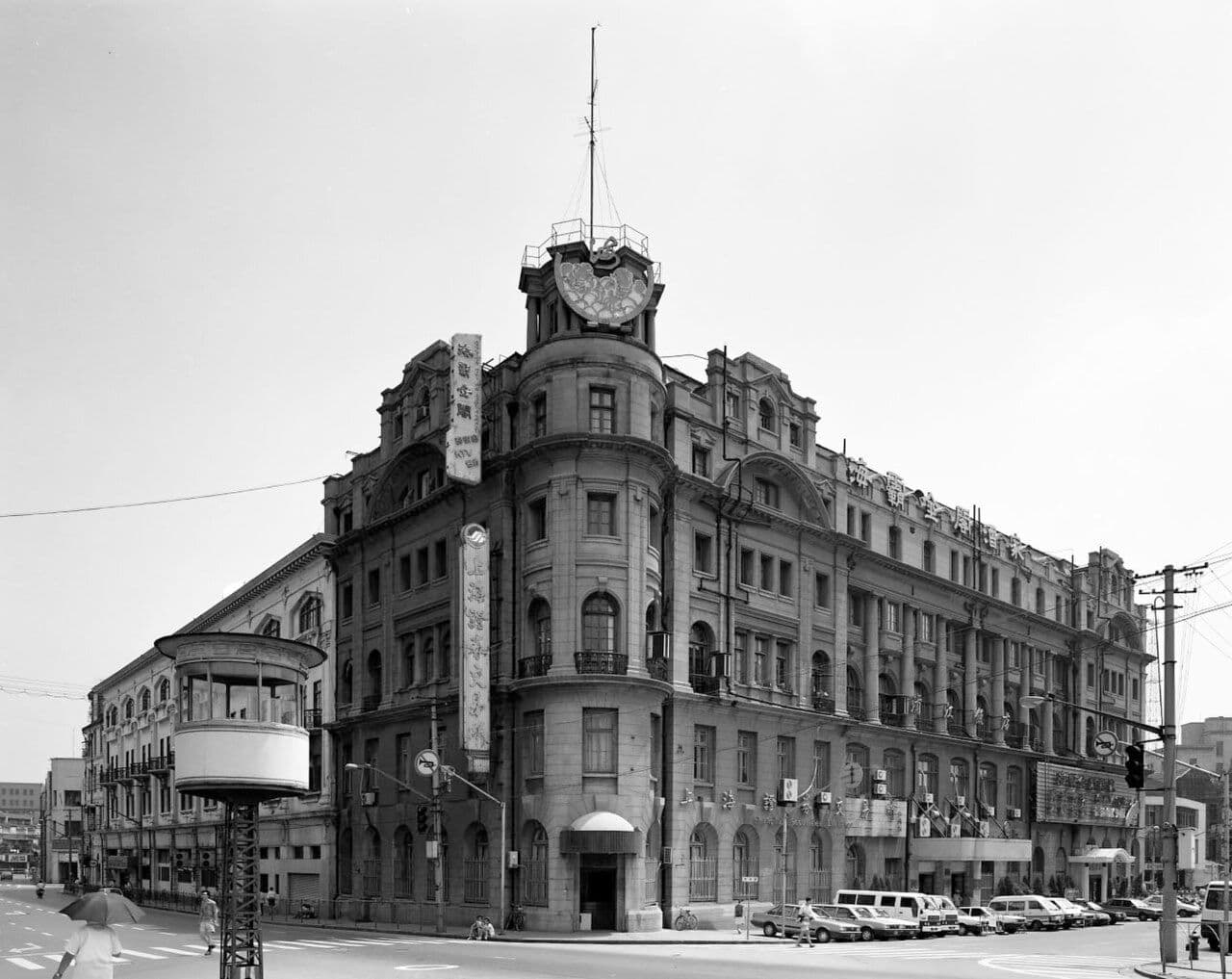
Preparation
According to Wei Wenyuan, the exchange's first general manager, speaking in 2018, the exchange was closely tied to the development of Pudong: Zhu Rongji, then Shanghai's Party secretary and mayor, told Deng Xiaoping that Shanghai wanted to set up a stock exchange, and Deng replied, "Good — go ahead." In December 1989 Zhu convened an enlarged meeting of the municipal Party standing committee that decided to prepare an exchange, with a preparatory group of Gong Haocheng (head of the People's Bank of China Shanghai branch), Li Xiangrui (president of the Bank of Communications) and He Gaosheng (head of the Shanghai Economic Restructuring Office). On 8 June 1990 Zhu announced that it would open within the year, and on 3 July Wei, then a deputy section chief at the PBoC Shanghai branch, became head of the preparatory team.
There were fewer than six months to prepare. Wei chose the Peacock Hall of the Pujiang Hotel (the former Astor House, built in 1846) north of the Bund as the trading floor, and decided to spend 1 million of the 5-million-yuan budget on a computerised matching system, programmed by staff and students of the Shanghai Institute of Finance and Economics; the six-digit stock codes beginning with 6 date from this time. The exchange initially obtained only 30 telephone lines; only after Zhu's inspection on 3 December did the city government mobilise to solve such problems.
Founding and Opening
On 26 November 1990, authorised by the State Council and approved by the People's Bank of China, the Shanghai Stock Exchange was formally established and held its first council meeting. At 11 a.m. on 19 December it opened for trading with the sound of a gong in the Pujiang Hotel's Peacock Hall, with Zhu Rongji attending. According to Xinhua (2020), it began with 8 listed companies (the "old eight") worth 1.234 billion yuan; Wei noted that they already included Zhejiang Phoenix from outside Shanghai and that the 16 founding members included CITIC and the trust companies of the big banks, so the exchange was not merely a local pilot. CCTV News reported that day that the exchange "shows that China is firmly continuing its policy of reform and opening". The Shenzhen Stock Exchange formally opened on 3 July 1991.
Early Controversy and Volatility
Around the time of the founding, whether shares and stock exchanges were "capitalist" remained contested. In his Southern Tour talks in early 1992 Deng Xiaoping said: "Are securities and the stock market good or bad? Are they dangerous? Are they peculiar to capitalism? Can socialism use them? We allow people to reserve their judgement, but we must try these things out. If after a year or two they prove correct, we can expand them; if wrong, we can correct them and close them down."
On 21 May 1992 the exchange fully freed share prices and introduced free bidding; the Shanghai index rose from 617 to a high of 1,266 that day, a gain of about 105%, before falling some 70% over the following six months. The anthropologist Ellen Hertz, drawing on fieldwork, wrote of an explosion of "stock fever" in Shanghai in 1992 and of the dominant role of the state in the market. According to the Shanghai Archives, the exchange moved to Pudong in 1993, and the development companies of Pudong's zones raised large sums through it.
Afterwards
The Shanghai–Hong Kong Stock Connect was launched on 10 April 2014, and in November 2018 Xi Jinping announced a STAR Market with a pilot registration-based IPO system at the exchange. According to SSE chairman Huang Hongyuan in 2020, listed companies had grown in 30 years from 8 to 1,785, with a total market value of nearly 45 trillion yuan, third in the world after the NYSE and Nasdaq. In the summer of 2015 the A-share market, led by the Shanghai Composite Index, suffered a steep fall.
Gallery
Narrative Comparison
| Source | Narrative |
|---|---|
| CCTV News (19 Dec. 1990, as quoted in "Moments in a Century"); Deng's Southern Tour talks (1992); Xinhua interview with Huang Hongyuan (22 Dec. 2020) | Official accounts treat the exchange as a product and symbol of reform and opening. CCTV News on opening day said its founding "shows that China is firmly continuing its policy of reform and opening, adopting internationally accepted forms and using securities to raise funds for socialist construction". In 1992 Deng Xiaoping urged that securities and stock markets be "tried out firmly" while judgement was reserved. In 2020 SSE chairman Huang Hongyuan said the exchange was "born of reform and opening and thrived with it", stressing that the capital market "must unswervingly serve the real economy and national strategy". |
| Hertz, The Trading Crowd (1998), as summarised in Clammer's review, Pacific Affairs 1999 | Western scholarship focuses on the relationship between the Shanghai market and the state. In her 1998 ethnography, anthropologist Ellen Hertz describes the "stock fever" of 1992 and argues that the state's dominant role produced a market "very different from those of the West"; investors and officials constructed a "moral storyline" to make sense of the innovation, with big investors, small investors and the state struggling for control of the market. |
| Interview with Wei Wenyuan, China Economic Weekly, 24 Dec. 2018 | Wei Wenyuan, the first general manager, stresses "starting from a blank sheet". When he took over, he said, a stock exchange existed in his mind "only as scenes from the film Midnight"; the team "often sat on the carpet holding meetings late into the night"; he insisted on spending a fifth of the budget on a computerised trading system, and "we were still building the user interface the day before opening"; on opening day he struck the first gong "with a fever", his foot blistered by ill-fitting shoes. He also stressed that its first listings and members meant the exchange "broke through local limits" from the start. |
Key Milestones
- Zhu announces opening within the year
According to Wei Wenyuan, Zhu Rongji announces the exchange will open within the year.
- Wei Wenyuan heads preparations
Wei Wenyuan of the PBoC Shanghai branch becomes head of the preparatory team.
- SSE established
Authorised by the State Council and approved by the PBoC, the SSE is established and holds its first council meeting.
- SSE opens for trading
Trading opens at 11 a.m. in the Pujiang Hotel's Peacock Hall with 8 listed companies.
- Shenzhen Stock Exchange opens
The Shenzhen Stock Exchange opens, completing the two centralised exchanges.
- Share prices fully freed
The Shanghai index rises from 617 to a high of 1,266 in one day, about 105%, then falls some 70% over six months.
- Shanghai–Hong Kong Stock Connect
The Stock Connect linking Shanghai and Hong Kong is launched.
Last verified:
Cite this page
Chronicles of Modern China. (2026, October 24). Founding of the Shanghai Stock Exchange. Retrieved October 24, 2026, from https://www.cmcarchive.org/events/shanghai-stock-exchange-1990
“Founding of the Shanghai Stock Exchange.” Chronicles of Modern China. Last modified October 24, 2026. Accessed October 24, 2026. https://www.cmcarchive.org/events/shanghai-stock-exchange-1990.
Chronicles of Modern China. Founding of the Shanghai Stock Exchange[EB/OL]. (2026-10-24)[2026-10-24]. https://www.cmcarchive.org/events/shanghai-stock-exchange-1990.