Founding of the Chinese Soviet Republic
From 7 to 20 November 1931 the First National Soviet Congress met at Yeping in Ruijin, Jiangxi, proclaiming the Provisional Central Government of the Chinese Soviet Republic, adopting an Outline Constitution, a Land Law and a Labour Law, and renaming Ruijin “Ruijing” as its seat. On 27 November the Central Executive Committee elected Mao Zedong chairman, with Xiang Ying and Zhang Guotao as vice-chairmen. The congress was pressed for by the Comintern, whose Far Eastern Bureau drafted its main legal documents. The regime carried out land revolution and elections in the soviet areas of Jiangxi and Fujian in opposition to the Nationalist government in Nanjing, and in 1934, under the fifth encirclement campaign, abandoned Ruijin as the Red Army set out on the Long March.
The Soviet Areas and the Nationalist “Encirclement” Campaigns
According to Japanese reference works, the main force of the Red Fourth Army moved from Jinggangshan into the hills of southern Jiangxi in 1929 and expanded into western Fujian; in 1931 the two areas were joined into the Central Revolutionary Base, or Central Soviet Area. The League of Nations’ Lytton Commission wrote in 1932 that the revival of civil war between 1928 and 1931 “favoured the growth of Communist influence”: a Red Army was organised and extensive areas of Jiangxi and Fujian were sovietised. Only in November 1930, after the defeat of the northern coalition in the Central Plains War, did the government take up suppression in earnest; its first expedition was defeated and its second frustrated, while the third, directed by Chiang Kai-shek, had taken the main Communist strongholds by mid-July 1931. The report also relayed contemporary claims that Communist forces had caused “the loss of 200,000 lives” and about a billion silver dollars of property in parts of Jiangxi and Hunan within two or three months.
The Comintern’s Role and the Choice of Ruijin
According to the Ruijin Municipal Office of Local History, in early January 1930 the Comintern’s Far Eastern Bureau proposed a congress of all soviet areas; on 23 May 1930 the presidium of the national soviet congress resolved to convene the First National Congress of Workers, Peasants and Soldiers on 7 November 1930 and found a provisional central government to unify the soviet areas. Preparations stalled amid danger and the date was repeatedly postponed; the Comintern kept pressing, and its Far Eastern Bureau itself drafted the congress’s main legal documents. On 20 September 1931 the CCP Central Committee resolved to establish the provisional central soviet government on the anniversary of the October Revolution.
The Party centre first considered holding the congress at Changting in Fujian. According to a Ruijin Party history official interviewed by the Guang’an Daily, Deng Xiaoping became Ruijin county Party secretary in early August 1931, when his predecessor Li Tianfu had been purging the so-called “Social Democratic Party,” extorting confessions under torture and killing innocent people; Deng halted the campaign and released more than 300 cadres and villagers. On 28 September Mao Zedong and Zhu De passed through Yeping village in Ruijin with the First Front Army, en route to Fujian to prepare the congress at Changting, but instead chose Yeping as headquarters of the Central Bureau and the Red Army and as the congress venue.
The First National Soviet Congress
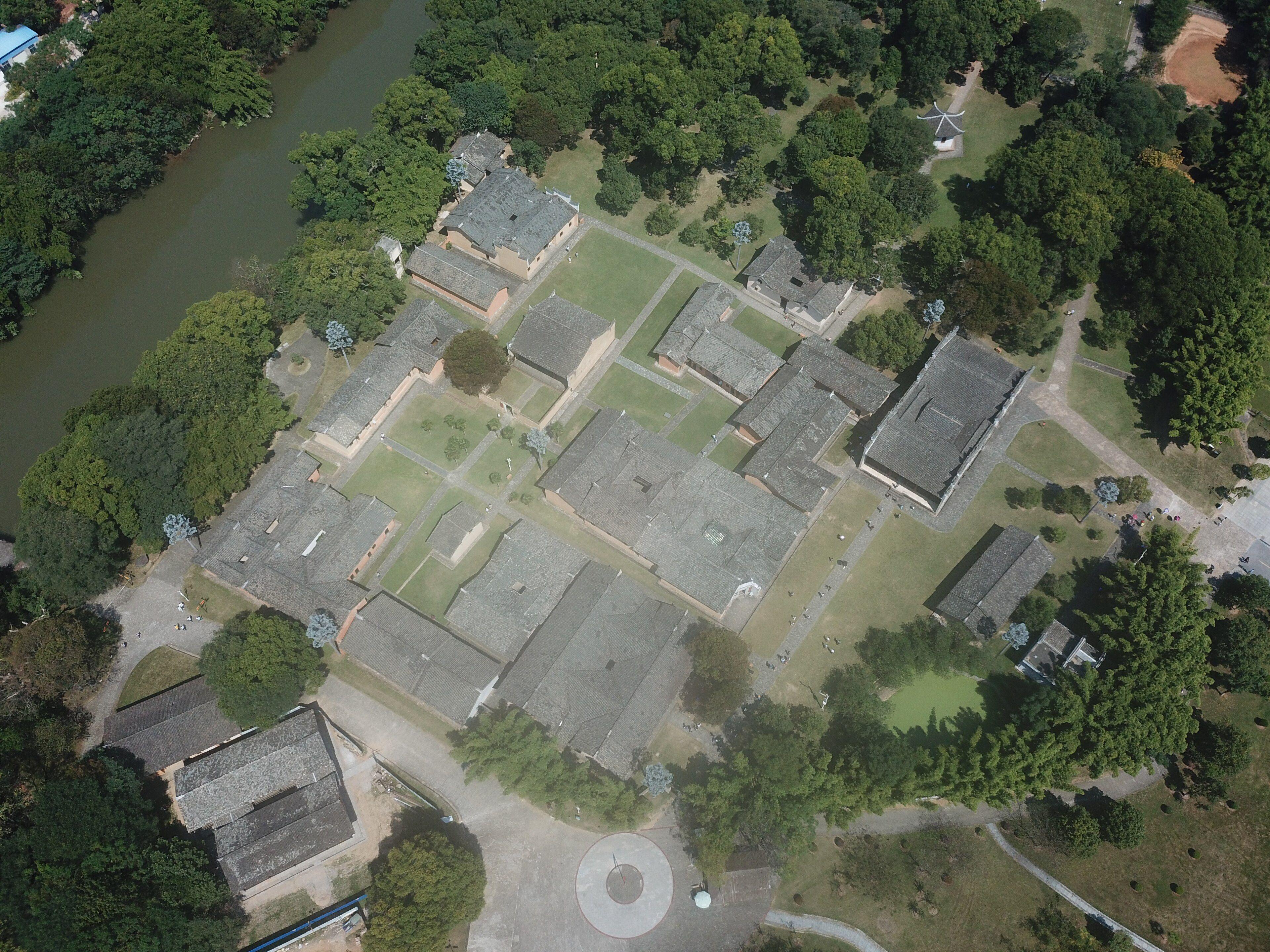
The First National Congress of the Chinese Soviets met from 7 to 20 November 1931 in the Xie ancestral hall at Yeping, Ruijin. Delegates came from the Central, West Fujian, Hunan–Hubei–Jiangxi, Hunan–Jiangxi, West Hunan–Hubei, Northeast Henan and Qiongya soviet areas and from Red Army units — 610 according to Ruijin sources, more than 600 according to People’s Daily Online. Mao Zedong delivered the report on political questions for the Central Bureau. The congress proclaimed the Provisional Central Government of the Chinese Soviet Republic; adopted the Outline Constitution, the Land Law, the Labour Law and a resolution on economic policy, together with a declaration to foreign countries, a resolution on national minorities, regulations on preferential treatment for the Red Army and marriage regulations; and elected 63 members of the Central Executive Committee, including Mao, Zhou Enlai and Zhu De. Ruijin was renamed “Ruijing” and became the seat of the government.
On 25 November the Central Executive Committee established the Central Revolutionary Military Commission under Zhu De, with Wang Jiaxiang and Peng Dehuai as vice-chairmen. At its first meeting on 27 November the Committee elected Mao its chairman, with Xiang Ying and Zhang Guotao as vice-chairmen, and also elected them to lead the Council of People’s Commissars. Ruijin sources say this was the origin of the title “Chairman Mao.”
The Outline Constitution
The Outline Constitution had seventeen articles. It declared that the Chinese Soviet power was building “a state of the democratic dictatorship of workers and peasants,” whose aim was to eliminate feudal remnants, drive out the imperialist powers, unify China and systematically restrict capitalism, and ultimately to transform itself into the dictatorship of the proletariat. Supreme power lay with the national congress of workers’, peasants’ and soldiers’ deputies and, between sessions, with the Central Executive Committee, under which a Council of People’s Commissars handled daily government. Workers, peasants, Red Army soldiers and all toilers aged sixteen and over, regardless of sex, race or religion, could vote and stand for election, with the proletariat given extra representation; warlords, bureaucrats, landlords, gentry, capitalists, rich peasants, monks and all exploiters and counter-revolutionaries were denied the vote and political freedom.
The document promised a land law confiscating all landlord land for distribution to poor and middle peasants, with land nationalisation as the goal; an eight-hour day; non-recognition of all imperialist privileges in China, annulment of unequal treaties and a ban on imperialist forces in soviet territory; and recognition of national minorities’ right to self-determination “up to the right of each small nation to separate from China and form its own independent state.” Its final article named the Soviet Union its firm ally. The Comintern organ International Press Correspondence published an English translation on 14 January 1932. The Second National Soviet Congress revised the document in January 1934.
The Provisional Government at Work
On 26 April 1932 the provisional government issued a circular telegram declaring war on Japan, pledging to drive “Japanese imperialism out of China by a national revolutionary war.” According to CCP sources, the Central Soviet Area held three elections between November 1931 and January 1934, with turnout above 80 per cent in many places; the government promulgated more than 120 laws and decrees; and on 15 December 1933 the Central Executive Committee issued Order No. 26 prescribing death for officials of soviet organs, state enterprises and public bodies who embezzled 500 yuan or more.
The Lytton Report of October 1932 described the soviet regime from outside: two provincial Communist governments had been organised in Jiangxi and Fujian, and “the number of minor Soviets runs into hundreds.” The government was formed by a committee elected by local workers’ and peasants’ congresses but “in reality, controlled by representatives of the Chinese Communist Party”; when the Red Army intended to hold an area, it was sovietised, and “Any opposition from the population is suppressed by terrorism.” The poorest farmers derived “considerable benefit,” whereas landowners, merchants and gentry were ruined by expropriation or levies. The report concluded that Chinese Communism had “become an actual rival of the National Government,” with its own law, army, government and territory — a state of affairs without parallel in any other country.
The End of the Ruijin Government and Differing Assessments
In 1934, under the Nationalists’ fifth encirclement campaign, the Red Army abandoned Ruijin and in October set out on the Long March. The official mainland account calls the provisional government “the first nationwide workers’ and peasants’ democratic regime in Chinese history” and an important attempt by the Party to govern in part of the country, providing experience for later base areas and for the government of the People’s Republic; People’s Daily’s party-history material defines it as a people’s democratic dictatorship of the new-democratic revolution led by the proletariat. The Lytton Report, by contrast, saw it as a challenge to the authority of the National Government and stressed its use of terror and the dispossession of landlords and merchants.
Gallery
Narrative Comparison
| Source | Narrative |
|---|---|
| China Organization and Personnel News (2021); CPC News party-history material | The official mainland account says the Provisional Central Government founded in November 1931 “was the first nationwide workers’ and peasants’ democratic regime in Chinese history and an important attempt by the Party to govern in a part of the country,” providing valuable experience for later base areas and for the government of New China, and defines it as a people’s democratic dictatorship of the anti-imperialist, anti-feudal new-democratic revolution led by the proletariat. |
| International Press Correspondence (Comintern), 14 January 1932 | The Comintern pressed for the congress, and its Far Eastern Bureau drafted the main legal documents. In January 1932 its organ published the constitution for an international readership, stating that the congress “regards the realisation of this Constitution in the whole of China as its fundamental task” and that the Chinese Soviet power “stands in a common revolutionary front with the world proletariat and the oppressed peoples” and regards the Soviet Union “as its firm ally.” |
Key Milestones
- Decision to convene a national soviet congress
The presidium resolves to convene the first national congress and found a provisional government; the date is repeatedly postponed.
- Third campaign takes main strongholds
According to the Lytton Report, Chiang’s third campaign takes the main Communist strongholds by mid-July.
- CCP decides to found the provisional government
The CCP Central Committee resolves to found the provisional central government on the October Revolution anniversary.
- Yeping chosen
Mao and Zhu reach Yeping with the First Front Army and choose it as headquarters and congress venue.
- First National Soviet Congress opens
The congress opens in the Xie ancestral hall, proclaims the provisional government and adopts the Outline Constitution.
- Congress closes
The congress closes after electing 63 members of the Central Executive Committee.
- Military Commission established
Zhu De becomes chairman, with Wang Jiaxiang and Peng Dehuai as vice-chairmen.
- Mao elected chairman
The Central Executive Committee elects Mao chairman, with Xiang Ying and Zhang Guotao as vice-chairmen.
- Declaration of war on Japan
The provisional government issues a circular telegram declaring war on Japan.
- Second congress revises the constitution
The Second National Soviet Congress revises the Outline Constitution.
- Red Army leaves for the Long March
Under the fifth encirclement campaign the Red Army abandons Ruijin and begins the Long March.
Last verified:
Cite this page
Chronicles of Modern China. (2026, November 9). Founding of the Chinese Soviet Republic. Retrieved November 9, 2026, from https://www.cmcarchive.org/events/chinese-soviet-republic-1931
“Founding of the Chinese Soviet Republic.” Chronicles of Modern China. Last modified November 9, 2026. Accessed November 9, 2026. https://www.cmcarchive.org/events/chinese-soviet-republic-1931.
Chronicles of Modern China. Founding of the Chinese Soviet Republic[EB/OL]. (2026-11-09)[2026-11-09]. https://www.cmcarchive.org/events/chinese-soviet-republic-1931.