The Zhengzhou “7·20” Rainstorm Disaster (2021)
From 17 to 23 July 2021 Henan was hit by historically rare torrential rain; on 20 July 201.9 mm fell in one hour in Zhengzhou, a record for mainland China. Floodwater entered the tunnel of Zhengzhou Metro Line 5 and trapped a train, killing 14, and there were also deaths in the Jingguang Expressway North Tunnel. According to the State Council investigation, 398 people in Henan died or went missing, 380 of them in Zhengzhou, and direct losses totalled 120.06 billion yuan. The report classified the event as an especially serious natural disaster but found that Zhengzhou had mishandled the response and committed dereliction of duty, that the metro and tunnel deaths were liability incidents that “should not have happened,” and that 139 deaths had been concealed; former Zhengzhou Party secretary Xu Liyi and 89 officials were disciplined and eight people arrested. Several foreign journalists were harassed while reporting in Zhengzhou; the US State Department voiced concern, while China’s Foreign Ministry said the reporting environment was open and free.
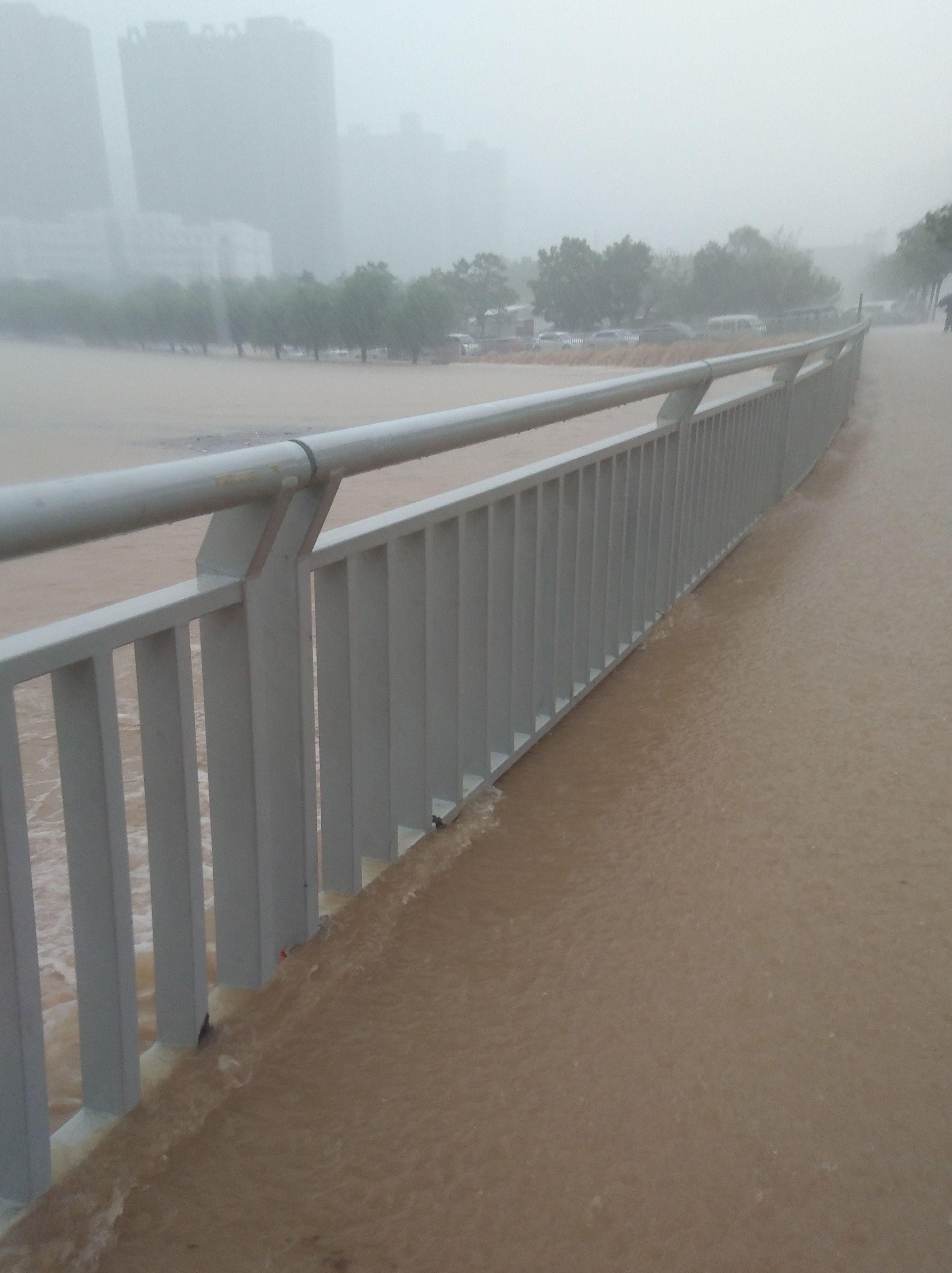
The extreme rainstorm
From 17 to 23 July 2021 Henan province was hit by historically rare torrential rain centred on Zhengzhou. According to the Beijing News, from 4 p.m. on 20 July one-hour rainfall at the Zhengzhou station reached 201.9 mm, exceeding China’s record for hourly rainfall on land, after the city’s observatory had issued seven consecutive red rainstorm warnings. A 2022 study by Li Changjia and colleagues noted that this set a new hourly record among China’s 2,418 national weather stations, and that 622.7 mm fell at the station in the 24 hours from 2 a.m. on 20 July — almost the city’s mean annual precipitation of 634.4 mm.
The State Council investigation later reported that the disaster affected 14.786 million people in 150 counties, cities and districts of Henan, leaving 398 dead or missing, 380 of them (95.5%) in Zhengzhou, with direct economic losses of 120.06 billion yuan, 40.9 billion of them in Zhengzhou.
Metro Line 5 and the Jingguang North Road tunnel
On the evening of 20 July severe waterlogging around the Wulongkou depot of Zhengzhou Metro Line 5 broke through the flood wall on the depot access line and poured into the main-line tunnel, trapping a train between Shakou Road and Haitansi stations. A trapped passenger, the Henan Traffic Radio reporter Ding Xiaopei, later recounted that after the train stopped an announcement called it a temporary halt; at about 6 p.m. the train reversed less than 200 metres before it could go no further; the water and the lack of air worsened until someone broke a window with fire equipment; she was rescued at about 9:30 p.m. Zhengzhou Metro ordered the whole network shut at 6:10 p.m. In the early hours of 21 July the city reported 12 deaths on the train; on 27 July it said two more victims had been found, bringing the toll to 14.
According to the 21st Century Business Herald, citing the investigation, the depot wall had been designed for a once-in-a-century waterlogging depth of 0.24 metres, whereas the investigators’ experts calculated it should have been 0.5 metres, and the builder had replaced more than 40 per cent of the new wall with temporary construction hoarding. After a switch-fault alarm the train had been held at Haitansi station and then released at 17:46 without the cause being established or the danger understood; Zhengzhou Metro Group did not order a network-wide suspension until 18:04 and never activated its emergency response. The same day the Jingguang Expressway North Tunnel also flooded with loss of life; the investigation likewise ruled it a liability incident.
Harassment of foreign journalists
Foreign coverage of the disaster became contentious. According to the Foreign Correspondents’ Club of China, BBC reporter Robin Brant, who reported from outside Shakou Road station, became the target of a viral online campaign, and Henan’s Communist Youth League asked its 1.6 million Weibo followers to report his whereabouts; days later Zhengzhou residents surrounded a Deutsche Welle reporter and a Los Angeles Times reporter, mistaking the former for Brant, and AFP journalists were forced to delete footage at a flooded tunnel. On 29 July the US State Department said it was “deeply concerned with the increasingly harsh surveillance, harassment, and intimidation of U.S. and other foreign journalists” in China. The same day Foreign Ministry spokesman Zhao Lijian said false reports by certain Western media had angered the Chinese public and that the reporting environment for foreign journalists in China was open and free.
The State Council investigation and accountability
With the approval of the Party Central Committee, the State Council set up an investigation team led by the Ministry of Emergency Management. Its report, released on 21 January 2022, classified the event as an especially serious natural disaster but found that the Zhengzhou Party committee and government and others lacked risk awareness, were inadequately prepared, organised prevention poorly and mishandled the emergency, committing dereliction of duty, “in particular, deaths occurred in the metro and tunnels that should not have happened.” The metro and tunnel deaths were ruled liability incidents and the overtopping of the Guojiazui reservoir an illegal incident. The report also found that Zhengzhou had concealed 139 deaths and disappearances at various stages: it failed to report through the disaster system for four days from 25 to 28 July, had reported only 97 by 29 July, and reported more only after two urgent provincial notices. Among the lessons it listed was urban construction “valuing appearances over substance.”
In decisions announced the same day, former Zhengzhou Party secretary Xu Liyi received a serious intra-Party warning and a demotion; mayor Hou Hong and 88 other officials were held accountable, and eight employees of the companies that designed and built the Line 5 depot were arrested. Li Changjia and colleagues noted that Zhengzhou had been selected as a candidate sponge-city pilot in 2016 with planned investment of 53.48 billion yuan in 2017–2020, but that facilities built to a once-in-200-years standard were overwhelmed by the storm.
Gallery
Narrative Comparison
| Source | Narrative |
|---|---|
| State Council investigation report (released 21 January 2022, via China News Service and Xinhua); Foreign Ministry spokesman Zhao Lijian (29 July 2021) | The State Council investigation found an especially serious natural disaster in which extreme rainfall far exceeded flood-control capacity, but also that the Zhengzhou leadership lacked risk awareness, its principal leaders “were slow to see and slow to act,” unified command was missing at the critical moment, there was formalism, bureaucratism and dereliction of duty, the metro and tunnel deaths “should not have happened,” and 139 deaths had been concealed. Xu Liyi and other officials were disciplined and eight company employees arrested. Lessons cited included leaders’ lack of risk awareness, urban construction “valuing appearances over substance,” and weak links between warnings and responses. On foreign media, the Foreign Ministry said false reports by certain Western media had angered the public, that the reporting environment for foreign journalists was open and free, and that they should obey Chinese law and journalistic ethics. |
| State Department spokesperson Ned Price statement (29 July 2021) | The US government offered condolences to those affected in Henan while expressing deep concern at the “increasingly harsh surveillance, harassment, and intimidation” of foreign journalists in China, including those covering the floods. It said the PRC government claims to welcome foreign media, “but its actions tell a different story”: harsh rhetoric in official media toward reporting it sees as critical had provoked confrontations, online abuse and death threats, and foreign journalists were increasingly refused visas. Deputy Secretary Sherman had raised media access and press freedom in Tianjin on 26 July. |
| Ding Xiaopei, Henan Traffic Radio reporter trapped on Metro Line 5 (oral account, The Paper, 21 July 2021) | Ding changed to Line 5 at about 5:40 p.m.; after one stop the train halted and an announcement called it a temporary stop, so she “didn’t think much of it.” At about 6 p.m. the train reversed less than 200 metres and could go no further, with water pouring into the tunnel outside. As the water rose and the air thinned, lack of oxygen became the most urgent problem until someone smashed a window with fire equipment. “Saving ourselves was so that we could be rescued later,” she said; once rescuers arrived the scene calmed and people let the elderly and children leave first. She was rescued at about 9:30 p.m. |
Key Milestones
- Henan rainstorm begins
Historic torrential rain begins in Henan, centred on Zhengzhou.
- Record hourly rain; Metro Line 5 flooded
201.9 mm falls in an hour; a Line 5 train is trapped (14 die) and the Jingguang North tunnel floods.
- 12 metro deaths reported
Zhengzhou reports 12 dead and 5 injured on Line 5.
- Four days without death reports
From 25 to 28 July Zhengzhou does not report deaths through the disaster system.
- FCCC statement
The FCCC protests harassment of reporters covering the floods.
- US statement; Chinese response
The State Department voices concern over harassment of journalists; China says the reporting environment is open and free.
- Investigation report released
The report finds 139 deaths concealed and rules the metro and tunnel deaths liability incidents; Xu Liyi and 89 officials are disciplined and eight arrested.
Last verified:
Cite this page
Chronicles of Modern China. (2026, November 11). The Zhengzhou “7·20” Rainstorm Disaster (2021). Retrieved November 11, 2026, from https://www.cmcarchive.org/events/zhengzhou-rainstorm-2021
“The Zhengzhou “7·20” Rainstorm Disaster (2021).” Chronicles of Modern China. Last modified November 11, 2026. Accessed November 11, 2026. https://www.cmcarchive.org/events/zhengzhou-rainstorm-2021.
Chronicles of Modern China. The Zhengzhou “7·20” Rainstorm Disaster (2021)[EB/OL]. (2026-11-11)[2026-11-11]. https://www.cmcarchive.org/events/zhengzhou-rainstorm-2021.