Debate on the Criterion of Truth (1978)
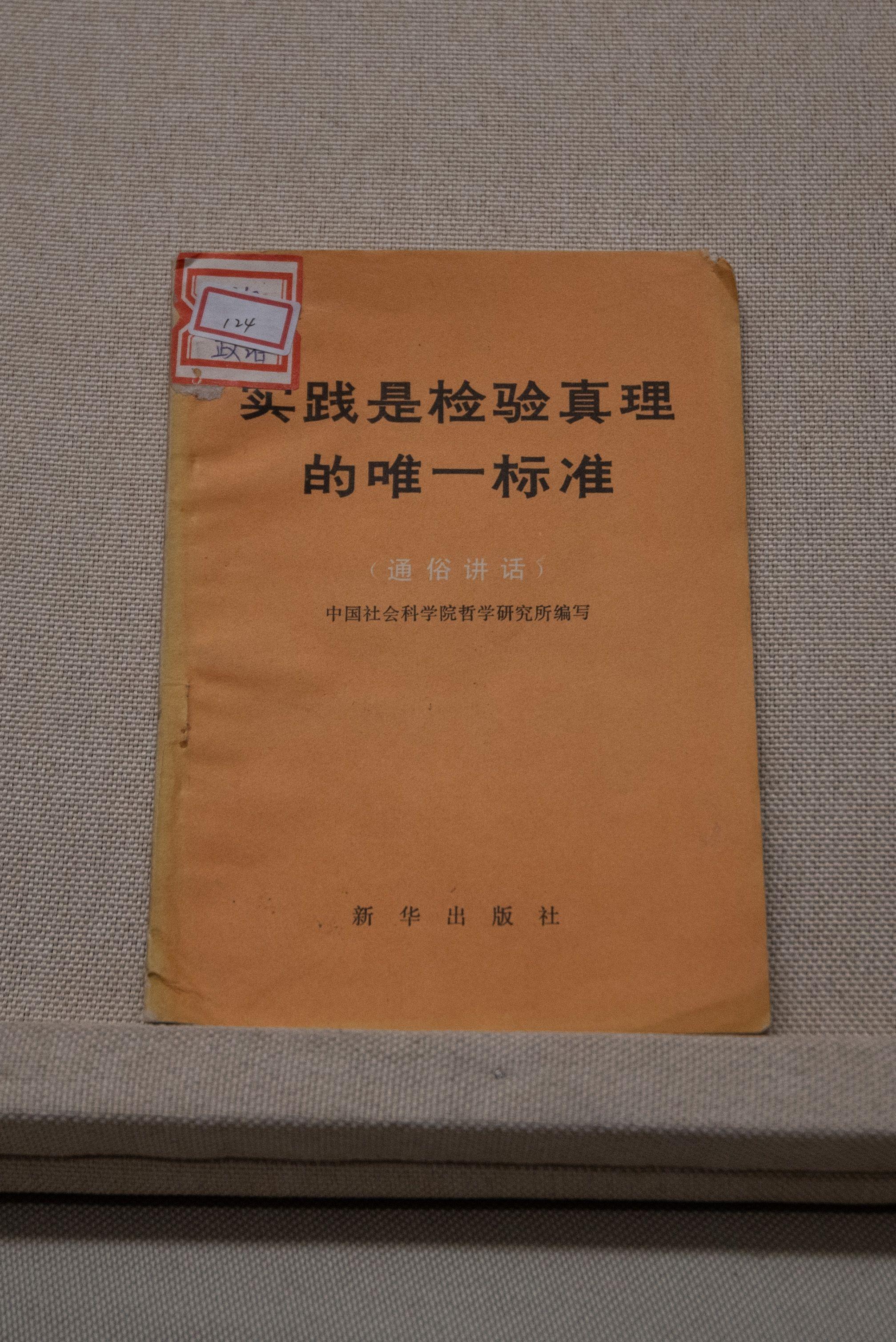
On 11 May 1978 Guangming Daily published “Practice Is the Sole Criterion for Testing Truth” under the byline “special commentator”, a day after it appeared in the Central Party School’s internal journal Theoretical Trends. Drafted by the Nanjing University teacher Hu Fuming, revised by Yang Xiguang, Sun Changjiang, Wu Jiang and others and approved by Hu Yaobang, it targeted the “two whatevers” of 1977 by attacking Lin Biao’s “theory of genius”. Criticised by Wang Dongxing and others, it was publicly endorsed by Deng Xiaoping on 2 June, and the debate spread nationwide. The Third Plenum praised the debate and the 1981 Resolution said Hua Guofeng had suppressed it. Officially it is the ideological forerunner of reform and opening; some scholars argue the standard account exaggerates the differences between Hua and Deng.
Background: The “Two Whatevers”
After the arrest of the “Gang of Four” in October 1976, Hua Guofeng became Party chairman. On 7 February 1977 People’s Daily, Liberation Army Daily and Red Flag jointly published the editorial “Study the Documents Well and Grasp the Key Link”, which set out what became known as the “two whatevers”: “we will resolutely uphold whatever policy decisions Chairman Mao made and unswervingly follow whatever instructions Chairman Mao gave.” According to a 2019 Guangming Daily article, once the “two whatevers” appeared, setting things right became almost impossible.
Writing and Publication
Hu Fuming, a teacher in the politics department of Nanjing University, told China Economic Weekly that he saw the “two whatevers” as the main obstacle to setting things right but could not attack them directly, so he used Lin Biao’s “theory of genius” and “every sentence is truth” as a stand-in, criticising idealist apriorism with the Marxist theory of practice. In summer 1977 he drafted “Practice Is the Criterion for Testing Truth” and sent it to Wang Qianghua, head of Guangming Daily’s philosophy section. In April 1978 the paper’s new editor-in-chief, Yang Xiguang, moved it from the philosophy page to the front page and organised revisions involving Ma Peiwen, Wang Qianghua and Sun Changjiang and Wu Jiang of the Central Party School; Hu called the article “the product of collective wisdom, not my achievement alone” and said he did not know who added the word “sole” to the title. According to Hu, Yang said Hu Yaobang had charged him with turning the paper from the “two whatevers” to setting things right.
The article was finally approved by Hu Yaobang, then vice-president of the Central Party School. It appeared first on 10 May 1978 in issue 60 of the school’s internal journal Theoretical Trends and on 11 May on the front page of Guangming Daily under the byline “special commentator”, running to more than 6,200 characters. Xinhua distributed it nationwide the same day, and People’s Daily, Liberation Army Daily and many provincial papers reprinted it.
Controversy and Deng Xiaoping’s Intervention
According to Hu Fuming, strong reactions and criticism from the top came almost simultaneously: on the evening of 12 May a former editor-in-chief of People’s Daily and head of Xinhua telephoned the paper’s current editor to say the article was very bad and “cuts down the banner”, and Wang Dongxing, the Party vice-chairman in charge of ideology, criticised Hu Yaobang, Yang Xiguang and Guangming Daily for serious errors and breach of discipline. On 2 June, invited by Luo Ruiqing, Deng Xiaoping spoke at the all-army political work conference in clear support of the debate, stressing that practice is the criterion of truth. The debate then spread across the country.
The Third Plenum and the Official Verdict
The criterion of truth became a major topic at the central work conference of November–December 1978 and the Third Plenum that followed. The 1981 Resolution on Certain Questions in the History of Our Party says Hua Guofeng promoted and was slow to correct the erroneous “two whatevers” and “suppressed the discussion on the criterion of truth unfolded in 1978, which was of great significance in setting things right”; the Third Plenum firmly criticised the erroneous “two whatevers” policy and “highly evaluated the discussion on the criterion of truth”, setting the guiding principle of emancipating the mind and seeking truth from facts. Guangming Daily in 2019 called the article “the first spray of spring” and the ideological forerunner of the historic turning point.
Competing Interpretations
The Australian scholars Frederick C. Teiwes and Warren Sun offered a revision in 2023. They argue that depicting the debate from May 1978 as an intense struggle between “whateverists” and reformers is “not totally amiss” but exaggerated: “the conflict was largely among lower-level figures on the theoretical front who did not deeply engage the top leadership”; Hua and Deng had “nuanced differences” on the question but “nothing fundamental”, and neither wanted ideology to disrupt the economic agenda of the work conference. They also note that at the end of March 1979 Deng responded with his “four cardinal principles” speech demanding adherence to Mao’s pre-Cultural Revolution political practice. They quote Sun Changjiang saying the participants “never expected such a major reaction” and did not foresee the article’s ramifications for Hua’s position, and they describe Sun as “the principal author of the sole criterion of truth article”—a view that differs from the standard account crediting Hu Fuming.
The debate also touched foreign policy. A November 1979 telegram from the US Consulate General in Hong Kong reported a source as saying that under the “practice is the sole criterion of truth” line China could no longer accuse the Soviet Union of revisionism.
Narrative Comparison
| Source | Narrative |
|---|---|
| Resolution on Certain Questions in the History of Our Party (1981); Guangming Daily (2019) | The official CCP account presents the debate as the ideological forerunner that broke through the “two whatevers” and made the historic turning point possible. The 1981 Resolution says Hua Guofeng promoted the “two whatevers” and “suppressed the discussion on the criterion of truth unfolded in 1978, which was of great significance in setting things right”, while the Third Plenum “highly evaluated the discussion on the criterion of truth” and set the principle of emancipating the mind and seeking truth from facts. Official media call the article “the first spray of spring” and the ideological forerunner of the historic turning point. |
| Recollections of principal author Hu Fuming (China Economic Weekly interview, 2018) | Hu Fuming says his aim from the outset was to criticise the “two whatevers” as the main obstacle to setting things right, though he could only do so obliquely by attacking Lin Biao’s “theory of genius”. He stresses that the article was revised many times by Yang Xiguang, Wang Qianghua, Sun Changjiang, Wu Jiang and others and finally approved by Hu Yaobang—“the product of collective wisdom, not my achievement alone”. He recalls the criticism from the top that followed publication and that the debate could proceed only after Deng Xiaoping publicly backed it on 2 June. |
| Frederick C. Teiwes and Warren Sun (University of Sydney China Studies Centre Working Paper, 2023) | Teiwes and Sun argue that “Nowhere is this period more misunderstood than in the area of ideology and its notional centrality to an imagined Hua-Deng power struggle.” The picture of an intense struggle between “whateverists” and reformers exaggerates matters: the conflict was largely among lower-level theorists, and Hua and Deng had “nuanced differences” but “nothing fundamental”. The criterion position was officially accepted at the work conference, but leaders—Deng most prominently—urged caution over Mao’s prestige, and in March 1979 Deng put forward the “four cardinal principles”. They also note that Deng’s return to high office had been decided in early January 1977. |
Key Milestones
- The “two whatevers” editorial
The joint editorial “Study the Documents Well and Grasp the Key Link” sets out the “two whatevers”.
- First published in Theoretical Trends
The article appears in issue 60 of the Central Party School journal Theoretical Trends.
- Published in Guangming Daily
The article appears on the front page of Guangming Daily under the byline “special commentator”; Xinhua distributes it.
- Reprints and criticism
People’s Daily and Liberation Army Daily reprint it; that evening a caller tells People’s Daily it “cuts down the banner”.
- Deng’s speech to the army conference
Deng Xiaoping speaks in support of the debate at the all-army political work conference.
- Third Plenum
The plenum highly evaluates the debate and adopts the principle of emancipating the mind and seeking truth from facts.
- Deng’s “four cardinal principles”
According to Teiwes and Sun, Deng responds to ideological ferment with his “four cardinal principles” speech.
- 1981 Resolution
The Sixth Plenum’s resolution states that Hua Guofeng suppressed the debate.
Last verified:
Cite this page
Chronicles of Modern China. (2026, November 11). Debate on the Criterion of Truth (1978). Retrieved November 11, 2026, from https://www.cmcarchive.org/events/truth-criterion-debate-1978
“Debate on the Criterion of Truth (1978).” Chronicles of Modern China. Last modified November 11, 2026. Accessed November 11, 2026. https://www.cmcarchive.org/events/truth-criterion-debate-1978.
Chronicles of Modern China. Debate on the Criterion of Truth (1978)[EB/OL]. (2026-11-11)[2026-11-11]. https://www.cmcarchive.org/events/truth-criterion-debate-1978.