Shanghai Lockdown
In spring 2022, as the Omicron variant spread through Shanghai, the city was locked down in stages divided by the Huangpu River from 28 March, moving to a citywide lockdown in early April that lasted about two months until normal life was fully restored on 1 June. Food shortages and difficulties obtaining medical care caused widespread discontent, while the central leadership reaffirmed its "dynamic zero-COVID" policy. Shanghai's GDP fell 13.7% year on year in the second quarter.
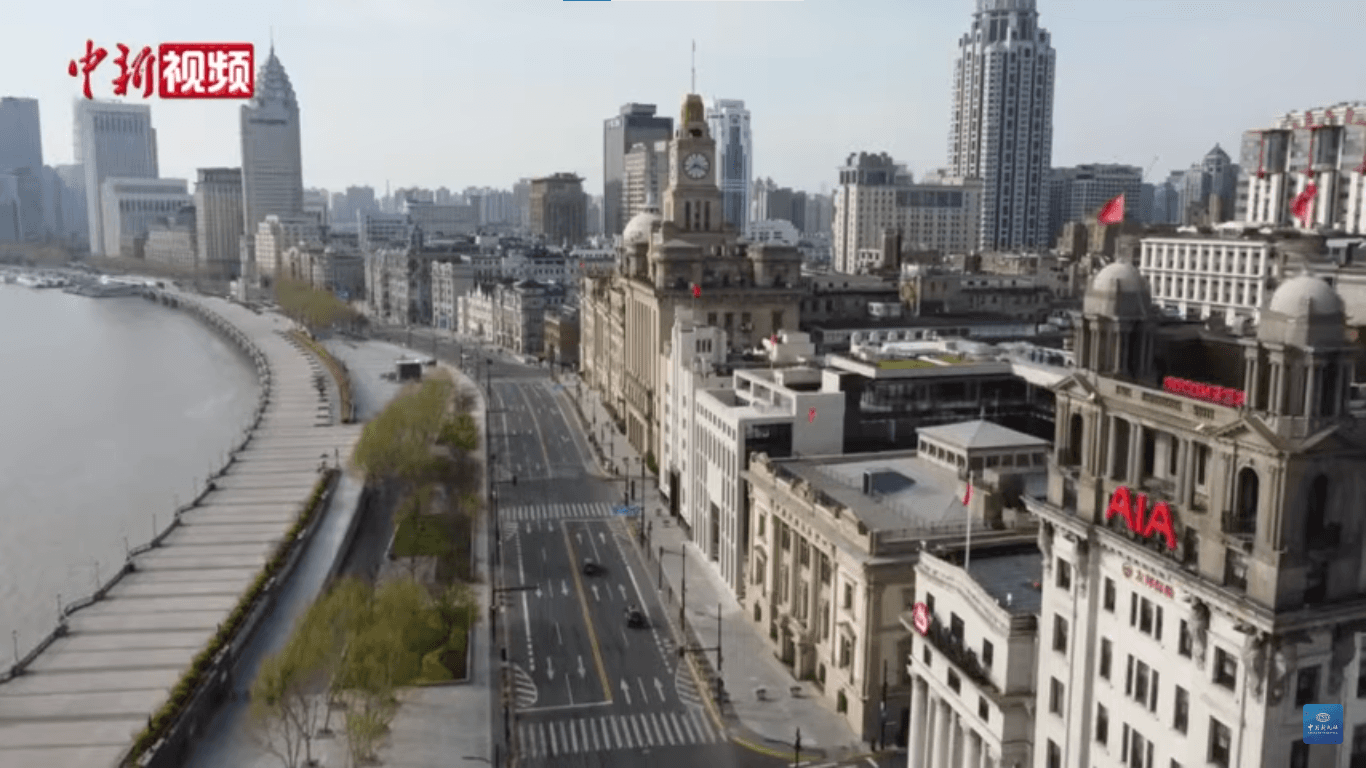
Background: "Precision Prevention" Meets Omicron
In March 2022 the highly transmissible Omicron BA.2 variant spread through communities in Shanghai. The city had been known for "precision prevention and control", generally avoiding citywide PCR testing and sweeping lockdowns; according to research by University of Chicago political scientist Dali L. Yang, in mid-March Shanghai officials and experts were still saying that a lockdown was not an option given the city's role in China's economic and social development. As infections rose rapidly, the control measures were steadily escalated.
From Staged Lockdowns to a Citywide Lockdown
On the evening of 27 March, Shanghai announced PCR screening and lockdowns in two stages divided by the Huangpu River: Pudong, Punan and adjacent areas would be locked down from 5 a.m. on 28 March and released on 1 April, and Puxi locked down from 1 April and released on 5 April. Metro and bus services in the locked-down areas stopped and residential compounds were sealed. According to Yang, on the evening of 30 March Shanghai Party Secretary Li Qiang convened an all-city cadre meeting, admitted inadequacies in the city's work, understanding and preparation and that some control measures had not been properly implemented, and announced comprehensive measures for all areas and all people, including static management and PCR screening — in effect a citywide lockdown. On 2 April Vice Premier Sun Chunlan arrived in Shanghai to oversee epidemic control. After completing a new round of citywide PCR sampling on 4 April, the authorities announced that the whole city would remain under lockdown until testing, transfers and related work were finished, with residents strictly confined to their homes except to seek medical care; the lockdown went on to last about two months.
Life Under Lockdown
The lockdown came suddenly, and many residents had no time to stock up on food. Delivery and logistics services broke down across much of the city, buying groceries became a widespread problem, and compound-level "group buying" became the main way many households obtained food. Deputy Mayor Chen Tong acknowledged that getting supplies the "last 100 meters" to households was a major challenge. Difficulties obtaining medical care, the centralised quarantine of infected people and close contacts, conditions in makeshift hospitals and in-home disinfection also caused discontent. On 22 April "The Voice of April", a video of under six minutes compiling audio recordings of the Shanghai outbreak from early April, spread widely on Chinese social media and was promptly deleted across the internet.
According to official figures cited by Yang, Covid-related deaths in Shanghai stood at 595 as of 11 June 2022, most of them unvaccinated elderly people with underlying conditions; the Shanghai authorities did not announce the first Covid deaths until 18 April. Volunteers separately compiled a list of more than 200 people who had died at least partly because they were denied timely medical care.
Central Leadership's Position and Reopening
On 5 May Xi Jinping chaired a meeting of the CCP Politburo Standing Committee, which declared that "we won the battle to defend Wuhan, and we will certainly win the battle to defend Greater Shanghai", called for unswerving adherence to the general policy of "dynamic zero-COVID", and demanded a resolute struggle "against all words and deeds that distort, doubt or deny our country's epidemic prevention policies". Shanghai subsequently brought community transmission to zero step by step. On 31 May it announced that from 1 June it would enter the stage of fully restoring normal order of production and daily life, with buses and the metro resuming service.
Economic Toll and Aftermath
The lockdown dealt a heavy blow to the economy: according to the Shanghai Statistics Bureau, Shanghai's GDP fell 13.7% year on year in the second quarter of 2022. Yang argues that the Shanghai lockdown marked the plateau of China's zero-Covid campaign, revealing the limits of "precision prevention" against Omicron and the vast costs of zero-Covid. In December that year China drastically relaxed its control measures, ending the zero-Covid policy.
Gallery
Narrative Comparison
| Source | Narrative |
|---|---|
| Chinese official position (CCP Politburo Standing Committee, Shanghai government) | Since March the country had withstood its most severe epidemic-control test since the battle to defend Wuhan. With a large and ageing population and insufficient medical resources, relaxing controls would inevitably cause mass infection and many severe cases and deaths, so the general policy of "dynamic zero-COVID" had to be upheld unswervingly; having won the battle for Wuhan, China would certainly win the battle for Greater Shanghai, and it would resolutely struggle against all words and deeds that distorted, doubted or denied its epidemic policies. Shanghai adhered to dynamic zero-COVID, resolutely curbed the spread of the epidemic to protect people's lives and health, and restored normal order in stages after community transmission was eliminated. |
| Western academic research (Dali L. Yang, University of Chicago) | Yang argues that Shanghai had sought a gentler path of "precision prevention and control" and ruled out a lockdown because of the city's economic importance, but under pressure from the national leadership it was effectively forced into a citywide lockdown, with Vice Premier Sun Chunlan overseeing the effort. The lockdown exposed the severe limits of precision control against Omicron; residents caught unprepared faced acute shortages of food, necessities and emergency medical care, and grassroots organisations were overwhelmed. In his view, the two-month lockdown marked the plateau of the zero-Covid campaign, combined the worst features of mitigation and zero-Covid containment, caused much unnecessary misery and badly damaged the credibility of the Shanghai authorities. |
| Eyewitnesses (Shanghai residents, as reported by AP) | During the lockdown residents went online first thing every morning to try to buy food. One said: "We read on the news there is (food), but we just can't buy it. As soon as you go to the grocery shopping app, it says today's orders are filled." Another resident, surnamed Chen, joined a neighbourhood buying club with a minimum order of 3,000 yuan that required pooling with neighbours: "Everyone is organizing to order food, because we can't count on the government to send it to us. They're not reliable." |
Key Milestones
- Pudong and adjacent areas locked down first
Under the announcement of 27 March, Pudong, Punan and adjacent areas were locked down from 5 a.m. on 28 March for PCR screening, with metro and bus services suspended.
- Puxi locked down
Lockdown began in Puxi, originally scheduled to end on 5 April.
- Sun Chunlan arrives to oversee control
Vice Premier Sun Chunlan arrived in Shanghai from Jilin to oversee epidemic control.
- Citywide lockdown continues
After a new round of citywide PCR sampling, officials announced that the whole city would remain locked down, with residents strictly confined to their homes, until related work was completed.
- "The Voice of April" deleted
"The Voice of April", a short video compiling audio recordings from the lockdown, spread widely on social media and was promptly deleted across the internet.
- Politburo Standing Committee reaffirms "dynamic zero-COVID"
Xi Jinping chaired a Politburo Standing Committee meeting that vowed to "win the battle to defend Greater Shanghai" and to struggle against words and deeds that distort, doubt or deny China's epidemic policies.
- Normal life fully restored
Shanghai entered the stage of fully restoring normal order of production and daily life, with buses and the metro resuming service.
- Q2 GDP down 13.7%
The Shanghai Statistics Bureau reported that Shanghai's second-quarter GDP fell 13.7% year on year.
Last verified:
Cite this page
Chronicles of Modern China. (2026, November 2). Shanghai Lockdown. Retrieved November 2, 2026, from https://www.cmcarchive.org/events/shanghai-lockdown-2022
“Shanghai Lockdown.” Chronicles of Modern China. Last modified November 2, 2026. Accessed November 2, 2026. https://www.cmcarchive.org/events/shanghai-lockdown-2022.
Chronicles of Modern China. Shanghai Lockdown[EB/OL]. (2026-11-02)[2026-11-02]. https://www.cmcarchive.org/events/shanghai-lockdown-2022.