Reduction of One Million Troops (1985–1987)
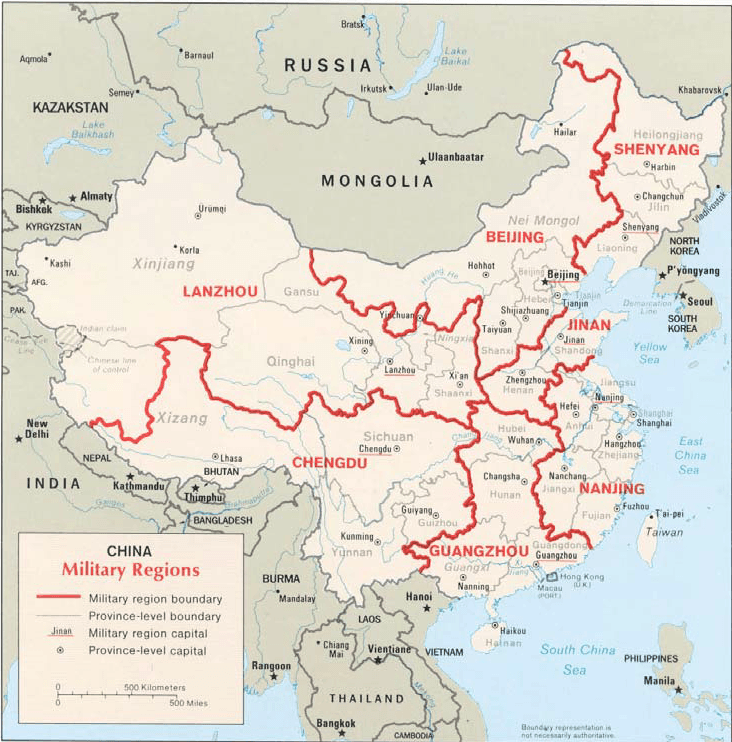
At an enlarged meeting of the Central Military Commission in Beijing from 23 May to 6 June 1985, CMC Chairman Deng Xiaoping announced on 4 June that the People’s Liberation Army would be cut by one million men, and the meeting shifted army building from war readiness to peacetime construction. The eleven military regions were merged into seven, headquarters organs were cut by nearly half and large numbers of officers were converted to civilian posts or demobilized. In April 1987 China announced the reduction basically complete, with strength down from 4.238 to 3.235 million; according to a 1995 white paper, 1.039 million had been cut by 1990. Beijing presents it as a strategic shift in army building and a contribution to world peace; a 1986 CIA assessment saw it also as a cost-cutting measure that met resistance and whose results may have been overstated; a US study notes that budget cuts pushed the military into business and corruption.
Background: A Shift in the Guiding Thought for Army Building
After the Third Plenum of the CCP’s Eleventh Central Committee, China shifted its focus to economic construction. According to Xinhua’s “A Hundred Moments for a Hundred Years” series, the military strategic guideline in this period was changed from “active defence, luring the enemy in deep” to “active defence”. Between 1982 and 1984 the PLA had already gone through a round of streamlining and restructuring: according to Xinhua, the Railway Corps was transferred wholesale to the Ministry of Railways in 1982, and the People’s Armed Police was established in April 1983. A 1995 white paper of the State Council Information Office describes this stage as the prelude to the large-scale unilateral disarmament of the 1980s and says that the 1980s “saw marked improvement in China’s security environment.”
An overstaffed command structure was one of the immediate reasons for the cut. Zhang Baozhong, who worked with Deng Xiaoping for many years, cites a 1980s survey by a UN expert group giving officer-to-soldier ratios of 1:4.56 in the Soviet Union, 1:6.15 in the United States, 1:10 in West Germany and 1:17 in France, against 1:2.45 in China. China’s published pre-reduction strength was 4.238 million; a 1986 CIA assessment estimated the PLA at roughly 5.2 million before the demobilization order.
The 1985 Enlarged Meeting of the Military Commission
According to Xinhua, the Central Military Commission held an enlarged meeting in Beijing from 23 May to 6 June 1985. On 4 June its chairman, Deng Xiaoping, announced that the PLA would be reduced by one million men, saying that this “bears witness to the strength and confidence of the Chinese Communist Party, the Chinese government and the Chinese people” and that “reducing the army by one million men will not weaken but enhance its combat effectiveness.” The hard part, he noted, would be finding jobs for several hundred thousand demobilized cadres, a problem Yang Shangkun had raised in the group discussion. The white paper dates the announcement to May 1985.
Most of the speech dealt with “two important changes” in China’s assessment of the international situation and its foreign policy: the judgement that “it is possible that there will be no large-scale war for a fairly long time to come,” replacing the view that war was imminent; and abandonment of the strategic “line stretching from Japan to Europe to the United States” directed against Soviet hegemonism. Deng said: “Only when we have a good economic foundation will it be possible for us to modernize the army’s equipment. So we must wait patiently for a few years.” According to Xinhua, the meeting moved army work from readiness for war “early, on a large scale and with nuclear weapons” onto the track of peacetime construction, and adopted a plan for structural reform, streamlining and reorganisation.
Zhang Baozhong recalls that Deng opened by referring to the 1984 National Day parade, saying that “an eighty-year-old reviewing the troops is itself a flaw”; criticising enormous headquarters organs, he said that rather than “crack troops” the army had “crack officers”, and added: “This is a job that offends people! Let me be the one to offend them! I won’t leave this problem to the next CMC chairman.”
Implementation: Merging Military Regions and Cutting Headquarters
According to an article by editors of China Military Online, on 14 June 1985 the Central Military Commission ordered the merger of the military regions, abolishing the Fuzhou, Wuhan, Kunming and Urumqi regions and reorganising the original eleven into seven: Shenyang, Beijing, Jinan, Nanjing, Guangzhou, Chengdu and Lanzhou. From the second half of 1985 the reduction proceeded from the top down, first in headquarters organs and then in troops, academies and support units. Xinhua says the organs of the three general departments and the military regions were cut by nearly half. On the number of units abolished, Zhang Baozhong’s book gives 31 units at corps level and above and 4,054 at division and regiment level; the white paper gives more than 5,900 units above regimental level.
The white paper also lists the conversion of most active-duty officers in research, engineering, education, the arts and health to civilian positions within the army; the removal from service of some 10,000 artillery pieces, over 1,100 tanks, about 2,500 aircraft and over 610 naval vessels; and the opening of 101 military airports and 29 military harbours to the public. A chapter by Daniel Gearin, a US Department of Defense official, in a 2019 volume from the National Defense University Press says the reforms disestablished 11 group armies and halved the personnel of the general departments, while the navy, air force and Second Artillery grew in personnel and budget.
A CIA intelligence assessment of July 1986 cited the Chinese press as saying that half of the million to be demobilized would be officers and that the General Logistics Department would be cut by 50 percent. It judged that Deng, “though he has many motives for the demobilization, probably concluded that the policy would be more palatable to the PLA if presented as driven by a need to economize”; that the plan “also is meeting some resistance,” with former military region commanders reported to have used their influence to block major cuts in their regions; and that the PLA “has not been as successful as it claims in reducing its strength,” the announced figure of 4.2 million “may, in fact, be a target and not yet reality.”
Completion and Differing Assessments
On 4 April 1987 Deputy Chief of the General Staff Xu Xin told the Fifth Session of the Sixth National People’s Congress that the reduction of one million was basically complete, with total strength down from 4.238 million to 3.235 million. Gearin writes that almost half of the goal had been reached by December 1986 and the reduction was basically completed by April 1987, a 25 percent cut in overall strength drawn mostly from the ground forces. The white paper says that further cuts brought the PLA to 3.199 million by 1990, a total reduction of 1.039 million, or 24.5 percent of its original strength. In 1988 the PLA introduced a new system of military ranks and a civilian cadre system.
Interpretations differ in emphasis. Official Chinese accounts present the cut as a strategic shift in the guiding thought for army building and a contribution to world peace; the white paper says it “stood in sharp contrast to the arms race pursued by the two major military blocs” and was “a major contribution towards promoting the process of the international arms control and disarmament.” The CIA assessment placed it under cost cutting, one of three goals of Deng’s military reform, while noting its political and professionalization implications. Gearin argues that the reduction was largely a response to changes in threat perceptions and the domestic situation, and that as budgets were slashed the military moved into commerce, creating what became known as “PLA, Incorporated”, an unintended consequence through which corruption spread within the armed forces.
Narrative Comparison
| Source | Narrative |
|---|---|
| Deng Xiaoping, speech to the enlarged CMC meeting (1985); State Council Information Office white paper “China: Arms Control and Disarmament” (1995); Xinhua, “A Hundred Moments for a Hundred Years” (2021) | Official accounts present the reduction as a strategic shift in the guiding thought for army building: having judged that a large-scale world war could be avoided for a long time, the army moved from readiness for war “early, on a large scale and with nuclear weapons” to peacetime construction, subordinate to economic development and pursuing fewer but better troops. Deng called the cut a sign of “the strength and confidence of the Chinese Communist Party, the Chinese government and the Chinese people” that would “not weaken but enhance its combat effectiveness.” The 1995 white paper calls it “the most representative of China’s many unilateral moves to disarmament”, contrasts it with the superpower arms race and states that 1.039 million were actually cut, “overshooting the declared target”. |
| CIA Intelligence Assessment, “China: Forging Ahead With Military Reform” (July 1986) | The CIA placed the cut within the three goals of Deng’s military reform—depoliticization, professionalization and cost cutting—seeing it as “an important cost-cutting measure” with significant political and professional implications, and judged that Deng “probably concluded that the policy would be more palatable to the PLA if presented as driven by a need to economize.” It estimated pre-reduction strength at roughly 5.2 million and was sceptical about implementation: the plan “also is meeting some resistance,” former regional commanders were blocking cuts, and the PLA “has not been as successful as it claims in reducing its strength.” |
| Daniel Gearin, ch. 9 of Chairman Xi Remakes the PLA (NDU Press, 2019) | Gearin treats 1985 as the PLA’s eighth round of force reductions, driven largely by “changes in China’s threat perceptions and domestic situation”, reflected in dropping “lure the enemy in deep” from the strategic guideline; with economic development the top priority, the military was seen as “too large, too expensive”, wasting manpower that could fuel growth. He notes that the cuts fell mostly on the ground forces and general departments while the navy, air force and Second Artillery grew, and that as budgets were slashed the military moved into commerce, creating “PLA, Incorporated”, an unintended consequence that spread corruption for years afterwards. |
| Zhang Baozhong, Forty Years with Deng Xiaoping (excerpted in China Economic Weekly, 2018) | Zhang Baozhong, present at the meeting, recalls Deng opening with the 1984 National Day parade—“an eighty-year-old reviewing the troops is itself a flaw”—and stresses that the cut targeted bloated headquarters: companies were understrength while organs at every level were enormous, and China’s officer-to-soldier ratio of 1:2.45 was far higher than in other military powers. Deng, he writes, said the army had “crack officers” rather than “crack troops” and took on himself the task of offending people: “I won’t leave this problem to the next CMC chairman.” |
Key Milestones
- Enlarged CMC meeting opens
The Central Military Commission opens an enlarged meeting in Beijing, lasting until 6 June.
- Deng announces the one-million cut
Deng Xiaoping announces that the PLA will be reduced by one million men.
- Military regions merged
The CMC orders the abolition of the Fuzhou, Wuhan, Kunming and Urumqi regions, reducing eleven military regions to seven.
- CIA assessment
A CIA assessment reports some resistance and suggests the announced strength may be a target rather than reality.
- Nearly half completed
According to an NDU Press study, almost half of the demobilization goal has been reached.
- Completion announced
Deputy Chief of the General Staff Xu Xin announces the reduction basically complete, with strength down from 4.238 to 3.235 million.
- New rank system introduced
The PLA introduces a new system of military ranks and a civilian cadre system.
- Strength falls to 3.199 million
According to the 1995 white paper, PLA strength falls to 3.199 million, a total cut of 1.039 million.
Last verified:
Cite this page
Chronicles of Modern China. (2026, November 11). Reduction of One Million Troops (1985–1987). Retrieved November 11, 2026, from https://www.cmcarchive.org/events/reduction-of-one-million-troops-1985
“Reduction of One Million Troops (1985–1987).” Chronicles of Modern China. Last modified November 11, 2026. Accessed November 11, 2026. https://www.cmcarchive.org/events/reduction-of-one-million-troops-1985.
Chronicles of Modern China. Reduction of One Million Troops (1985–1987)[EB/OL]. (2026-11-11)[2026-11-11]. https://www.cmcarchive.org/events/reduction-of-one-million-troops-1985.