The Qiandao Lake Incident (1994)
On 31 March 1994 three local men robbed and set fire to the pleasure boat Hairui on Qiandao Lake in Zhejiang, killing all aboard: 24 Taiwanese tourists and eight mainland crew and guides. The Zhejiang authorities at first called it an accidental fire, barred Taiwan’s Straits Exchange Foundation and Taiwanese reporters, and cremated the bodies over the families’ objections, announcing only on 17 April that it was a case of robbery, arson and murder. Taiwan suspended tourism and cultural and academic exchanges, and Lee Teng-hui likened the mainland’s conduct to that of bandits. In June the Hangzhou court sentenced Wu Lihong, Hu Zhihan and Yu Aijun to death and they were executed. The incident set back cross-Strait relations and prompted Beijing’s first joint central notice on reporting emergencies that August.
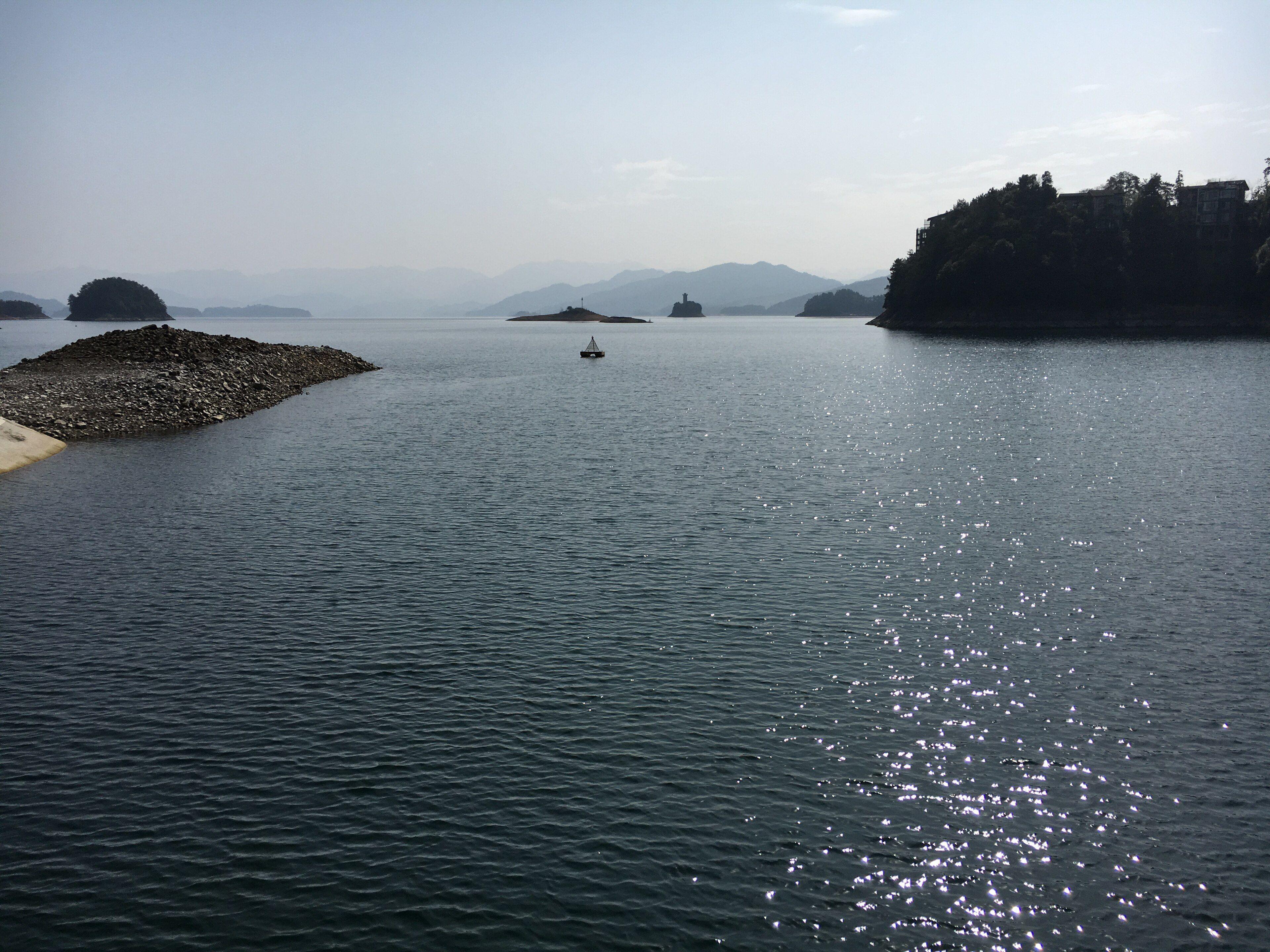
The 32 People Aboard the Hairui
On 31 March 1994 a Taiwanese tour group of 24 boarded the pleasure boat Hairui at Shendu pier after visiting Huangshan in Anhui, for a cruise across Qiandao Lake in Chun’an county, Zhejiang, due to land that evening. Besides the 24 tourists, the boat carried six crew and two mainland guides — 32 people in all. According to Ma Guangwu, then head of the Zhejiang Provincial Taiwan Affairs Office, the next morning the Chun’an public security bureau received a report of a burning boat on the lake: the Hairui. Its decks and cabins were empty; only when firefighters dived into the flooded hold were all 32 bodies found there.
An “Accident” and a News Blackout
The Zhejiang authorities at first treated the deaths as an accidental fire. According to the British newspaper The Independent, a Zhejiang official said initial investigations pointed to an explosion, that the victims had died of fire or drowning, that there was no evidence of robbery and “no abnormal wounds”; ARATS, the mainland’s cross-Strait body, called the fire “merely a sudden accident”. Taiwan’s Straits Exchange Foundation (SEF) asked to send someone to help the families and was refused, and Taiwanese reporters were barred. Taiwan Panorama’s day-by-day record, published in May 1994, reports that relatives found marks on the boat that looked like bullet holes, which officials called bolt holes, that autopsies were carried out without notifying the families, and that requests to photograph the boat and the bodies as evidence were refused.
Ma Guangwu’s account is that photographs were refused because the scene was too terrible and pictures would hurt the families further. Late on 4 April the two sides agreed on cremation on the spot and compensation of 135,000 yuan per victim. He concedes that the mainland side released information “in the usual mainland way, not fully or promptly”. According to a 2012 retrospective by People’s Daily Online, the Xinhua reporter Wan Runlong returned to Hangzhou on 4 April and wrote an internal report titled “Imposing a News Blackout on the ‘3·31 Incident’ at Qiandao Lake Has Backfired”; Jiang Zemin wrote instructions on it, and “only then was the blackout lifted”.
Taiwan’s Response
According to Ma Guangwu, on 9 April Taiwan’s President Lee Teng-hui told a training session: “So many Taiwanese died, and the mainland authorities dismissed it in a few words — this is how ‘bandits’ behave.” Taiwan Panorama records that Premier Lien Chan told the cabinet the mainland’s handling showed disregard for human rights and human life. The Mainland Affairs Council ordered the travel industry to stop advertising mainland tours and accept no new groups, then suspended visits by mainland performing troupes and all academic and cultural exchanges; Taiwan’s tourism authorities suspended all tours to the mainland from 1 May. Taiwanese had made some 1.5 million visits to the mainland in 1993. A Gallup Taiwan poll found support for Taiwan independence had risen to 27%, the highest since such polling began.
Arrests and Trial
On 17 April the Zhejiang public security authorities announced that the Hairui disaster was “an exceptionally serious case of robbery, arson and murder” and that three suspects had been arrested. In Ma Guangwu’s account, Wu Lihong, who ran an unlicensed motorboat service, and Hu Zhihan and Yu Aijun followed the Hairui by motorboat on the evening of 31 March, boarded it masked at about 6.30 p.m. with hunting guns and an axe, robbed the passengers, drove crew, guides and tourists into the hold, then threw in explosives and poured in petrol to set it alight. Zhejiang prosecutors approved their arrest on 19 April. On 12 June the Hangzhou Intermediate People’s Court sentenced all three to death for robbery and intentional homicide, and they were executed in June.
According to the People’s Daily Online retrospective, the People’s Daily article “The Qiandao Lake Incident from Beginning to End” of 20 June 1994 showed that the local government had known from the start that this was not a “fire accident” but a major criminal case; the article also acknowledged that the two sides of the Strait differ in how they view and handle such matters, and that misunderstandings arising from this are bound to exist.
Aftermath in Cross-Strait Relations
On 8 May SEF deputy secretary-general Hsu Hui-yu brought forensic and investigative experts, lawyers and seven relatives of the victims to Hangzhou for a briefing on the case and a visit to the lake; Ma Guangwu recalls they raised 108 questions. On 16 May Taiwan’s travel industry ended its boycott of mainland travel, and other suspended exchanges gradually resumed. In August the General Offices of the CCP Central Committee and the State Council issued a Notice on External Reporting of Domestic Emergencies, the first joint notice of its kind since 1949. That month ARATS vice-chairman Tang Shubei went to Taipei for talks with the SEF, the highest-ranking mainland official to visit Taiwan up to that time; The Christian Science Monitor cited analysts who linked Beijing’s concessions in the talks to a wish to quiet anti-mainland sentiment in Taiwan stirred up by the Qiandao Lake incident.
Narrative Comparison
| Source | Narrative |
|---|---|
| People’s Daily Online retrospective (2012); People’s Daily, “The Qiandao Lake Incident from Beginning to End” (20 June 1994, as cited) | Mainland official media describe the incident as “an exceptionally serious case of robbery, arson and murder”, solved by the police in 17 days and severely punished by the courts. The 1994 People’s Daily article attributed the cross-Strait dispute to differences in outlook and practice produced by long separation and different social systems, from which misunderstandings were “bound to exist”. The 2012 People’s Daily Online retrospective states plainly that a news blackout was imposed, causing “irreparable political losses”, and presents the 1994 central notice on reporting emergencies and the 2007 Emergency Response Law as later improvements. |
| Taiwan Panorama, “Smoke Screen--The Qiandao Lake Tragedy and Coverup” (May 1994) | Taiwanese accounts centre on a cover-up: the mainland authorities obstructed the families and Taiwanese reporters, insisted for weeks that it was an accident, performed autopsies without telling the families, refused to let evidence be photographed and cremated the bodies against the relatives’ wishes. Even after the arrests the families raised “six doubtful points”, asking how three men could overpower 32 people and what became of the luggage and travel documents. Taipei responded by suspending tourism, cultural and academic exchanges and investment approvals, and Premier Lien Chan accused Beijing of disregard for human rights. |
| Ma Guangwu, then head of the Zhejiang Provincial Taiwan Affairs Office, oral account (2010) | Ma Guangwu, who handled the aftermath, concedes that the mainland side “had no experience” in handling emergencies or disclosing information and did not report fully or promptly, letting Hong Kong and Taiwanese media set the narrative; but he says photographs were refused to spare the families, that compensation of 135,000 yuan was unprecedented on the mainland, and that some of the “charges” made in Taiwan were misunderstandings. In his view a few people in Taiwan exploited the case, “turning a simple criminal case into a political incident”, which became a turning point for the independence movement. |
Key Milestones
- The Hairui robbed and burned
24 Taiwanese tourists and 8 mainland crew and guides are killed.
- 32 bodies found in the hold
Firefighters find the victims in the flooded hold.
- Cremation agreed; internal report on the blackout
Compensation of 135,000 yuan per victim agreed; Wan Runlong writes his internal report.
- Lee Teng-hui condemns the mainland
Lee likens the mainland’s conduct to that of bandits; the families leave Hangzhou.
- Zhejiang announces arrests
Police announce a case of robbery, arson and murder and three arrests.
- Arrests approved
Prosecutors approve the arrest of Wu Lihong, Hu Zhihan and Yu Aijun.
- Taiwan suspends mainland tours
Taiwan’s suspension of group tours to the mainland takes effect.
- SEF delegation in Hangzhou
Hsu Hui-yu leads experts and relatives to a briefing and the scene.
- Taiwan travel boycott lifted
Taiwan’s travel industry ends its boycott.
- Death sentences
The Hangzhou Intermediate People’s Court sentences the three to death.
- People’s Daily account
The article says officials knew from the start it was a criminal case.
- Reporting notice; Tang Shubei in Taipei
The first joint central notice on reporting emergencies; ARATS–SEF talks in Taipei.
Last verified:
Cite this page
Chronicles of Modern China. (2026, November 15). The Qiandao Lake Incident (1994). Retrieved November 15, 2026, from https://www.cmcarchive.org/events/qiandao-lake-incident-1994
“The Qiandao Lake Incident (1994).” Chronicles of Modern China. Last modified November 15, 2026. Accessed November 15, 2026. https://www.cmcarchive.org/events/qiandao-lake-incident-1994.
Chronicles of Modern China. The Qiandao Lake Incident (1994)[EB/OL]. (2026-11-15)[2026-11-15]. https://www.cmcarchive.org/events/qiandao-lake-incident-1994.