The Meng Wanzhou Affair
On 1 December 2018 Huawei’s chief financial officer, Meng Wanzhou, was arrested by Canadian police while changing planes in Vancouver, on a US extradition request. In January 2019 the US Justice Department charged Huawei and Meng, alleging she had deceived a bank about Huawei’s relationship with Skycom, a company operating in Iran. China called the case “political persecution” of a Chinese citizen and demanded her release. On 10 December two Canadians, Michael Kovrig and Michael Spavor, were detained by Chinese state security; China said they were suspected of endangering national security, while Canada called the detentions arbitrary and retaliatory. Meng spent nearly three years on bail in Vancouver, and in 2020 a Canadian court ruled the double-criminality requirement could be met. On 24 September 2021 she entered a deferred prosecution agreement with the US, the extradition ended and she returned to Shenzhen the next day; Kovrig and Spavor were released and flown home the same day.
Arrest in transit at Vancouver
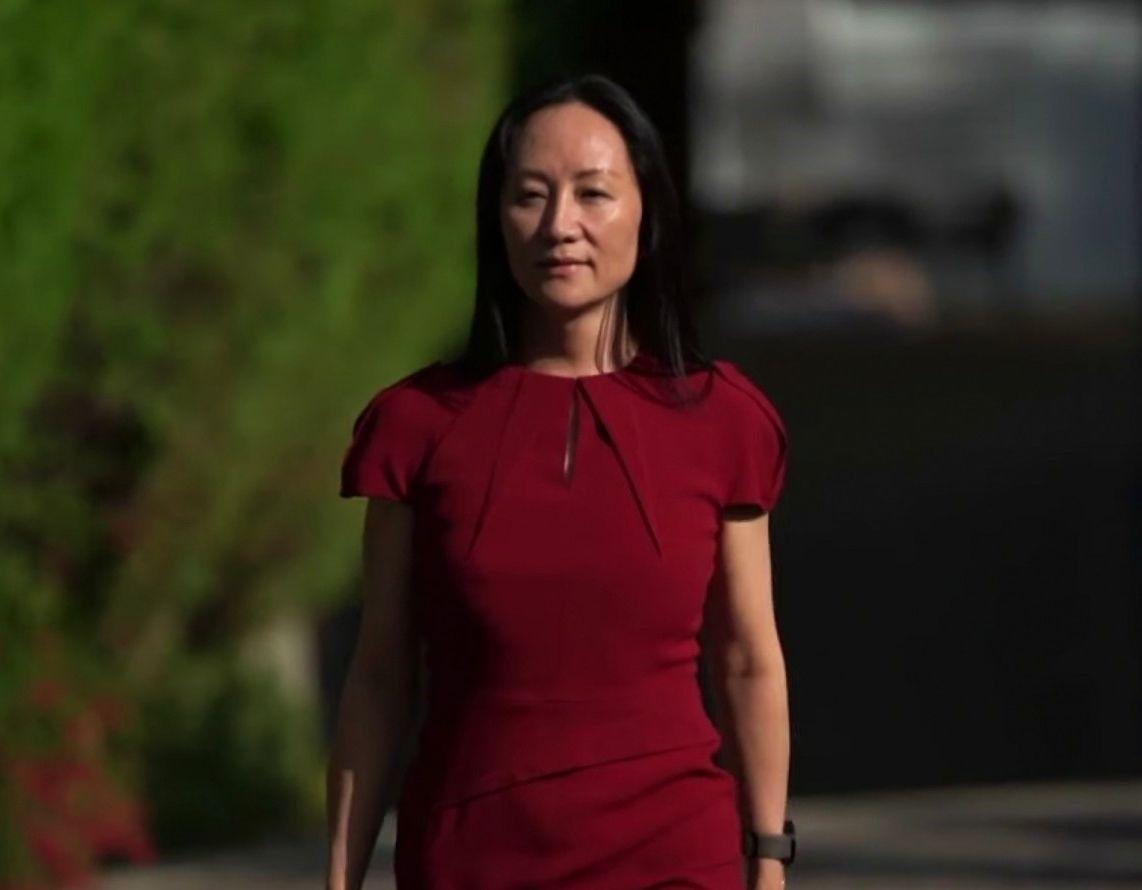
On 1 December 2018 Huawei’s chief financial officer, Meng Wanzhou, landed at Vancouver International Airport from Hong Kong to change planes for Mexico City. After border officers screened her, the Royal Canadian Mounted Police arrested her on a US extradition request. According to The Canadian Encyclopedia, a court in Brooklyn had issued an arrest warrant on 22 August 2018. The same day the Chinese and US leaders met in Buenos Aires. On 11 December Meng was released on C$10 million bail; her passport was seized and she was required to wear a GPS ankle monitor and live at her Vancouver home pending the extradition hearing.
China protested immediately. On 6 December the Foreign Ministry spokesman said China had lodged solemn representations with Canada and the US, demanding that they clarify the grounds for the detention and release her immediately, and said China opposed unilateral sanctions outside the UN Security Council framework. On 8 December Vice Foreign Minister Le Yucheng summoned Canadian Ambassador John McCallum, saying that Canada’s detention of a Chinese citizen in transit at US request was “extremely vile” in nature and that if she were not released there would be “grave consequences.”
US charges and the detention of two Canadians
On 10 December 2018 two Canadians — Michael Kovrig, a former Canadian diplomat then working for the International Crisis Group, and Michael Spavor, a businessman who organised exchanges with North Korea — were placed under compulsory measures by state security authorities in Beijing and Dandong. Foreign Ministry spokesman Lu Kang said on 13 December that both were “suspected of engaging in activities endangering the national security of the People’s Republic of China”; asked whether this was retaliation for Meng’s arrest, he said China had “acted in accordance with laws and regulations.” The Canadian government maintained that the two had been arbitrarily detained in retaliation for Meng’s arrest.
On 28 January 2019 the US Justice Department unsealed an indictment charging Huawei and two affiliates with bank fraud, wire fraud, sanctions violations under the International Emergency Economic Powers Act and conspiracy to commit money laundering, and charging Meng with bank fraud, wire fraud and related conspiracies. The department alleged that Huawei had for years lied to global banks and the US government about its relationship with Skycom, a company operating in Iran, and that in August 2013 Meng “repeatedly lied about the relationship between Huawei and Skycom” in a presentation to a senior banker; it also stated: “The charges in the indictment are merely allegations,” with the defendants presumed innocent. According to The Canadian Encyclopedia, President Donald Trump said he would intervene only if it helped secure a trade deal with China, while Foreign Minister Chrystia Freeland said Canada would act on the rule of law, not a country’s political objectives.
The extradition proceedings
Meng’s lawyers argued that her alleged conduct related only to US sanctions against Iran, which Canada did not have, so the “double criminality” requirement for extradition could not be met. On 27 May 2020 Associate Chief Justice Heather Holmes of the Supreme Court of British Columbia ruled that, although the allegations depended on the effects of US sanctions, those effects could form part of the context, and that “the double criminality requirement for extradition is capable of being met in this case”; Meng’s application was dismissed. The hearings were then slowed by procedural disputes and the pandemic, concluding in August 2021 with the ruling deferred until the autumn.
Relations between China and Canada remained tense. According to The Canadian Encyclopedia, China banned imports of Canadian pork and canola in June 2019. Kovrig and Spavor were tried separately in Beijing and Dandong in March 2021; on 11 August the Dandong Intermediate People’s Court sentenced Spavor to 11 years for espionage and illegally providing state secrets, while Kovrig’s verdict was not announced.
The deferred prosecution agreement and simultaneous releases
In September 2021 Presidents Joe Biden and Xi Jinping discussed the case in a phone call. On 24 September Meng appeared before a federal district court in Brooklyn and entered a deferred prosecution agreement with the Justice Department: she pleaded not guilty but agreed to the accuracy of a four-page statement of facts acknowledging untrue statements she made to an HSBC executive (“Financial Institution 1” in the documents) in 2013; the US agreed to withdraw its extradition request, and the charges would be dropped in December 2022 if she complied. The British Columbia court ended the extradition proceedings the same day, and Meng flew out of Canada on a Chinese government charter, arriving in Shenzhen on the evening of 25 September, where she said: “If faith has a colour, it must be China red!”
The same day Kovrig and Spavor were released on bail and flown back to Canada. Prime Minister Justin Trudeau announced that they had left Chinese airspace, saying they had been through “an unbelievably difficult ordeal” over “the past 1,000 days.” On 27 September Foreign Ministry spokeswoman Hua Chunying said Meng’s case was “completely different in nature” from theirs: the former was “political persecution of a Chinese citizen,” while the two Canadians were suspected of crimes endangering national security, had applied for bail on medical grounds, which the courts approved, and had written confessions in their own hand; on the timing, she said Meng’s detention was a serious mistake that the US and Canada should have corrected long ago.
Aftermath
According to The Canadian Encyclopedia, Canada banned Huawei and ZTE from its 5G networks in May 2022, and in March 2024 Spavor reached a settlement with the federal government. The parties’ characterisations remained sharply different: China called the case US “political persecution” aimed at suppressing Chinese high-tech firms, the US called it a financial fraud case, and Western scholars and the Canadian government described the detention of the two Canadians as “hostage diplomacy” or arbitrary detention (see the narrative comparison below).
Gallery
Narrative Comparison
| Source | Narrative |
|---|---|
| Foreign Ministry spokespersons Geng Shuang (6 Dec 2018), Lu Kang (13 Dec 2018) and Hua Chunying (27 Sep 2021); Vice Foreign Minister Le Yucheng (8 Dec 2018); China Discipline Inspection and Supervision News (Sep 2021) | The Chinese government held that Canada, acting at US request, had detained a Chinese citizen in transit, seriously violating her lawful rights, and that this was “extremely vile” in nature; China opposed unilateral sanctions outside the Security Council framework. The Meng incident was “political persecution of a Chinese citizen aimed at suppressing China’s high-tech companies”; the Party’s discipline-inspection newspaper called its essence “an American attempt to obstruct or even interrupt China’s development” and her return “a major victory for the Chinese people.” As for Kovrig and Spavor, China said they were suspected of crimes endangering national security, that it “acted in accordance with laws and regulations,” and that their cases were “completely different in nature” from Meng’s; the two had confessed and were granted bail on medical grounds in accordance with the law. |
| US Department of Justice press releases (28 January 2019; 24 September 2021) | The US Justice Department treated the case as financial fraud: Huawei had for years deceived global banks and the US government about its Iran business and its relationship with Skycom, and in August 2013 Meng “repeatedly lied about the relationship between Huawei and Skycom” to a senior banker, leading the bank to keep processing transactions in violation of US law. The department stressed that the indictment’s charges were merely allegations. In the 2021 deferred prosecution agreement Meng agreed to the accuracy of the statement of facts; the department said she had admitted misleading the bank, that the agreement would end the extradition proceedings in Canada, thanked Canada for its steadfast adherence to the rule of law, and said it would continue to prepare for trial against Huawei. |
| Danielle Gilbert and Gaëlle Rivard Piché, Texas National Security Review 5:1 (2021) | Gilbert and Rivard Piché treated the detention of Kovrig and Spavor as a case of “hostage diplomacy,” defined as the detention of foreign nationals in peacetime “under the guise of national law” to gain foreign-policy leverage; they argued that Meng and the two Canadians “were used as pawns in a much bigger game,” that the case illustrated a turn toward hostage diplomacy by China and other authoritarian states, and that middle powers such as Canada, caught between great powers, need more creative negotiation strategies. (Rivard Piché works for Defence Research and Development Canada; the article states the views are the authors’ own.) |
Key Milestones
- Brooklyn arrest warrant
A court in Brooklyn issues an arrest warrant for Meng.
- Meng arrested in Vancouver
Meng is arrested at Vancouver airport on a US extradition request.
- Le Yucheng summons Canadian envoy
China’s vice foreign minister summons the Canadian ambassador and demands her release.
- Kovrig and Spavor detained
The two Canadians are detained by state security in Beijing and Dandong.
- Meng granted bail
Meng is released on C$10 million bail.
- US indictment unsealed
The US Justice Department unseals charges against Huawei and Meng.
- Double criminality ruling
The B.C. Supreme Court rules double criminality can be met and dismisses Meng’s application.
- Spavor sentenced
A Dandong court sentences Spavor to 11 years for espionage.
- DPA; all three released
Meng enters a deferred prosecution agreement and extradition ends; Kovrig and Spavor are freed the same day.
- Meng arrives in Shenzhen
Meng lands at Shenzhen on a government charter.
Last verified:
Cite this page
Chronicles of Modern China. (2026, November 11). The Meng Wanzhou Affair. Retrieved November 11, 2026, from https://www.cmcarchive.org/events/meng-wanzhou-affair-2018
“The Meng Wanzhou Affair.” Chronicles of Modern China. Last modified November 11, 2026. Accessed November 11, 2026. https://www.cmcarchive.org/events/meng-wanzhou-affair-2018.
Chronicles of Modern China. The Meng Wanzhou Affair[EB/OL]. (2026-11-11)[2026-11-11]. https://www.cmcarchive.org/events/meng-wanzhou-affair-2018.