The Lei Chen Case and the Closure of Free China (1960)
Free China, a fortnightly founded in Taipei in 1949 by Lei Chen and others with Hu Shih’s support, advocated constitutional democracy and fell out with the KMT over its criticism of the government and of Chiang Kai-shek’s third term. In 1960 Lei joined Taiwanese local politicians in organising a China Democratic Party. On 4 September the Garrison Command arrested Lei, Fu Cheng, Ma Chih-su and Liu Tzu-ying; on 8 October a military court sentenced Lei to ten years for failing to report a Communist agent and for propaganda benefiting the rebels. Free China ceased publication at the end of the year and the new party was stillborn. Later-released files show that Chiang personally planned the arrests and ordered a sentence of no less than ten years; in 1988 Liu admitted he had been coerced into framing Lei. Taiwan’s Transitional Justice Commission quashed the convictions in 2019.
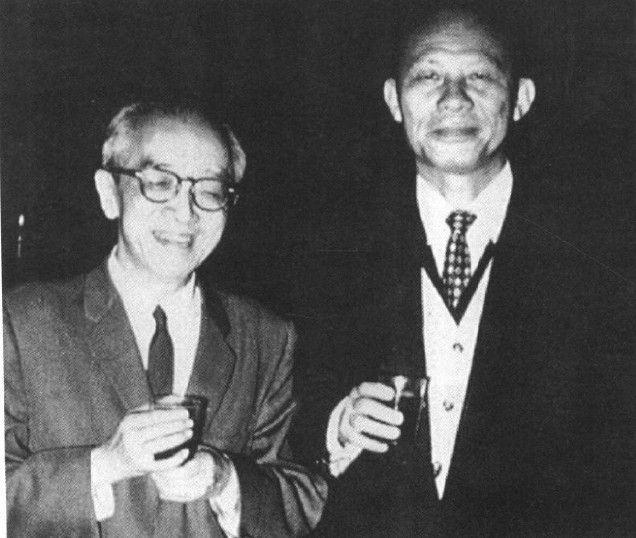
The Founding of Free China
On 20 November 1949 Lei Chen and other reformers within the Kuomintang system, with the support of Hu Shih, launched the political fortnightly Free China in Taipei, with “constitutional democracy” as its goal. Hu Shih, then in the United States, was nominal publisher; Ma Chih-su was manager, and the 16-member editorial board included Hsia Tao-ping, Yin Hai-kuang and Nieh Hua-ling. According to research by Yang Tianshi of the Chinese Academy of Social Sciences’ Institute of Modern History, the journal was at first encouraged and funded by senior KMT figures, receiving about NT$30,000 from the Ministry of Education between November 1949 and the end of 1950. By 1 September 1960 it had published 260 issues.
A Worsening Relationship
As its articles increasingly offended the authorities, relations soured. At the end of 1954 Chiang Kai-shek demanded Lei’s expulsion from the KMT for “breaching party discipline and damaging the KMT’s reputation”; in the end his party registration was cancelled instead. For Chiang’s seventieth birthday in 1956 Free China published a special issue in which Lei, Hu Shih and others called for genuine cabinet responsibility and limits on presidential power; Lei later wrote that “since the birthday issue the government has been deeply hostile.” From August 1957 the journal ran seventeen editorials under the heading “Today’s Problems”; one, by Yin Hai-kuang, argued that a counter-attack on the mainland was unlikely for some years, and was branded by the authorities “the theory that counter-attack is hopeless.” In 1959–60 Free China, together with liberal journals in Hong Kong, opposed a third presidential term for Chiang, who was nonetheless re-elected in March 1960.
Organising the China Democratic Party
After Chiang’s re-election, from May 1960 Lei joined Taiwanese local politicians such as Li Wan-chu and Kao Yu-shu in organising a new party, holding meetings across the island under the name of an election-reform forum. The historian Jen Yu-te notes that in this movement Taiwanese local elites supplied the manpower and mainland-born intellectuals the ideas. The party was first to be called the China Liberal Party, but Hu Shih thought the name unlucky and it became the China Democratic Party. The issue of Free China dated 1 September 1960 (vol. 23 no. 5) carried an urgent statement on forming the party signed by Li Wan-chu, Lei Chen and Kao Yu-shu; it was the journal’s last issue.
Planning and Arrest
Drawing on Chiang Kai-shek’s diary and that of Garrison Commander Huang Chieh, Yang Tianshi shows that the Garrison Command began gathering material and drafting an indictment as early as January 1959, code-naming the operation “Project Tianyu” by splitting the character for Lei into its two parts. On 12 June 1960 Premier Chen Cheng told Huang: “I give the order and take responsibility; you carry it out.” At a national security meeting on 22 July Chiang Ching-kuo said one should “not be too tense” about Lei’s party-building, “nor careless”, and “must solve this political problem by political methods.” On 20 July Chiang Kai-shek wrote in his diary that “something must be done about the reactionary Free China” that month; in August and September he summoned Huang seven times to plan the arrests, and on 3 September set the time for “3 a.m. on 4 September.”
On 4 September 1960 the Garrison Command arrested Lei Chen, the Free China editor Fu Cheng, its manager Ma Chih-su and its accountant Liu Tzu-ying, and searched the journal’s offices and Lei’s home. That evening KMT officials gave newspaper chiefs a digest of Free China’s allegedly illegal statements, listing six “crimes” including “sowing discord between Taiwanese and mainlanders.” The next day Liu stated that he had been sent to Taiwan by the Communists in 1949 and had told Lei so, on which basis the authorities accused Lei of failing to report a Communist agent; according to Lei’s later recollection, Liu’s statement and “confession” went through six drafts until the authorities were satisfied. On 7 October the US ambassador in Taipei, Everett F. Drumright, cabled Washington that Lei’s arrest and prosecution resulted from his leadership of the movement to form an opposition party, that he had “no doubt President Chiang ordered his arrest”, and that “Probability is Chiang Chingkuo was active in obtaining action by his father.”
Reactions
On the day of the arrest Chen Cheng cabled Hu Shih in the United States that the case would be handled through legal channels. Hu replied that “this action by the government is not very wise”, predicting that opinion would see it as fear and suppression of the opposition movement, and asked that the case be sent to the civilian courts. Lei’s wife Sung Ying, a member of the Control Yuan, petitioned for habeas corpus and was refused; Li Wan-chu, Kao Yu-shu and others demanded Lei’s release or a civilian trial; American newspapers criticised the arrests, and Hong Kong intellectuals wrote to the UN Commission on Human Rights. Yang Tianshi cites Chiang’s diary calling Hu’s criticism “nonsense” that would nonetheless be tolerated, since otherwise the government “could not show that its politics are democratic.”
Trial and Sentence
The military court sat on 3 October for 8 hours 30 minutes. Lei denied all charges; his lawyer Liang Su-jung, defying KMT pressure, argued for acquittal, saying Liu’s confession was uncorroborated. When sentencing was discussed on 6 October, Ku Feng-hsiang, one of the officials consulted, conceded that the evidence for Lei’s failure to report a Communist agent was “weak” and risked charges of a literary inquisition. On the morning of 8 October Chiang Kai-shek personally chaired a meeting that chose the sentencing plan, and that afternoon the court ruled that Lei, knowing Liu to be a Communist agent, had failed to report him and had repeatedly written propaganda beneficial to the rebels, sentencing him to ten years; Liu received twelve years, Ma five, and Fu Cheng three years of reformatory education. Files released by the Academia Historica in 2002 show that on the day of the verdict Chiang instructed that Lei’s sentence “must not be less than 10 years, and that the appeal verdict must not alter the original trial verdict.”
When Chiang received Hu Shih on 18 November he said: “If there had been no Communist agent behind him, I would never have prosecuted him.” On 23 November the Military Appeals Bureau upheld the sentences of Lei and Liu and reduced Ma’s to reformatory education; Hu told reporters: “great disappointment, great disappointment.” In February 1961 a Control Yuan investigation found “many improper or inappropriate ways” in the Garrison Command’s handling of the case but proposed no impeachment; a petition by Hu Shih and 45 others for a pardon was rejected by Chiang.
Closure and the Stillborn Party
On 20 December 1960 Free China announced in Taipei newspapers that owing to “force majeure” it was “unable to publish.” In February 1961 Li Wan-chu and others decided to “go slowly”, and the China Democratic Party was never founded. Jen Yu-te argues that Fu Cheng’s sentence also reflected two articles he had written against Chiang’s third term, and that the United States chose to stand aside after the case broke and continued to back Chiang. Assistant Secretary of State J. Graham Parsons nevertheless wrote to Drumright that the government’s handling of the case “has seriously damaged its reputation among some of the most important people in the Congress.”
Release, Rehabilitation and Remembrance
In prison Lei wrote some four million characters of memoirs. In July 1970, shortly before his term ended, the prison seized his manuscripts and diaries; he was released on 4 September 1970 and remained under Garrison Command surveillance. Nieh Hua-ling, a former Free China editor, visited him in 1974; he told her that a dozen agents watched him from the houses opposite and next door. In 1975 he wrote to Hong Kong’s Ming Pao: “I am absolutely opposed to Taiwan independence.” Lei Chen died on 7 March 1979, aged 83.
In April 1988 Sung Ying and Fu Cheng launched a campaign for his rehabilitation; that same month the military prison burned all of Lei’s manuscripts on the grounds that they attacked the Three Principles of the People and defamed “the late President Chiang”. In August 1988 Liu Tzu-ying, before leaving to settle on the mainland, wrote to Sung Ying admitting that, “Coerced by the military’s power”, he had “fabricated lies to frame Mr Lei.” In September 2002 the Academia Historica published compilations of the formerly classified files, together with copies of part of the prison memoirs previously rumoured to have been burned. In May 2019 the Transitional Justice Commission included Lei Chen, Liu Tzu-ying and Fu Cheng in its fourth list of quashed convictions. Taiwan now marks 4 September each year as Lei Chen Case Memorial Day.
Narrative Comparison
| Source | Narrative |
|---|---|
| Yang Tianshi, Institute of Modern History, Chinese Academy of Social Sciences | Mainland scholarship treats the Lei Chen case as the KMT authorities’ suppression of free speech and of an opposition party. Drawing on Chiang Kai-shek’s diary and Garrison Commander Huang Chieh’s diary, Yang Tianshi of the CASS Institute of Modern History details how Chiang summoned Huang seven times to plan the arrests and personally chose the sentence, notes that Liu Tzu-ying’s confession went through six drafts, and argues that branding the case a Communist-spy affair gave the suppression of speech a respectable pretext; he also observes that Chiang tolerated Hu Shih’s criticism in order to show that his politics were democratic. The study also records that in later life Lei declared “I am absolutely opposed to Taiwan independence.” |
| Academia Historica files (2002, via Taipei Times); Transitional Justice Commission (2019); Hsueh Hua-yuan (2026) | In Taiwan the case is regarded as a landmark of martial-law political persecution and of the democracy movement. Files released by the Academia Historica in 2002 confirm that Chiang repeatedly convened senior party, government and military officials on the case and, on the day of the verdict, ordered that the sentence be no less than ten years and unchanged on appeal; in 2019 the Transitional Justice Commission quashed the convictions of Lei, Liu Tzu-ying and Fu Cheng, and 4 September is marked as Lei Chen Case Memorial Day. The historian Hsueh Hua-yuan argues that Lei and Fu were arrested on trumped-up charges for opposing Chiang’s third term and organising a party with Taiwanese elites, and that Free China’s insistence on opposing communism through liberal democracy rather than Communist methods remains an important intellectual resource for Taiwan. |
| FRUS 1958–1960, Vol. XIX, Docs. 354 and 361 | Ambassador Everett Drumright judged that Lei’s arrest stemmed from his leadership of the party movement, that he had “no doubt President Chiang ordered his arrest”, that Chiang Ching-kuo was probably active in bringing it about, and that the aim was to “checkmate activities of Taiwanese politicians before they could take root.” He thought the prosecution “handled so clumsily as to reflect discredit on GRC”, but that rebuking Chiang would be risky, since “a free political atmosphere is an unattainable goal if we want stable, militarily secure Taiwan.” In Washington, Assistant Secretary J. Graham Parsons agreed that “liberalization” should not come at the expense of security, but worried that continued suppression of Taiwanese aspirations could lead to an explosion like Korea’s, and noted that the case had seriously damaged the government’s reputation in Congress. |
| Lei Mei-lin, Lei Chen’s eldest daughter (Taipei Times, 2007); Nieh Hua-ling, “Seeing Lei Chen Again” | Lei Mei-lin, 21 when her father was arrested, recalls that a dozen agents burst into the house at dawn and that the family was not surprised, having been under 24-hour surveillance for more than two years; she calls the trial “nothing but a show” and says the four-million-word memoir her father wrote in prison was confiscated along with family letters. Nieh Hua-ling, a former Free China editor, visited Lei in 1974 after his release; he remembered that the last time he had seen her was the day before his arrest, told her “I wrote four million characters in prison! They simply took it away”, and said a dozen agents watched him from across the street. |
Key Milestones
- Free China launched
Lei Chen and others, backed by Hu Shih, launch the Free China fortnightly in Taipei.
- “Today’s Problems” editorials
Seventeen editorials appear; one on counter-attacking the mainland is branded defeatist.
- Chiang’s third term
Despite opposition from Free China and others, Chiang is re-elected for a third term.
- China Democratic Party organised
Lei Chen and Taiwanese local politicians begin organising a new party.
- Lei Chen and three others arrested
The Garrison Command arrests Lei, Fu Cheng, Ma Chih-su and Liu Tzu-ying.
- Military court verdict
Lei is sentenced to ten years for failing to report a Communist agent and sedition.
- Appeal upheld
The Military Appeals Bureau upholds Lei’s sentence; Hu Shih voices great disappointment.
- Free China ceases publication
The journal announces it cannot publish owing to force majeure.
- Lei Chen released
Lei completes his ten-year sentence and is released, remaining under surveillance.
- Lei Chen dies
Lei Chen dies aged 83.
- Liu Tzu-ying recants
Before leaving for the mainland, Liu writes to Sung Ying admitting he was coerced into framing Lei.
- Academia Historica releases files
The Academia Historica publishes the case files, confirming Chiang’s sentencing instruction.
- Convictions quashed
The Transitional Justice Commission quashes the convictions of Lei, Liu and Fu.
Last verified:
Cite this page
Chronicles of Modern China. (2026, November 21). The Lei Chen Case and the Closure of Free China (1960). Retrieved November 21, 2026, from https://www.cmcarchive.org/events/lei-chen-incident-1960
“The Lei Chen Case and the Closure of Free China (1960).” Chronicles of Modern China. Last modified November 21, 2026. Accessed November 21, 2026. https://www.cmcarchive.org/events/lei-chen-incident-1960.
Chronicles of Modern China. The Lei Chen Case and the Closure of Free China (1960)[EB/OL]. (2026-11-21)[2026-11-21]. https://www.cmcarchive.org/events/lei-chen-incident-1960.