The “Inner Mongolian People’s Party” Purge (1968–1969)
During the Cultural Revolution the Inner Mongolia Revolutionary Committee under Teng Haiqing decided that the 1920s Inner Mongolian People’s Revolutionary Party had survived underground after 1949, and in 1968–69 waged a region-wide campaign to dig out a “New” party in which large numbers of cadres and ordinary people, most of them Mongols, were detained and tortured. In May 1969 the Centre issued a notice to correct the “excesses”, and Teng was removed. In 1978 the regional Party committee confirmed that the “New” party had never existed and victims were rehabilitated. The 1980 indictment of the Lin Biao and Jiang Qing cliques put the toll at more than 346,000 framed and persecuted and 16,222 persecuted to death; other estimates of the dead range from 50,000 to 100,000.
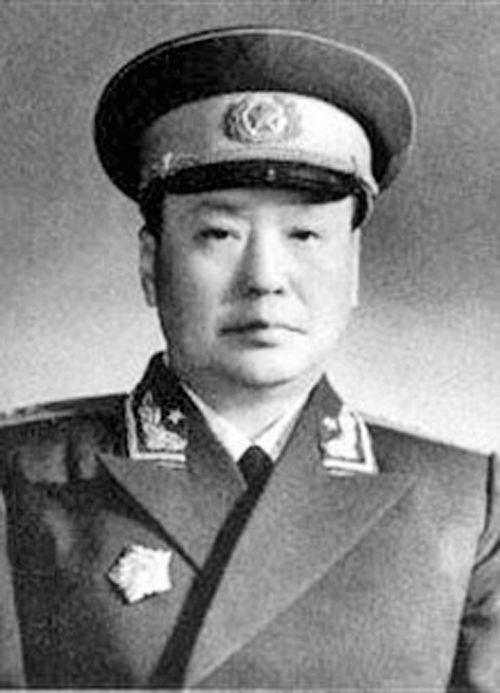
The Fall of Ulanhu and the Arrival of Teng Haiqing
The Cultural Revolution came early to Inner Mongolia. According to Renqin of the Mongolian Studies Centre at Inner Mongolia University, criticism of Ulanhu began at a meeting of the CCP North China Bureau in Beijing on 21 May 1966. The British scholar Kerry Brown records in his doctoral thesis that the attack on Ulanhu, the region’s Party secretary and an ethnic Mongol, ran from May to June; he was dismissed the following month and was not allowed back to Inner Mongolia until his formal rehabilitation and return to office in 1978. On 13 April 1967 the Centre issued a decision on handling the Inner Mongolia question, reorganising the Inner Mongolia Military Region and sending Teng Haiqing, deputy commander of the Beijing Military Region, to the region; in Renqin’s account he in effect held real power there. Brown notes that Teng was Han Chinese with “no links with IMAR before 1967”, and that he exercised power through bodies such as the regional Revolutionary Committee set up that November.
Identifying the “Inner Mongolian People’s Party”
The Inner Mongolian People’s Revolutionary Party was a Mongol party of the 1920s: it held congresses from 1924 to 1926, its activities effectively ended in 1930, and it re-formed briefly in 1945 before its programme was superseded by the CCP in 1947. The target of the Cultural Revolution campaign was a so-called “New” party alleged to have continued underground after 1949. Brown writes that after speeches in late 1967 by Jiang Qing and others on the need to “dig and uproot class enemies”, Teng “was eventually converted to the idea that the IMPP had continued its activity after 1949”. According to the 1980 indictment, Kang Sheng said on 4 February 1968: “The Inner Mongolian People’s Party is still active underground; at the start we may cast the net a bit wide—don’t be afraid.”
On 26 April 1968 the Inner Mongolia Revolutionary Committee sent Mao Zedong, Lin Biao, the Central Committee and others a “Report on the Treason Case of the ‘Inner Mongolian People’s Revolutionary Party’”. It said that in 1963 the public-security authorities had found in the mail a letter to Tsedenbal in the name of the party’s second congress demanding the “merger of Inner and Outer Mongolia”, and that an initial breakthrough had come the previous morning: Bayanjab, deputy director of the Political Department of the Inner Mongolia Military Region, had confessed to a list of about 70 people, including heads of regional departments, universities and military sub-districts. The report admitted that “we cannot yet be fully certain of the reliability of Bayanjab’s confession”, yet resolved to attack “by combining a large-scale people’s war with special case investigation”, ordered five people detained and isolated, and asked that the case be kept secret for a time. Brown argues that “After the spring of 1968 the IMPP, as a named entity, became the key element to the campaign in IMAR”, with Ulanhu thereafter serving mainly as its symbol.
Digging Out the “New” Party
Renqin records that from February 1968 the region first criticised the “Gao Jinming right opportunist line” and then set out to dig out a “New Inner Mongolian People’s Party” allegedly created by Ulanhu to restore capitalism, with a region-wide registration drive promising leniency to those who came forward and severity to those who concealed; a notice of the Hohhot public-security military control commission declared the party a counter-revolutionary organisation with a programme, unified leadership and large-scale activity. Citing the Chinese historian Wu Di, Brown divides the campaign into an “opening” phase from November 1967 to April 1968, a “developing” phase from May to November 1968, and “the most violent ‘high-tide’ phase, from November 1968 to May 1969”. Renqin writes that arresting people became the fashion, private courts were set up and all kinds of torture used; more than a thousand people killed themselves or were beaten to death, and many bodies were left in the wilds.
According to the indictment, Kang Sheng said on 4 February 1969: “There are Inner Mongolian People’s Party members in the army too; this is a very serious problem.” Xie Fuzhi said: “Outwardly they are the Communist Party, secretly they are the Inner Mongolian People’s Party; it must be wiped out.” Brown states that “the majority of those accused of supporting IMPP were Mongolian”, quoting the British scholar David Sneath (1994): “Mongols were the victims, and it was largely Han Chinese who organised their suffering.”
The 22 May Notice and Teng Haiqing’s Removal
After the Ninth Party Congress in April 1969, Brown writes, citing Wu Di, Mao Zedong remarked that “excesses had been committed in the course of the movement to rectify the Party” in Inner Mongolia. On 22 May the Centre issued a notice to “Rectify Mistakes and Thoroughly Implement Measures Concerning Inner Mongolia”. Teng made a series of self-criticisms in the summer of 1969 and left the region in December for re-education in Tangshan, Hebei; the PLA 65th Corps was sent from the Beijing Military Region to control the region, large tracts of which were transferred to three neighbouring provinces until 1979. Brown records that Teng later served as deputy commander of the Jinan Military Region from 1975 to 1980, and that his wartime record brought him “top-level protection”, so that he “was never formally charged with the excesses of the CR in IMAR”.
Rehabilitation
Renqin records that on 20 April 1978 You Taizhong and Chi Biqing, first and second secretaries of the Inner Mongolia Party Committee, and others submitted a report to the Centre stating that the so-called “New Inner Mongolian People’s Party” had not existed and that the decision to dig it out had been wrong, and proposing the rehabilitation of the dead, compensation for their families and support for the disabled; the Centre approved it with amendments. On 27 June the regional Party committee’s policy-implementation group issued detailed rules: all materials on the “New” party were to be sorted by the Party organisations holding them and publicly burned, and the dead were to be treated as having died on duty and rehabilitated, with monthly allowances for dependants of 15 yuan in towns, 13 in pastoral areas and 10 in farming areas. Review and rehabilitation of unjust cases dating from the Cultural Revolution and from 1957 onward were basically completed in 1981, with 90 per cent of victims rehabilitated. Renqin counts the “Ulanhu anti-Party treasonous clique”, the “Inner Mongolian February Adverse Current” and the “New Inner Mongolian People’s Party” as the region’s three great frame-ups, with 4,800 related unjust cases.
In November 1980 the Special Procuratorate’s indictment in the case of the Lin Biao and Jiang Qing counter-revolutionary cliques stated that Kang Sheng and others had used the campaign to frame and persecute large numbers of cadres and ordinary people in Inner Mongolia, “undermining national unity”, and that at the instigation of Kang Sheng and Xie Fuzhi “more than 346,000 cadres and ordinary people” in the region were framed and persecuted in the “Inner Mongolian People’s Party” and other cases, and “16,222 were persecuted to death”.
The Toll
The official figures are those of the 1980 indictment: more than 346,000 people framed and persecuted and 16,222 persecuted to death. Incomplete statistics cited by Renqin add that 75 per cent of those investigated, struggled against or imprisoned were Mongols and that 87,180 were disabled by torture. Brown considers such “official” figures “disputable”: William Jankowiak in 1988 cited internal local-government estimates from 1976 putting the dead “closer to 50,000”, and argued that the figure “could be as high as 100,000”. Extracts from Wu Di’s manuscript, translated by Michael Schoenhals and published by Stockholm University in 1993, state that the movement “led to the death of more than 16,000 persons, most of them ethnic Mongols killed by the People’s Liberation Army”.
Gallery
Narrative Comparison
| Source | Narrative |
|---|---|
| Indictment of the Special Procuratorate (1980); Inner Mongolia Party Committee report of 1978 (as described by Renqin) | Official accounts treat the campaign as a frame-up by the Lin Biao and Jiang Qing cliques: the indictment states that Kang Sheng and others used it to persecute cadres and ordinary people in Inner Mongolia, “undermining national unity”, and that at the instigation of Kang Sheng and Xie Fuzhi “more than 346,000 cadres and ordinary people” were framed and persecuted and “16,222 were persecuted to death”. The regional Party committee’s 1978 report confirmed that the “New Inner Mongolian People’s Party” had not existed and that the decision to dig it out had been wrong, after which victims were rehabilitated, compensated and the case files publicly burned. The official account places responsibility on figures such as Kang Sheng and Xie Fuzhi. |
| Kerry Brown (University of Leeds PhD thesis, 2004); Michael Schoenhals and W. Woody (1993) | Western scholarship stresses the ethnic character of the campaign. Brown notes that “the majority of those accused of supporting IMPP were Mongolian” and cites Sneath’s view that Mongols were the victims and Han Chinese largely the organisers; he calls the official death toll “disputable”, reports estimates of 50,000 to 100,000, and notes that Teng Haiqing’s record brought him “top-level protection”. The extracts from Wu Di’s manuscript edited by Michael Schoenhals describe “the ethnicidal political movement to “uproot” the so-called “New Inner Mongolian People’s Party.””, stating that most of the more than 16,000 dead were “ethnic Mongols killed by the People’s Liberation Army”. |
Key Milestones
- North China Bureau meeting attacks Ulanhu
The CCP North China Bureau begins criticising Ulanhu in Beijing; he is later dismissed.
- Central decision on Inner Mongolia
The Inner Mongolia Military Region is reorganised and Teng Haiqing is sent to the region.
- Regional Revolutionary Committee founded
Teng Haiqing exercises power through the new regional Revolutionary Committee.
- Kang Sheng: the party is “still active underground”
Kang Sheng says the net may be cast wide at first.
- Revolutionary Committee report on the “treason case”
The report claims an initial breakthrough and orders an attack combining “people’s war” with special investigation.
- Kang Sheng: the party is in the army too
Kang Sheng claims the party has members in the army as well.
- Central notice of 22 May
After the Ninth Congress the Centre issues a notice to rectify mistakes in Inner Mongolia; Teng makes self-criticisms.
- Teng Haiqing leaves Inner Mongolia
Teng goes to Tangshan for re-education; the PLA 65th Corps takes control of the region.
- Regional Party committee repudiates the case
You Taizhong, Chi Biqing and others report that the party never existed; the Centre approves with amendments.
- Detailed rehabilitation rules
Rules order the public burning of case materials and treat the dead as having died on duty.
- Special Procuratorate indictment
The indictment cites more than 346,000 persecuted and 16,222 persecuted to death.
Last verified:
Cite this page
Chronicles of Modern China. (2026, November 14). The “Inner Mongolian People’s Party” Purge (1968–1969). Retrieved November 14, 2026, from https://www.cmcarchive.org/events/inner-mongolian-peoples-party-purge-1968
“The “Inner Mongolian People’s Party” Purge (1968–1969).” Chronicles of Modern China. Last modified November 14, 2026. Accessed November 14, 2026. https://www.cmcarchive.org/events/inner-mongolian-peoples-party-purge-1968.
Chronicles of Modern China. The “Inner Mongolian People’s Party” Purge (1968–1969)[EB/OL]. (2026-11-14)[2026-11-14]. https://www.cmcarchive.org/events/inner-mongolian-peoples-party-purge-1968.