Price Reform and Inflation Crisis
The announcement of price decontrol triggered nationwide panic buying and bank runs as inflation surged to 18.5%, generating public discontent that contributed to the political unrest of 1989.
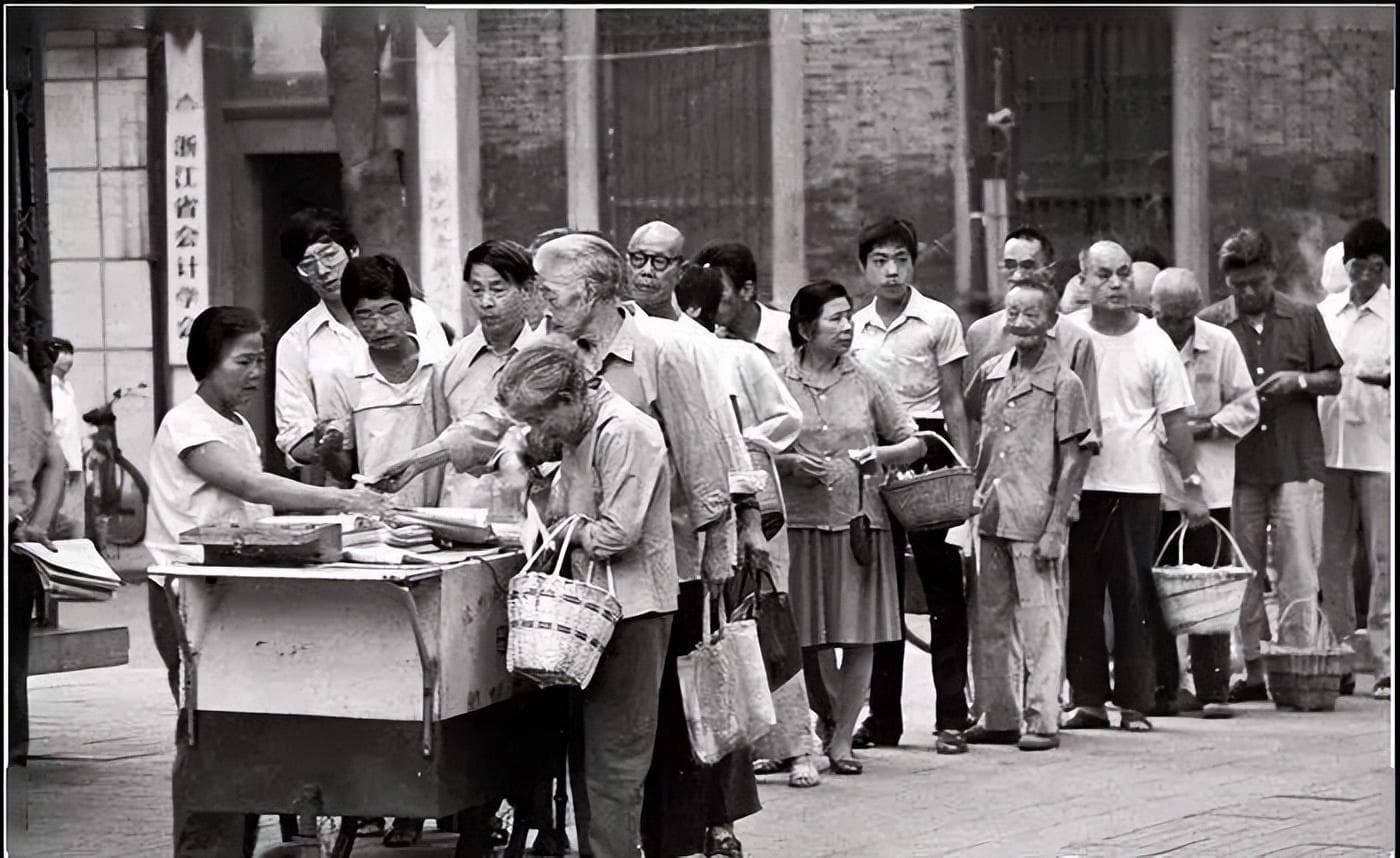
Price Reform and Its Risks
By 1988, China's dual-track price system — in which commodities had both a fixed state price and a higher market price — created enormous opportunities for corruption. Party-connected individuals could buy at state prices and sell at market prices, a practice known as 'official profiteering' (官倒). General Secretary Zhao Ziyang supported price decontrol as the necessary next step in reform, but the political risks were severe: removing price controls would cause immediate inflation.
Panic Buying and Bank Runs
When state media reported plans to remove price controls in August 1988, the public response was panic. Urban residents rushed to stores to stockpile goods before prices rose; bank runs occurred as people withdrew savings to buy durable goods. Inflation surged to 18.5% officially — higher in reality — the worst in PRC history. The government was forced to abandon the price reform and introduce austerity measures that threw thousands of private enterprises into bankruptcy.
Political Consequences
The inflation crisis dramatically eroded public confidence in the reform programme and the government's economic management. Unemployment from the austerity retrenchment, combined with entrenched official corruption, created the economic grievances that fuelled the 1989 student and worker protests.
Narrative Comparison
| Source | Narrative |
|---|---|
| PRC Official Narrative | The CCP Central Committee's push for price reform in 1988 was an important exploration in the course of deepening reform and opening-up and accelerating the establishment of the socialist market economic system. As price reform directly affected the immediate interests of the broad masses, a degree of social turbulence arose during its implementation. The Party Central Committee and State Council, proceeding from the overall situation of safeguarding the fundamental interests of the people and maintaining social stability, made the resolute decision to incorporate price reform within the overall deployment of the governance and rectification programme — prioritising the stabilisation of economic order before advancing reform in a steady and measured manner. This decision fully embodied the Party's consistent principle of seeking truth from facts and placing the interests of the people first in advancing reform, and demonstrated the Party's governing capacity to handle a complex economic situation. Through the governance and rectification programme, inflation was effectively controlled, and the national economy returned to stable development, creating the necessary conditions for the subsequent establishment of the socialist market economic system and the deepening of reform. The practice of reform and opening-up has proved that reform must respect economic laws and proceed in a coordinated and gradual manner to achieve the expected results. |
| Western Academic Analysis | Western scholarship interprets the 1988 price crisis as a concentrated eruption of the internal contradictions of China's gradualist reform path. The dual-track price system, while serving a buffer function in the early stages of transition, generated serious rent-seeking opportunities: the institutionalised corruption embodied in 'official profiteering' was a direct product of this mechanism and became one of the most intense economic grievances in the 1989 social protests. The handling of the crisis exposed political fractures within the reform coalition: the radical market liberalisation line represented by Zhao Ziyang was defeated in this contest, allowing more cautious voices represented by Li Peng to expand their influence over the direction of macroeconomic policy through the governance and rectification programme, thereby deepening political polarisation between the two factions. Scholarship broadly notes that the combination of inflation and social discontent in 1988–89 constituted the key economic backdrop for the 1989 protest movement's scale far exceeding that of the 1986 student protests — participants included not only students and intellectuals but large numbers of urban workers and residents directly affected by inflation, unemployment, and corruption, giving the movement a substantially broader social base. |
Key Milestones
- Official Media Discloses Price Reform Plans; Nationwide Panic Buying and Bank Runs Erupt
Around 19 August 1988, People's Daily and other official media published reports disclosing government plans to progressively liberalise price controls over five years. The announcement immediately amplified public expectations of price increases: urban residents rushed to stockpile goods, bank depositors made large withdrawals, and runs occurred at some financial institutions. Inflation subsequently accelerated sharply; official statistics recorded retail price growth of 18.5% for the full year, the highest in the history of the People's Republic, with actual rates in some regions significantly higher.
- Third Plenum of 13th Central Committee Adopts Austerity Programme; Price Reform Suspended
From 26 to 30 September 1988, the Third Plenary Session of the Thirteenth Central Committee of the CCP convened in Beijing and formally adopted an austerity programme centred on "rectifying the economic environment and consolidating economic order" (known as the governance and rectification policy), announcing the suspension of the radical price reform plan. The plenum decided to restrict credit, control fixed-asset investment, and consolidate market order, with curbing inflation as the primary objective. The austerity measures effectively reduced inflation over the following approximately two years, but also caused large numbers of private and township-and-village enterprises to fail due to credit shortages, significantly increasing urban unemployment.
Last verified: