The Great Hinggan Mountains Forest Fire (1987)
On 6 May 1987 fires broke out at several points in the Great Hinggan Mountains forest region of Heilongjiang; on the evening of the 7th a gale of force 8 or above drove them out of control, and in one night they destroyed three forestry-bureau towns in Mohe county — Xilinji, Tuqiang and Amur. 58,800 soldiers and civilians fought the fire for 25 days until it was extinguished on 2 June. The State Council reported at the time that 1.01 million hectares had burned and 193 people had died; later reports give 211 dead and more than 50,000 homeless, making it the worst forest fire in the history of the PRC. Officials attributed the fire to workers smoking and using brush cutters in breach of regulations and blamed chaotic management and serious bureaucratism; the Minister of Forestry, Yang Zhong, was dismissed. China Youth Daily’s “three color reports” on the fire are regarded as a turning point in Chinese disaster reporting.
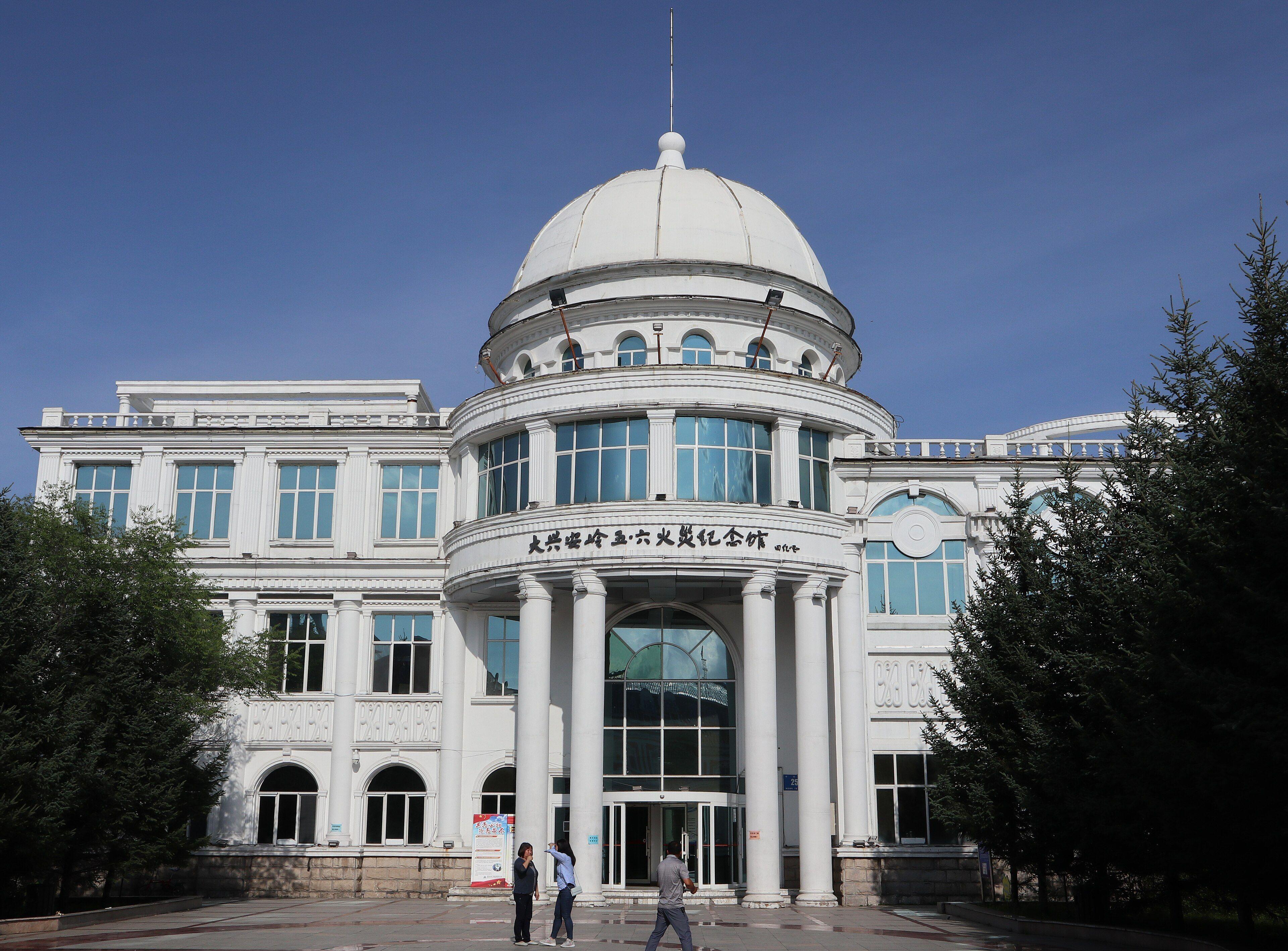
The Forest and the Outbreak
The Great Hinggan Mountains (Daxing’anling) are one of China’s key forest regions and a main timber base, covering 22.68 million hectares, 13.44 million of them forested, and divided between two forestry administrations, one under Inner Mongolia and one directly under the Ministry of Forestry. The spring of 1987 was exceptionally dry. According to the report that State Council Secretary-General Chen Junsheng made to the NPC Standing Committee that June, on 5 February State Council leaders had told the Ministry of Forestry to attend to fire prevention, but the instruction did not receive due attention from the ministry’s principal leaders. A 1994 satellite analysis by Donald Cahoon of NASA’s Langley Research Center and colleagues found that weather conditions in the spring of 1987 were extremely conducive to fire, and that very large areas of boreal forest burned in both northeastern China and southeastern Siberia.
The report stated that the direct cause “was neither a natural disaster nor sabotage”: the first fires were started by forestry workers smoking in breach of regulations and by the use of brush cutters despite a fire-season ban. According to a 2017 follow-up by the Beijing News, on 6 May smouldering cigarette ends dropped by two brush-clearing workers in Tahe county started the first fire, and at 2 p.m. that day the brush cutter of Wang Yufeng, a logger at Gulian forest farm, ignited petrol spilled nearby.
Three Towns Engulfed
The western fire broke out on 6 May. On the evening of the 7th a gale of force 8 or above arose; the fire front advanced 100 km in five hours, unchecked by railways, roads, rivers or even a 500-metre firebreak, and in a single night destroyed the seats of three forestry bureaus — Xilinji, Tuqiang and Amur — and seven forest farms. That night the fire at Pangu forest farm in Tahe county in the east also raged out of control. By 8 May seas of fire of 300,000 and 200,000 hectares had formed in Mohe in the west and Tahe in the east. Liu Wanping, then head of the Mohe county political-legal committee, recalled returning from the fire line to the county town that night: “For a dozen kilometres the road was full of people, crying and shouting.” Wang Ming, a local resident who later joined the fire service, remembered: “Half the sky was burning red, and the fire chased the cars.”
Fighting the Fire
On 9 May Vice-Premier Li Peng convened the departments concerned, agreed with the PLA leadership to send troops, and set up a State Council firefighting leading group; on the 12th he visited Tahe and, with Shenyang Military Region commander Liu Jingsong, decided to send 20,000 more troops. In all 58,800 soldiers and civilians fought the fire, more than 34,000 of them from the PLA. The first task was to cut a firebreak between the fire front and the county town — to “hold Tahe at all costs” — and by 12 May the town was out of danger; open flames in the eastern and western fire zones were put out on 19 and 26 May. On 2 June all 891 km of planned firebreaks were open, rain fell over the whole fire zone, and the fire was completely extinguished. The report stated that not a single firefighter was burned to death. Li Dong, deputy head of the Mohe forest fire brigade, has said that besides the force-8 gale, inadequate firefighting forces were the other main reason the fire spread so fiercely.
Losses
The report called it “the forest fire with the largest area of forest destroyed, the most casualties and the heaviest losses since the founding of the PRC”: 1.01 million hectares burned, 700,000 of them forested; 850,000 cubic metres of stored timber and 614,000 square metres of housing destroyed; 10,807 households and 56,092 people affected; 193 dead and 226 injured. The Beijing News gave the figures in 2017 as 211 dead and more than 50,000 homeless, and reported that the region lost a fifth of its woodland and forest cover fell from 76% to 61.5%. From satellite imagery, Cahoon and his colleagues estimated that the fire eventually burned “in excess of 1.3 million hectares of forested land”, and that about 14 million hectares burned in eastern Asia, including southeastern Siberia, that year.
Accountability
On 19 May an executive meeting of the State Council severely criticised the serious bureaucratism of the Ministry of Forestry’s leadership. On 6 June a plenary meeting of the State Council issued a decision noting that in the 25 days from the outbreak to the end of the fire the ministry’s principal leaders had made “no self-criticism or self-examination whatsoever”; it removed Yang Zhong as Minister of Forestry, subject to approval by the NPC Standing Committee, and ordered the ministry and the front-line headquarters to deal severely with others directly responsible. On 23 June the 21st session of the Sixth NPC Standing Committee adopted a resolution stating that the fire “was caused mainly by chaotic enterprise management, lax discipline, violations of rules and regulations, unsafe operations and serious bureaucratism in the leadership”, and approved Yang Zhong’s removal.
Chen Junsheng’s report listed further lessons: Mohe county had disbanded a 76-strong forest police company in March, before the fire season; the region had only about a third as many lookout towers and wind-powered extinguishers as the Yichun forest region; and the towns’ mud-and-plank houses, with stacks of firewood in front of every home, made them “firewood towns”, an important reason they burned.
The “Three Colour Reports”
Reporters from China Youth Daily went to the fire zone and produced three reports — “The Red Warning”, “The Black Sigh” and “The Green Sorrow” — known at the time as the “three color reports”, which won that year’s special award for best national news reporting. According to a 2020 article by the China Media Project, Yang Lang, the paper’s domestic affairs editor responsible for the series, said at the time: “Everyone recognizes that a disaster is a disaster. Turning a disaster into a triumphal hymn is heaping disaster on top of disaster.” The reports described how, while the fire was still burning, local leaders had people sweep the streets for visiting officials from Beijing, and how the only red-brick building left standing in the ruins of the Mohe county seat was the home of the county chief and the fire department head. The People’s Daily, too, ran 64 consecutive reports and commentaries on the fire, 22 of them on the front page within a month.
Rebuilding
After the fire Mohe upgraded its fire-prevention section and set up a fire-prevention office and professional forest firefighting teams. The rebuilt county town was planned without wooden houses, all replaced by brick, and with central heating. In 1988 a memorial hall was built to mark the rebuilding of the town; it has since become a local landmark.
Gallery
Narrative Comparison
| Source | Narrative |
|---|---|
| State Council decision (6 June 1987); NPC Standing Committee resolution (23 June 1987); Chen Junsheng’s report | Officials treated the fire from the outset as an accident caused by human failings: it “was neither a natural disaster nor sabotage” but “was caused mainly by chaotic enterprise management, lax discipline, violations of rules and regulations, unsafe operations and serious bureaucratism in the leadership”. The State Council removed the Minister of Forestry, Yang Zhong, and ordered others directly responsible to be dealt with severely, and the NPC resolution insisted on accountability “with no indulgence for anyone”. The same documents praised the PLA, forest police and workers who fought the fire, stating that not a single firefighter was burned to death. |
| Cahoon et al., Satellite Analysis of the Severe 1987 Forest Fires in Northern China and Southeastern Siberia (1994) | A satellite study by scientists at NASA’s Langley Research Center places the fire in a wider regional setting: weather in the spring of 1987 was “extremely conducive to fire development and spread”, very large areas of boreal forest burned in both northeastern China and southeastern Siberia, and about 14 million hectares burned in eastern Asia that year. It calls the Chinese fire “one of the largest and most destructive forest fires in recent history”, which despite “vigorous suppression activities” burned for about three more weeks and over more than 1.3 million hectares of forest — more than the 1.01 million hectares in the official Chinese figures. |
| Local witnesses interviewed by the Beijing News in 2017 | Witnesses remember above all the speed of the fire and the chaos of the evacuation: loudspeakers first called workers out to fight the fire, then told everyone to evacuate; the road to the county town was full of people, crying and shouting, and a twenty-minute drive took over three hours; Wang Ming, who later joined the fire service, recalls: “Half the sky was burning red, and the fire chased the cars.” Local firefighters say that besides the gale, inadequate firefighting forces were the other main reason the fire spread, and Yao Zhanjun, Mohe’s county head in 2017, says the county had no fire-prevention office before 1987 and that the disaster awakened people to fire prevention. |
Key Milestones
- State Council warns the Ministry of Forestry
State Council leaders warn of a severe spring drought and tell the ministry to attend to fire prevention.
- Fires break out
Fires start in Tahe county and at Gulian forest farm in Mohe, among other places.
- Three towns destroyed in a gale
A gale of force 8 or above drives the fire through Xilinji, Tuqiang and Amur in a single night.
- State Council firefighting group
Li Peng convenes a meeting and troops are sent to fight the fire.
- Tahe saved
A firebreak saves the Tahe county town; Li Peng visits Tahe.
- Eastern fire zone extinguished
The same day a State Council executive meeting criticises the ministry’s bureaucratism.
- Western fire zone extinguished
Open flames in the western fire zone are put out.
- Fire completely extinguished
All 891 km of firebreaks are open and rain falls over the fire zone.
- State Council decision
Yang Zhong is removed as Minister of Forestry, subject to NPC approval.
- Chen Junsheng reports to the NPC
The State Council Secretary-General reports on the fire and its handling.
- NPC Standing Committee resolution
The resolution approves Yang Zhong’s removal.
- Memorial hall built
Built to mark the rebuilding of the town.
Last verified:
Cite this page
Chronicles of Modern China. (2026, November 15). The Great Hinggan Mountains Forest Fire (1987). Retrieved November 15, 2026, from https://www.cmcarchive.org/events/great-hinggan-forest-fire-1987
“The Great Hinggan Mountains Forest Fire (1987).” Chronicles of Modern China. Last modified November 15, 2026. Accessed November 15, 2026. https://www.cmcarchive.org/events/great-hinggan-forest-fire-1987.
Chronicles of Modern China. The Great Hinggan Mountains Forest Fire (1987)[EB/OL]. (2026-11-15)[2026-11-15]. https://www.cmcarchive.org/events/great-hinggan-forest-fire-1987.