Galwan Valley Clash
On the night of 15 June 2020, Chinese and Indian troops fought a violent hand-to-hand clash in the Galwan Valley in eastern Ladakh — the first fatalities on the China–India border since 1975. Twenty Indian soldiers died, and China later announced four deaths. Each side accused the other of crossing the line and provoking the clash. After rounds of talks the two sides gradually disengaged, reaching an agreement on patrolling arrangements in October 2024.
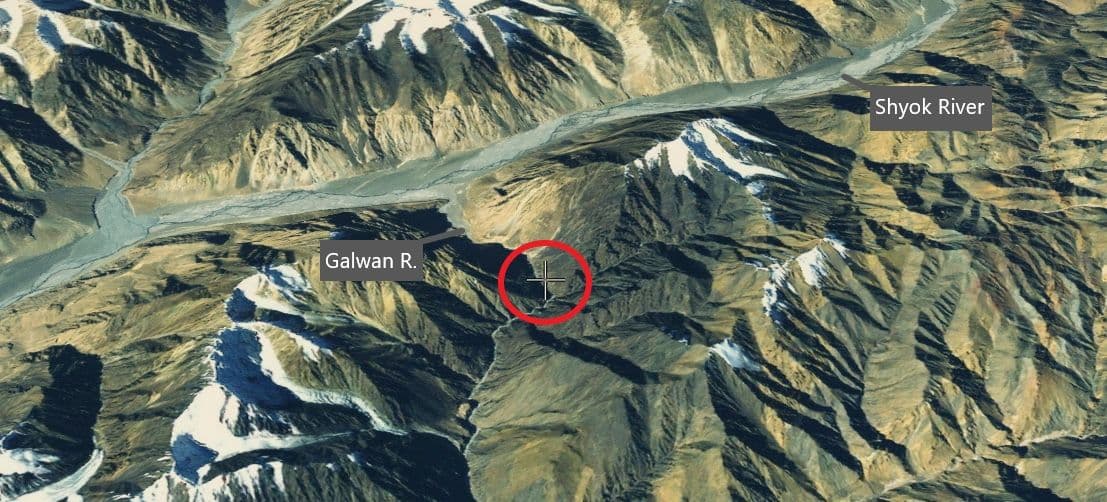
Background: The Standoff in Eastern Ladakh
The China–India boundary has never been settled. In the western sector the disputed area lies around Ladakh and Aksai Chin, with the two sides separated by the Line of Actual Control (LAC); the two countries fought a border war there in 1962. From April 2020 the two militaries faced off at several points along the LAC in eastern Ladakh. China said India had, since April 2020, been building roads, bridges and other facilities across the line in the Galwan Valley in an attempt to unilaterally change the status quo of border management; India said it was China that had departed from the consensus to respect the LAC in the Galwan Valley and was attempting to change the status quo unilaterally. In early May, personnel from the two sides clashed physically along the border. On 6 June the two militaries held their first corps commander-level talks and agreed on steps to de-escalate.
The Clash on the Night of 15 June
On the night of 15 June 2020, soldiers from the two sides fought a violent hand-to-hand clash in the Galwan Valley. No firearms were used; the troops reportedly attacked each other with stones and clubs. According to research by Carnegie India, these were the first fatalities on the China–India border since 1975.
The two sides gave sharply different accounts of how the clash began. Zhang Shuili, spokesperson of China's Western Theater Command, said on 16 June that Indian troops had "gone back on their commitments, again crossed the Line of Actual Control for illegal activities and deliberately launched provocative attacks", and asserted that "sovereignty over the Galwan Valley area has always belonged to China". India's Ministry of External Affairs said the same day that the clash resulted from a Chinese attempt to change the status quo unilaterally, and that the casualties could have been avoided had China scrupulously followed the agreement reached at a higher level.
On casualties, the Indian Army first reported three deaths on 16 June, then announced that evening that 17 more critically injured soldiers had succumbed in sub-zero, high-altitude conditions, bringing the toll to 20, among them Colonel B. Santosh Babu, commanding officer of 16 Bihar, on whom President Ram Nath Kovind posthumously conferred the Maha Vir Chakra on 23 November 2021. China gave no casualty figures at the time. On 19 February 2021 the PLA Daily published its first account of the clash: regimental commander Qi Fabao, who had waded across the river with a few soldiers to negotiate, was attacked with steel pipes, clubs and stones and suffered severe head injuries; battalion commander Chen Hongjun and soldiers Chen Xiangrong and Xiao Siyuan were killed in the fighting, and Wang Zhuoran died while crossing the river to reinforce, in the course of rescuing comrades. The Central Military Commission named Qi Fabao a "Hero Regimental Commander for Defending the Border", posthumously named Chen Hongjun a "Hero for Defending the Border", and posthumously awarded first-class merit to the other three. China's official death toll is four; several higher outside estimates have circulated, none of them officially confirmed.
Reactions and Diplomacy
The clash provoked a strong reaction in India. On 29 June India's Ministry of Electronics and Information Technology, invoking Section 69A of the Information Technology Act, banned 59 Chinese apps including TikTok and WeChat on the grounds that they were "prejudicial to sovereignty and integrity of India, defence of India, security of state and public order", and later extended the bans to further apps.
Diplomatic and military contacts continued in parallel. On 10 September, Chinese State Councillor and Foreign Minister Wang Yi and Indian External Affairs Minister S. Jaishankar met in Moscow on the sidelines of the Shanghai Cooperation Organisation foreign ministers' meeting and issued a joint press statement setting out a five-point consensus: the current situation in the border areas was not in the interest of either side; border troops should continue their dialogue and quickly disengage; both sides would abide by existing border agreements; they would keep communicating through the Special Representatives mechanism; and they would expedite new confidence-building measures as the situation eased.
Disengagement and the 2024 Agreement
Through successive rounds of corps commander-level talks, the two sides gradually disengaged at friction points in eastern Ladakh. On 10 February 2021 China's Ministry of National Defense announced that frontline troops on the southern and northern banks of Pangong Tso had begun synchronized, organized disengagement. By September 2022 disengagement had been completed and buffer zones set up in the Galwan Valley, the Gogra–Hot Springs area and at Pangong Tso, while differences over Depsang and Demchok remained unresolved.
On 21 October 2024 India announced that the two sides had reached an agreement on patrolling arrangements, which China confirmed the next day; its terms were not made public. On 23 October Xi Jinping and Indian Prime Minister Narendra Modi met in Kazan, Russia, during the BRICS summit — their first formal bilateral meeting since the 2020 clash. According to the Chinese readout, the two leaders positively assessed recent progress in resolving issues in the border areas and agreed to make use of the Special Representatives mechanism on the boundary question. According to Carnegie India research published in December 2024, each side still kept more than 100,000 troops deployed along the border, and rebuilding political trust would take time.
Gallery
Narrative Comparison
| Source | Narrative |
|---|---|
| Chinese official position (Western Theater Command; PLA Daily) | Sovereignty over the Galwan Valley has always belonged to China. Since April 2020 India violated bilateral agreements by building roads, bridges and other facilities across the line in the Galwan Valley in an attempt to unilaterally change the status quo; on the evening of 15 June Indian troops went back on their commitments, again crossed the LAC and deliberately launched provocative attacks. Chinese border troops, after exercising restraint, struck back and safeguarded national sovereignty and territorial integrity. China demands that India strictly restrain its frontline troops and return to resolving differences through dialogue. |
| Indian official position (Ministry of External Affairs) | Senior commanders agreed on a process of de-escalation on 6 June, and ground commanders then met to implement it, but the Chinese side departed from the consensus to respect the Line of Actual Control in the Galwan Valley. The violent face-off on the night of 15 June resulted from a Chinese attempt to change the status quo unilaterally, and the casualties could have been avoided had China scrupulously followed the higher-level agreement. India subsequently insisted on full disengagement, restoration of traditional patrolling and de-escalation as preconditions for normalising relations. |
| Policy research (Carnegie India, 2024) | Saheb Singh Chadha of Carnegie India divides the 2020–2024 standoff into three phases according to the two sides' negotiating positions: from April to September 2020 both sides sought to manage the crisis and avoid another fatal clash like Galwan; from September 2020 to September 2022 they negotiated disengagement at four friction points in eastern Ladakh; from September 2022 to July 2024 China preferred to treat Depsang and Demchok as legacy issues and to expand the broader relationship, while India insisted on full disengagement and restoration of patrolling rights first. After the October 2024 patrolling agreement, each side still kept more than 100,000 troops on the border, and rebuilding political trust will take time. |
Key Milestones
- First China–India corps commander-level talks
The two militaries held their first corps commander-level talks at a border meeting point and agreed on steps to de-escalate in eastern Ladakh. India later said ground commanders then held a series of meetings to implement this consensus.
- Clash in the Galwan Valley
That night soldiers from both sides fought a violent hand-to-hand clash in the Galwan Valley without firearms — the first fatalities on the China–India border since 1975.
- Statements from both sides; India announces casualties
Western Theater Command spokesperson Zhang Shuili said Indian troops had crossed the LAC and deliberately provoked the clash, and that sovereignty over the Galwan Valley had always belonged to China; India's foreign ministry said the clash resulted from a Chinese attempt to change the status quo unilaterally. The Indian Army first reported three deaths, raising the figure to 20 that evening.
- India bans 59 Chinese apps
India's IT ministry, invoking Section 69A of the Information Technology Act, banned 59 Chinese apps including TikTok and WeChat as prejudicial to sovereignty, defence, state security and public order.
- Five-point consensus of the foreign ministers in Moscow
Wang Yi and S. Jaishankar met in Moscow during the SCO foreign ministers' meeting and issued a joint press statement agreeing that border troops should continue dialogue, quickly disengage, maintain proper distance and ease tensions.
- Disengagement begins at Pangong Tso
Chinese defence ministry spokesperson Wu Qian announced that, under the consensus of the ninth round of corps commander-level talks, frontline troops on both banks of Pangong Tso had begun synchronized, organized disengagement.
- China discloses its casualties and honours
The PLA Daily published China's first account of the clash, naming four soldiers killed — Chen Hongjun, Chen Xiangrong, Xiao Siyuan and Wang Zhuoran — and regimental commander Qi Fabao as severely injured; the Central Military Commission conferred honorary titles and first-class merit.
- India announces a patrolling agreement
India announced that the two sides had agreed on patrolling arrangements, which China confirmed the next day; the terms were not published and covered the previously unresolved areas of Depsang and Demchok.
- Xi Jinping and Narendra Modi meet in Kazan
Xi and Modi met in Kazan during the BRICS summit, their first formal bilateral meeting since the 2020 clash. They positively assessed progress on border issues and agreed to use the Special Representatives mechanism on the boundary question.
Last verified:
Cite this page
Chronicles of Modern China. (2026, November 2). Galwan Valley Clash. Retrieved November 2, 2026, from https://www.cmcarchive.org/events/galwan-valley-clash-2020
“Galwan Valley Clash.” Chronicles of Modern China. Last modified November 2, 2026. Accessed November 2, 2026. https://www.cmcarchive.org/events/galwan-valley-clash-2020.
Chronicles of Modern China. Galwan Valley Clash[EB/OL]. (2026-11-02)[2026-11-02]. https://www.cmcarchive.org/events/galwan-valley-clash-2020.