Fukushima Water Discharge and China's Ban on Japanese Seafood
On 24 August 2023 TEPCO began releasing water from the Fukushima Daiichi nuclear plant, treated by the ALPS system, into the sea. The IAEA had found the plan consistent with international safety standards; the Chinese government, calling it "nuclear-contaminated water", firmly opposed the discharge, and China's customs suspended all imports of Japanese seafood the same day, a ban Japan called "totally unacceptable". After a September 2024 consensus on long-term monitoring, China conditionally resumed imports in June 2025 from all but ten prefectures including Fukushima; in November 2025, amid tensions over Japanese Prime Minister Sanae Takaichi's remarks on Taiwan, it suspended them again.
Background
The March 2011 earthquake and tsunami caused meltdowns at the Fukushima Daiichi nuclear power plant. The large volumes of contaminated water generated on site since then have been processed by the Advanced Liquid Processing System (ALPS), which removes almost all radioactivity except tritium, and stored in tanks. In April 2021 the Japanese government decided to discharge the water into the sea and asked the International Atomic Energy Agency to review the plan; Japan's Nuclear Regulation Authority approved it in May 2023.
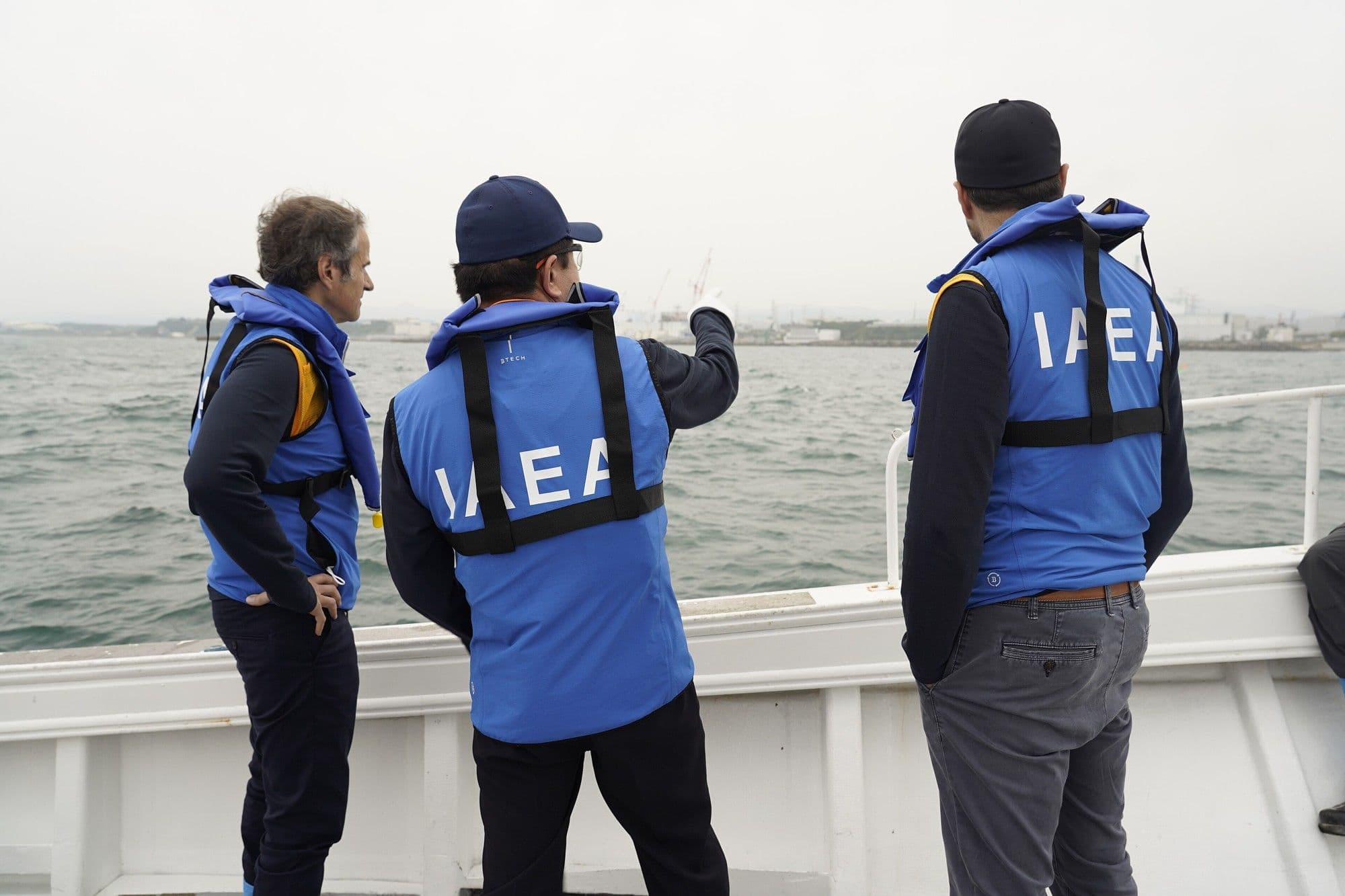
On 4 July 2023 IAEA Director General Rafael Grossi presented a comprehensive report to Prime Minister Fumio Kishida concluding that Japan's approach and activities were consistent with relevant international safety standards and that the controlled, gradual discharges planned by TEPCO would have a negligible radiological impact on people and the environment; Japan would dilute the water before release to bring tritium below regulatory standards. When Japan announced on 22 August that the discharge would begin two days later, Chinese Vice Foreign Minister Sun Weidong summoned Japanese Ambassador Hideo Tarumi to lodge solemn representations.
The Discharge and China's Import Suspension
On 24 August 2023 TEPCO began releasing the treated water from Fukushima Daiichi into the sea. A Chinese foreign ministry spokesperson said that day that China firmly opposed and strongly condemned Japan's unilateral start of the discharge of what Beijing calls "nuclear-contaminated water", arguing that Japan had not proved the legitimacy of the decision, the long-term reliability of the purification facility, the accuracy of its data, or that the discharge was harmless to the marine environment and human health. The same day the General Administration of Customs, citing the Food Safety Law and relevant WTO rules, suspended all imports of aquatic products, including edible aquatic animals, originating in Japan.
Mainland China was the largest overseas market for Japanese seafood, accounting for about 22.5% of exports. The Japanese government said the discharge was necessary for decommissioning work that would span decades, and Prime Minister Kishida announced a $141 million emergency fund for affected exporters. On 4 September Japan's foreign ministry, responding to China's 31 August notification to the World Trade Organization, called the ban "totally unacceptable", urged China to repeal it immediately and requested consultations under the Regional Comprehensive Economic Partnership.
In Fukushima, fishing groups opposed the release. Fisherman Haruo Ono said local fish prices had only just recovered to their highest level since 2011; he and his colleagues were suing the government to stop the release. At the first auction after the discharge began, the price of larger flounder — Fukushima's signature "Joban-mono" — fell by more than 10%. Tetsu Nozaki, head of the prefectural fisheries federation, said the fishing community's worries would last as long as the discharge continued.
Consensus and Conditional Resumption
On 20 September 2024 China's foreign ministry published a consensus reached after several rounds of talks between the two countries' authorities: Japan welcomed a long-term international monitoring arrangement within the IAEA framework covering key stages of the discharge and would ensure the effective participation and independent sampling of stakeholder countries including China; China said that once these monitoring activities were under way it would begin adjusting its measures on the basis of scientific evidence and gradually resume imports of Japanese aquatic products meeting its standards.
On 29 June 2025 the General Administration of Customs announced that, with long-term international monitoring and China's independent sampling showing no abnormalities and the Japanese government having committed to ensure the safety of exports, imports of aquatic products from parts of Japan would conditionally resume with immediate effect, excluding ten prefectures including Fukushima, Miyagi and Tokyo; producers whose exports had been suspended had to reapply for registration in China.
Renewed Suspension
On 7 November 2025 Prime Minister Sanae Takaichi told parliament that a Chinese attack on Taiwan that threatened Japan's survival was one of the cases that could trigger a Japanese military response, setting off a sharp downturn in relations. On 19 November Japanese broadcaster NHK reported that China had notified Japan it was suspending imports of Japanese seafood. Chinese foreign ministry spokesperson Mao Ning said that day that Japan had undertaken to fulfil its regulatory responsibilities for seafood exports to China but had not provided the promised technical materials; she added that because Takaichi's erroneous remarks on Taiwan had provoked strong public indignation in China, there would be no market for Japanese seafood in China under current circumstances even if it were exported. Japanese Agriculture Minister Norikazu Suzuki said the same day that nearly 700 Japanese exporters had applied to re-register, of which only three had been approved.
Narrative Comparison
| Source | Narrative |
|---|---|
| Chinese official position (foreign ministry statements, the 2024 consensus, regular press conferences) | The disposal of Fukushima's nuclear-contaminated water is a major nuclear-safety issue with cross-border effects and by no means a private matter for Japan; there is no precedent or recognised standard for deliberately discharging water from a nuclear accident into the ocean. Japan has not proved the legitimacy of the decision, the long-term reliability of its purification facility, the accuracy of its data or that the discharge is harmless to the marine environment and human health, nor has it consulted fully with stakeholders; forcing the discharge shifts the risk onto the world. China adopted emergency precautionary interim measures on Japanese aquatic products in line with its laws and WTO rules and will gradually resume imports that meet its standards, on the basis of scientific evidence, after effectively participating in long-term international monitoring and independent sampling. The renewed suspension in November 2025 was because Japan had not provided the technical materials it had promised. |
| Japanese official position (foreign ministry rebuttal to the WTO, Kishida government statements) | Discharging the treated water is necessary for decommissioning work at Fukushima Daiichi that will span decades, and a two-year IAEA review found the plan consistent with international safety standards with negligible radiological impact on people and the environment. China's blanket ban on Japanese seafood after the discharge is "totally unacceptable"; Japan has rebutted it at the WTO, urged China to repeal it immediately and requested consultations under the Regional Comprehensive Economic Partnership, while setting up an emergency fund for affected seafood exporters. |
| Fukushima fishing community (AP and NPR interviews, August 2023) | Hideaki Igari, a middleman at Numanouchi port, said that after years of struggle fish prices had finally stabilised only for the water to arrive, and that people in the fisheries feared prices would crash again and worried about their livelihoods. Tetsu Nozaki, head of the Fukushima prefectural fisheries federation, said the community's worries would continue as long as the discharge did: "Our only wish is to continue fishing for generations in our home town, like we used to before the accident." Fisherman Haruo Ono accused the Japanese government of abandoning Fukushima's fishermen; he and his colleagues were suing to stop the release. |
Key Milestones
- IAEA issues comprehensive report
The report found the plan consistent with international safety standards, with negligible radiological impact.
- China summons Japan's ambassador
After Japan announced a 24 August start, Vice Foreign Minister Sun Weidong summoned Ambassador Tarumi.
- Discharge begins; China bans Japanese seafood
TEPCO began the discharge and China's customs suspended all imports of Japanese aquatic products.
- Japan tells WTO the ban is unacceptable
Japan called the ban "totally unacceptable", urged its repeal and requested RCEP consultations.
- China-Japan consensus on the discharge
Japan agreed to Chinese participation in long-term monitoring and independent sampling; China would gradually resume imports based on scientific evidence.
- Conditional resumption of imports
China resumed imports of Japanese seafood except from ten prefectures including Fukushima, subject to re-registration.
- China suspends imports again
Amid tensions over Prime Minister Takaichi's Taiwan remarks, China notified Japan it was again suspending seafood imports.
Last verified:
Cite this page
Chronicles of Modern China. (2026, November 2). Fukushima Water Discharge and China's Ban on Japanese Seafood. Retrieved November 2, 2026, from https://www.cmcarchive.org/events/fukushima-discharge-seafood-ban-2023
“Fukushima Water Discharge and China's Ban on Japanese Seafood.” Chronicles of Modern China. Last modified November 2, 2026. Accessed November 2, 2026. https://www.cmcarchive.org/events/fukushima-discharge-seafood-ban-2023.
Chronicles of Modern China. Fukushima Water Discharge and China's Ban on Japanese Seafood[EB/OL]. (2026-11-02)[2026-11-02]. https://www.cmcarchive.org/events/fukushima-discharge-seafood-ban-2023.