Changchun Changsheng Vaccine Scandal (2018)
On 15 July 2018 the National Medical Products Administration announced that Changchun Changsheng Biotechnology had falsified production records for its freeze-dried rabies vaccine; earlier, a substandard batch of more than 250,000 doses of its DTaP vaccine had been sold to Shandong, and Jilin regulators published their penalty only nearly nine months after opening the case. The revelations caused widespread anxiety among parents on social media. Xi Jinping demanded that investigators “get to the bottom of it, hold people strictly accountable”, the State Council sent an investigation team, and chairwoman Gao Junfang and 14 others were detained. In August officials including Jilin vice-governor Jin Yuhui and former drug regulator Bi Jingquan were held accountable; in October the company lost its licence and was hit with penalties of 9.1 billion yuan. Some parents of affected children protested and demanded compensation and legislation, and some were detained. In June 2019 the NPC Standing Committee passed the Vaccine Administration Law, and the parent company was forcibly delisted. Studies found that the incident sharply, if temporarily, reduced public confidence in vaccines.
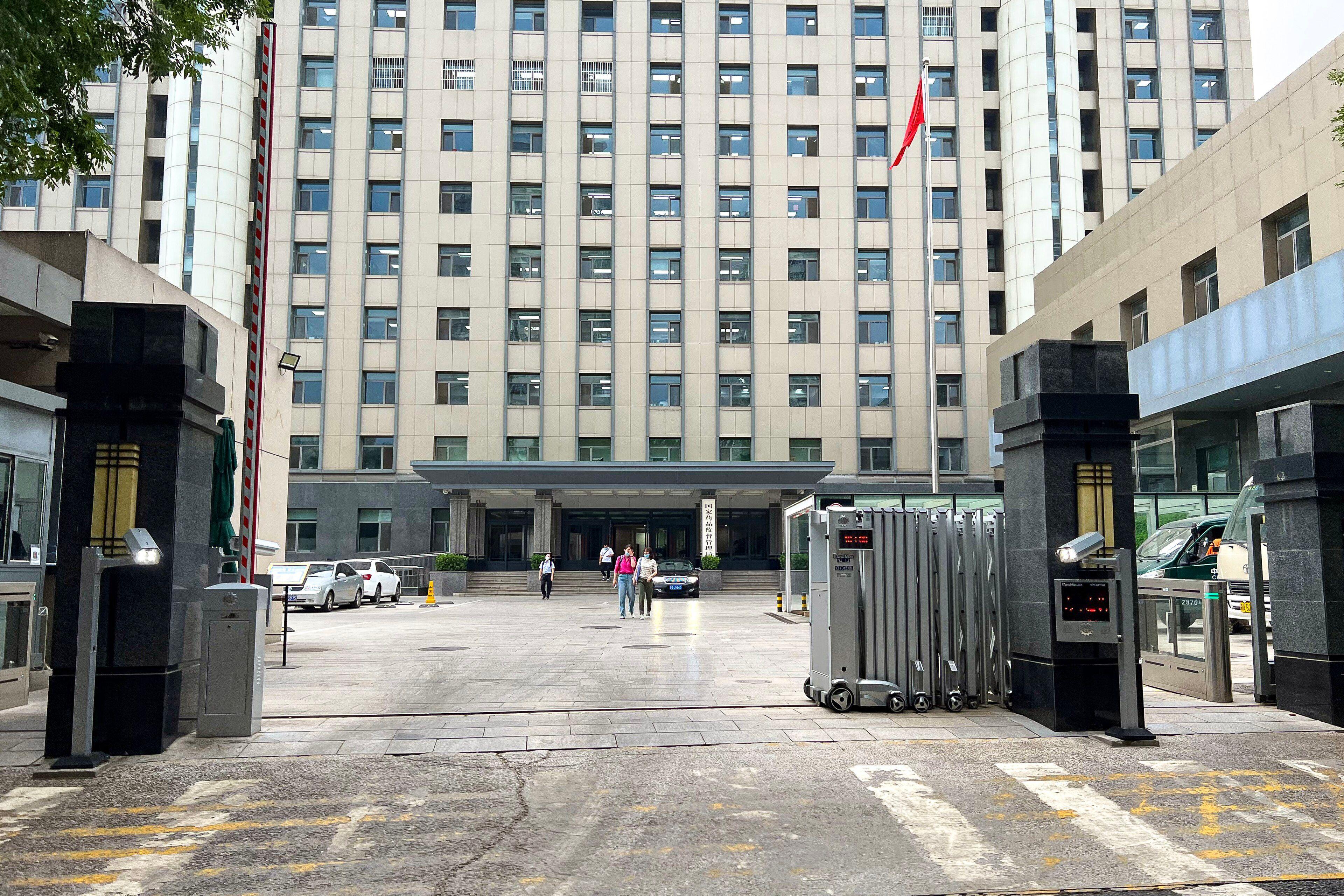
Substandard DTaP Vaccines
Changchun Changsheng Biotechnology, based in Changchun, Jilin, was a wholly owned subsidiary of the listed Changsheng Biotechnology Co. On 3 November 2017 the former China Food and Drug Administration announced that random testing had found a batch (201605014-01) of Changchun Changsheng’s DTaP vaccine to be below potency standards, together with a batch made by the Wuhan Institute of Biological Products. A CFDA spokesman said at the time that the vaccines might affect immune protection but had no effect on safety.
According to the Jilin food and drug administration’s later penalty decision, the bureau had opened a case on 27 October 2017; the batch totalled 253,338 doses, 252,600 of which were sold to the Shandong provincial CDC. The decision, dated 18 July 2018, imposed fines and confiscations of about 3.44 million yuan and was posted online only on 20 July, nearly nine months after the case was opened; some media questioned why it gave no reason for the potency failure and disclosed no production or recall records. On 13 August the NMPA announced that a second batch (201605014-02) had failed pertussis and tetanus potency tests, and the National Health Commission notified Anhui and Shandong provinces and arranged free revaccination for children who had received it.
Falsified Rabies Vaccine Records
According to an NMPA official, acting on a tip-off the NMPA and the Jilin bureau carried out an unannounced inspection of Changchun Changsheng on 5 July (The Paper reported the inspection as taking place on 6–8 July), and on 15 July announced that the company’s production of freeze-dried human rabies vaccine involved falsified records and other serious breaches of good manufacturing practice; China Securities Journal reported that the tip came from an employee. On 17 July Changsheng Biotechnology said all its rabies vaccines on the market met national standards.
On 22 July the NMPA official said it had been established that the company fabricated production and inspection records and arbitrarily changed process parameters and equipment; production had been halted, the GMP certificate revoked and unused rabies vaccine recalled. He added that all vaccines already on the market had passed statutory testing with no quality problems found, and that laboratory evaluation of retained samples had begun. It was, he said, the second time in a year the company had been found to have quality problems.
Public Outrage and the Central Response
As the DTaP penalty and the rabies falsification came to light in quick succession, many parents checked their children’s vaccination records and the story spread widely on social media. On 23 July Xi Jinping, on a visit abroad, issued instructions calling the company’s conduct “vile in nature and shocking” and demanding that investigators “get to the bottom of it, hold people strictly accountable” and improve the vaccine system with the determination to “use strong medicine and scrape the bone to remove the poison”; Premier Li Keqiang ordered an immediate State Council investigation. The Jilin bureau revoked the rabies vaccine GMP certificate and suspended batch release of all the company’s products. On 24 July chairwoman Gao Junfang and 14 others were placed under criminal detention.
On 30 July a State Council executive meeting said the case had basically been established: in making freeze-dried rabies vaccine the company had seriously violated drug standards and GMP, changed production processes without authorisation, fabricated production and inspection records and destroyed evidence. It ordered all unused vaccines recovered and destroyed, exported doses recalled with notification to the WHO and the countries concerned, and checks on all 46 vaccine producers in China completed. The same day the company announced that police had sought the arrest of 18 of its people.
Accountability and Penalties
On 16 August the Politburo Standing Committee heard a report on the investigation and described the case as one in which a vaccine producer pursued profit illegally, breached standards and fabricated records, while local governments and regulators failed in their duties. It removed Jilin vice-governor Jin Yuhui; ordered his predecessor Li Jinxiu to resign; required Changchun mayor Liu Changlong and Bi Jingquan—former head of the CFDA and then deputy head of the State Administration for Market Regulation—to resign and take responsibility; required Jiang Zhiying and NMPA head Jiao Hong to make self-criticisms; held 35 lower-level officials accountable; and placed former CFDA deputy head Wu Zhen under investigation.
On 16 October the Jilin bureau revoked Changchun Changsheng’s drug production licence, confiscated 1.89 billion yuan in proceeds and imposed fines of 7.21 billion yuan—three times the value of the goods—for a total of 9.1 billion yuan; Gao Junfang and 13 other directly responsible staff were barred from drug production and trade. The NMPA revoked the approval documents for its rabies vaccine and fined it 12.03 million yuan. The Jilin government’s compensation scheme offered one-off payments of 200,000 yuan for general disability, 500,000 yuan for severe disability or paralysis and 650,000 yuan for death.
In December the China Securities Regulatory Commission penalised Changsheng Biotechnology and barred Gao Junfang and three others from the securities market for life, and the Shenzhen Stock Exchange began forced-delisting proceedings. In January 2019 the criminal case was transferred to the Changchun procuratorate. In October 2019 the company entered its delisting period, the first A-share company forcibly delisted for a major violation of law, and a bankruptcy petition was filed against Changchun Changsheng.
Victims’ Families and Their Campaign
On 30 July about a dozen people holding banners identifying themselves as parents protested outside the National Health Commission, shouting “Legislation for vaccines is imperative!” Parents who said their children had been harmed by substandard vaccines continued to petition and protest in Beijing. According to Radio Free Asia, some tried to demonstrate on Tiananmen Square during the China–Africa summit on 3–4 September and were dealt with by police, and Dong Junhua, a parent from Dancheng county, Henan, was criminally detained on suspicion of “picking quarrels and stirring up trouble”. The parents called for a vaccine law, more timely information on vaccine safety and help with medical bills.
Responding to the compensation scheme announced in October, Wang Shixia of Jinan, Shandong, the parent of a vaccine-injured child, told RFA she had received nothing: “For us, 9 billion is just a number. These children still can’t afford treatment.”
Vaccine Confidence and Legislation
Several studies documented the blow to public confidence. A Harbin Medical University online survey in September 2018 found that about 70% of 1,115 respondents lacked confidence in vaccines and 54.53% were dissatisfied with the government’s response. Researchers from Fudan University and the London School of Hygiene & Tropical Medicine cited an August 2018 survey in which self-scored confidence fell from 6.7 to 3.2 on a nine-point scale; their own January 2019 survey found caregivers’ confidence had returned to pre-incident levels six months later, though some had shifted from strong to moderate agreement. They also noted that no long-term sequelae linked to the substandard rabies or DTaP vaccines had been officially reported, while claims that the vaccines were poisonous circulated online.
A 2023 study of vaccination records from ten provinces found that the share of DTaP doses delayed by more than three months rose from 7.17% to 11.82% after the incident, and that more guardians chose private-market substitutes containing DTaP components. On 29 June 2019 the NPC Standing Committee passed the Vaccine Administration Law by 170 votes to none, with one abstention.
Gallery
Narrative Comparison
| Source | Narrative |
|---|---|
| Xi Jinping’s instructions (23 July 2018) and Politburo Standing Committee meeting (16 August), Xinhua | Officials characterised the case as one in which a vaccine producer pursued profit illegally and fabricated production and inspection records while local governments and regulators failed in their duties, exposing regulatory loopholes and institutional defects. Xi called the conduct “vile in nature and shocking” and demanded that investigators “get to the bottom of it, hold people strictly accountable”; several provincial- and ministerial-level officials were then held accountable, the company was hit with huge fines and bans, and dedicated vaccine legislation followed. Officials also stressed that rabies vaccines already on the market had passed statutory testing with no quality problems found. |
| Tu et al. (Fudan University and London School of Hygiene & Tropical Medicine), Vaccine (2020) | Public health researchers examined the incident through the lens of vaccine confidence. They note that substandard DTaP vaccines were given to 215,184 children, that no long-term sequelae were officially reported but claims that the vaccines were poisonous circulated online, and that self-scored public confidence fell from 6.7 to 3.2. Six months later caregivers’ confidence had returned to pre-incident levels, but “some caregivers moved from the higher to the lower end of the vaccine confidence spectrum”, and vaccination staff were overwhelmed by consultations, workload and psychological pressure—pointing, the authors argue, to the need to keep promoting vaccine acceptance. |
| Parents of affected children (interviewed by RFA, 17 October 2018; AFP report, 30 July) | Parents who believe their children were harmed by substandard vaccines say the fines and compensation did not address their real difficulties. Wang Shixia of Jinan said she had received no compensation—“These children still can’t afford treatment, and the families still can’t get by”—adding that the company and officials had not faced the legal punishment they deserved. Parents protesting outside the National Health Commission on 30 July shouted “Legislation for vaccines is imperative!”, and some who later petitioned in Beijing were detained. |
Key Milestones
- Jilin regulator opens case
The Jilin bureau opens a case over a substandard batch of Changchun Changsheng DTaP vaccine.
- Substandard DTaP announced
The CFDA announces substandard DTaP batches from Changchun Changsheng and the Wuhan institute.
- Unannounced inspection
The NMPA and the Jilin bureau inspect the company on a tip-off.
- Rabies vaccine falsification announced
The NMPA announces falsified records in Changchun Changsheng’s rabies vaccine production.
- DTaP penalty published
The Jilin bureau publishes a penalty of about 3.44 million yuan.
- Xi Jinping’s instructions
Xi orders a thorough investigation; the State Council sends a team.
- Gao Junfang and 14 others detained
Changchun police place the chairwoman and 14 others under criminal detention.
- State Council findings; parents protest
The State Council says the case is established; about a dozen protest outside the health commission.
- Politburo Standing Committee accountability
Jin Yuhui is removed, Bi Jingquan and others resign, and Wu Zhen is investigated.
- Penalties of 9.1 billion yuan
The Jilin bureau revokes the licence and imposes penalties totalling 9.1 billion yuan.
- CSRC penalties and delisting notice
Gao Junfang and three others are banned from the market for life; the exchange moves to delist.
- Vaccine Administration Law passed
The NPC Standing Committee passes the law 170–0 with one abstention.
- Delisting period begins
Changsheng becomes the first A-share company forcibly delisted for major violations.
Last verified:
Cite this page
Chronicles of Modern China. (2026, November 16). Changchun Changsheng Vaccine Scandal (2018). Retrieved November 16, 2026, from https://www.cmcarchive.org/events/changsheng-vaccine-scandal-2018
“Changchun Changsheng Vaccine Scandal (2018).” Chronicles of Modern China. Last modified November 16, 2026. Accessed November 16, 2026. https://www.cmcarchive.org/events/changsheng-vaccine-scandal-2018.
Chronicles of Modern China. Changchun Changsheng Vaccine Scandal (2018)[EB/OL]. (2026-11-16)[2026-11-16]. https://www.cmcarchive.org/events/changsheng-vaccine-scandal-2018.