Battle of Guningtou (Kinmen, 1949)
On the night of 24 October 1949 three regiments of the PLA 10th Army Group (Third Field Army), led by the 28th Army and numbering more than 9,000 men, crossed in wooden sailing boats to attack Nationalist-held Kinmen, landing between Guningtou and Longkou early on the 25th. With their boats stranded by wind and tide and unable to fetch reinforcements, the landed troops lacked unified command, while the defenders were reinforced by Hu Lien’s 12th Army Group and held air and sea superiority; after three days and nights of fighting the attackers were nearly all killed or captured. Taiwan calls it the Great Victory at Guningtou and counts 3,511 PLA dead, 5,175 captured and 1,267 Nationalist dead; a Military Commission circular drafted by Mao Zedong called it the greatest loss since the start of the War of Liberation and blamed underestimation of the enemy and impatience. The PLA never landed on Kinmen again, and the island remains under Taiwan’s administration.
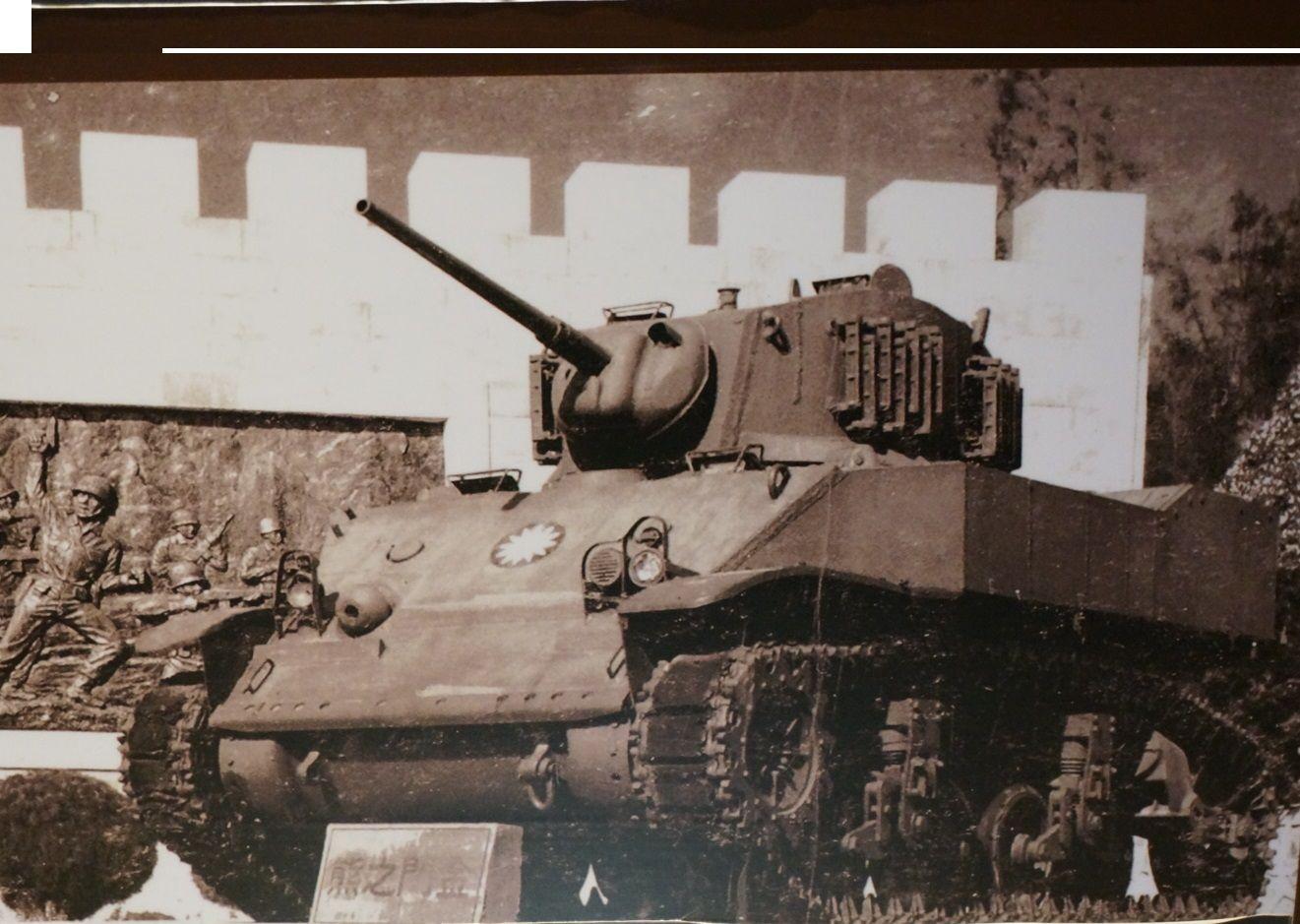
The Fall of Xiamen and the Defence of Kinmen
On 17 October 1949 the PLA’s 10th Army Group (Third Field Army) captured Xiamen, and Kinmen, across the water, became the next target. According to a 2016 study in the ROC Army’s Army Bimonthly, from September the island was defended by Li Liang-jung’s 22nd Army Group, made up largely of remnants reorganised after defeats, with only about 10,000 men. Hu Lien’s 12th Army Group then arrived piecemeal from the Chaoshan area of Guangdong; by 14 October the garrison of Greater Kinmen exceeded 24,000, and the 19th Army, originally bound for Zhoushan, came ashore between the night of 23 October and the 25th, adding more than 15,000. Liu Hsi-hui, who had been pressed into Hu’s army, recalled in 2022 that it seized conscripts wherever it went before leaving Chaoshan; he himself was taken at 17 and reached Kinmen after days at sea.
Tang En-po, head of the Fuzhou Pacification Office, judged that the PLA would land between East and West Yidianhong near Guningtou. The Youth Army’s 201st Division built more than 400 earthen bunkers along the coast from Guningtou to Longkou in ten days, and on 24 October the defenders held a combined infantry, armour and artillery exercise on those beaches. An article in an ROC defence ministry periodical, compiled from veterans’ recollections, says Chiang Kai-shek had warned the garrison that the high tide that month was when an attack might come and that strict vigilance was required.
The Plan of Attack
According to Taiwanese research, the 10th Army Group first intended to take Kinmen and Xiamen together, but on 12 October, short of boats and boatmen, it decided to take Xiamen first. Army Group commander Ye Fei, on the orders of Third Field Army commander Chen Yi, made 28th Army deputy commander Xiao Feng commander of the Kinmen attack, planning to send six regiments in two echelons, with the boats returning after the first landing to carry the second. Boats were still short, and the first echelon could carry only three regiments: the 244th (82nd Division) and 251st (84th Division) of the 28th Army and the 253rd (85th Division) of the 29th Army.
The PLA general Liu Yazhou later criticised the decisions in his “A Review of the Kinmen Campaign”. He writes that Ye Fei told an Army Group conference in Quanzhou “This battle will surely be won!” and told Xiao Feng that “your 28th Army can just mop up”, and that Ye approved the 28th Army’s plan “without even reading it through”. Citing Xiao Feng, he says Third Field Army deputy commander Su Yu had laid down “three don’ts”: no attack without boats to carry six regiments at once, none if the enemy were reinforced, and none until six thousand boatmen selected from the Shandong coast had arrived. On intelligence, Liu says that when the 28th Army took Dadeng on 9 October, men of Hu Lien’s 12th Army Group were found among the prisoners and Ye replied “Impossible”; and that on 24 October, hearing that Hu had asked to withdraw to Taiwan, Ye concluded “this looks like the best time to attack.” According to a 2014 Qilu Net report, 244th Regiment commander Xing Yongsheng learned before embarking that the garrison was being reinforced; when the 28th Army forward command asked for a postponement, the Army Group replied: “Carry out the original plan; the resolve must not change.”
The Landing of 25 October
On the evening of 24 October the first echelon, more than 9,000 men, set out from Aotou, Lianhe, Dadeng and elsewhere in two to three hundred requisitioned wooden sailing boats. The boats were of mixed types, the boatmen did not know the channels and the boats could signal only by flashlight; the formation broke up and almost every boat landed away from its intended point. According to Taiwanese accounts, at about 02:00 on 25 October an inspecting officer of the 201st Division set off a mine, and the blast sent the beach defenders to their positions; a tank platoon repairing a vehicle nearby opened fire on the troops wading ashore. The 244th landed between Longkou and East Yidianhong, the 251st near the Huwei creek and East Yidianhong, and the 253rd between Linzuo and Beishan. It was high tide; some boats ran straight over the barbed wire and other obstacles, and the attackers broke through the first line, reaching Linzuo, Anqi, Putou and Hill 132 before dawn.
The former US intelligence officer Kevin McCauley notes that the 82nd Division command post did not cross with the first echelon, leaving the landed units without unified command, and that the junks, grounded by the ebb tide and underwater obstacles, could not return for the second echelon and were destroyed by Nationalist aircraft and warships. Zhong Guoqiu, then a cipher clerk at 29th Army headquarters, recalled that because the boats did not come back, neither the forward command nor the follow-up units could cross that night.
Counter-attack and Encirclement
At about 03:00 on the 25th, 18th Army commander Kao Kuei-yuan was ordered to take unified command of the counter-attack. From dawn his units, supported by tanks, advanced on Guningtou along northern, central and southern routes, while warships and aircraft struck the boats on the beach and artillery on the opposite shore. The two sides fought hard for the villages of Linzuo and Guningtou; at 15:00 Colonel Li Kuang-chien, commander of the Nationalist 42nd Regiment, 14th Division, was killed leading a charge. That night Sun Yunxiu, commander of the 246th Regiment, crossed with about 350 men and landed at the north-western tip of Guningtou.
On the 26th Hu Lien, commander of the 12th Army Group, reached Kinmen and went to the front; Taiwanese research puts his arrival at noon on the 26th, while the Taipei Times gives dusk on the 25th. Liu Hsi-hui argues that by the time Hu arrived at noon on the 26th the outcome had long been decided, and that the literature has made the victory almost his personal achievement. On the afternoon of the 26th the 10th Army Group ordered 85th Division commander Zhu Yunqian to cross and take command on the island; Zhong Guoqiu recalls that the boat ran aground on the ebb tide and that the Army Group telephoned that night, “Don’t go over”—contact with the island had been lost. That afternoon Nationalist troops broke into Beishan and Nanshan villages. On the morning of the 27th about 1,300 PLA soldiers were found on the beach below the Beishan cliffs; after an attack some 900 surrendered, and Taiwanese records date the end of the battle to 10:00 on the 27th. Mainland reports say that the 10th Army Group decided on the 27th to send no more reinforcements, that Sun Yunxiu shot himself early on the 28th when breaking out was hopeless, and that only scattered shots were heard that day.
Casualties and Prisoners
By Taiwanese count, 9,086 PLA personnel landed (including 350 boatmen and labourers), of whom 3,511 were killed and 5,175 captured; Nationalist losses were 1,267 killed and 1,982 wounded. Qilu Net gives 3,873 killed and 5,175 captured, and says all 13 regiment-level and 36 battalion-level officers who took part were killed or captured; Zhong Guoqiu writes that the PLA (including boatmen) lost more than 9,000 men, “the greatest loss suffered in the liberation of all East China.” A 2019 CNA report says more than 4,000 PLA and more than 2,000 Nationalist soldiers died. Most of the 28th Army men who landed came from the old Bohai area of northern Shandong.
Xu Qinlin, leader of a heavy machine-gun squad of the 251st Regiment, was wounded, escaped capture by passing himself off as a soldier of the Nationalist 25th Army, and after recovering stayed on as an orderly; taken to Zhoushan with the unit in 1950, he made his way back to the mainland, where he was screened and expelled from the Party, and in 1952 he was demobilised and returned to farming. In 1983 the CCP Centre issued document Zhongbanfa (1983) No. 74, beginning a review of the cases of those captured at Kinmen; Xu’s Party membership was restored three years later.
Causes and Assessments
After the battle Mao Zedong drafted, in the name of the Central Military Commission, the circular “Pay Serious Attention to the Lessons of the Failed Attack on Kinmen Island”, calling the loss “the greatest since the start of the War of Liberation” and attributing it to underestimating the enemy and impatience. The Taipei Times cites a PLA report of 29 October 1949 giving the main reasons as “rashness of the plan and underestimation of the enemy.” Zhang Zhen, former vice-chairman of the Central Military Commission, wrote in a preface to Looking Back on the Kinmen Landing that the troops’ “revolutionary character and glorious deeds will never be effaced by the failure of the battle.” Liu Yazhou calls it “the only complete defeat in the PLA’s history” and “less a defeat by Chiang’s army than a defeat by the sea.”
In Taiwan the battle is known as “The Great Victory at Guningtou”. The Army Bimonthly study calls it the only complete defeat in the Chinese Communist army’s history and credits correct intelligence assessment, fortifications and exercises, air and naval superiority and unified command, naming the PLA’s shortage of sea transport as a key factor. Hu Lien later wrote that the Communists were too impatient, did not land at multiple points and sent 9,000 men “without a commanding officer overseeing the entire operation.” McCauley observes that, compared with the careful preparation for Xiamen, “the Kinmen operation appeared to be haphazardly planned”: sailors did not know the area, training was inadequate and the tides and weather at the beaches were unknown; PLA analysis also found that the dual tasks of fighting and taking control of newly captured Zhangzhou and Xiamen distracted attention from the details of the Kinmen operation. These lessons were later applied in planning the Hainan campaign. A new book by mainland scholars points to coincidences such as a sentry’s accidental mine explosion revealing the landing and three broken-down tanks on the shore that “suddenly started working again” as the attackers arrived.
Aftermath
Chiang Kai-shek wept on hearing of the victory and said “Taiwan is safe”; Provincial Governor Chen Cheng visited Kinmen the next day. The PLA never landed on Kinmen again, and the island remains under Taiwan’s administration. After the battle Hu Lien ordered the Kinmen county government to clear the battlefield and bury the bodies; citing Hu’s Memories of Kinmen, CNA reports that in 1953 the military reburied the dead, including those of Guningtou, in three thousand-person tombs at the Taiwu cemetery.
In 2011 a monument to the Kinmen battle was completed at the Shandong veterans’ memorial square in Changqing, Jinan. On 25 October 2014 the first group from the mainland in 65 years to cross the strait for the purpose held a memorial ceremony at the General’s Temple in Anqi village, Kinmen, which enshrines the fallen of both sides. At the 70th anniversary in 2019, some locals, believing remains still lay beneath the battlefield, began a “bone-gathering” effort, while others felt the dead should not be disturbed.
Gallery
Narrative Comparison
| Source | Narrative |
|---|---|
| Qilu Net (2014, via People’s CPPCC Net), including the Military Commission circular drafted by Mao Zedong | The mainland calls it the Kinmen battle or campaign. Mao Zedong’s circular for the Central Military Commission called the loss “the greatest since the start of the War of Liberation” and blamed underestimation of the enemy and impatience. Official media retrospectives stress that the landed troops were trapped by the shortage of boats, the tide and the failure of reinforcements, quote Zhang Zhen that their “revolutionary character and glorious deeds will never be effaced by the failure of the battle”, and also report that returned prisoners were expelled from the Party before their cases were reviewed from 1983, as well as the Shandong monument and cross-strait memorials. |
| Yao Hsiang-wei and Chen Sheng-chang, Army Bimonthly (2016) | In Taiwan it is known as the Great Victory at Guningtou, the battle that turned the tide after a string of defeats on the mainland. A study in the ROC Army’s journal calls it the only complete defeat in the Chinese Communist army’s history, holding that it let the Republic of China establish itself in Taiwan, Penghu, Kinmen and Matsu and laid the foundation for the division across the strait. It credits the correct prediction of the landing site by Tang En-po and others, fortifications and pre-battle exercises, air and naval superiority, Kao Kuei-yuan’s unified command of the counter-attack and the timely arrival of Hu Lien’s 12th Army Group, and names the PLA’s shortage of sea transport as a key factor. |
| Kevin McCauley, China Brief, The Jamestown Foundation (2018) | Western researchers examining PLA amphibious experience contrast Kinmen with Xiamen and Hainan: Xiamen was carefully prepared, whereas “the Kinmen operation appeared to be haphazardly planned”—sailors did not know the area, training was inadequate, the tides and weather were unknown, the 82nd Division command post did not cross with the first echelon, and the stranded boats could not carry the second echelon. Citing PLA analysis, they note that the dual missions of combat and establishing control in newly captured areas diverted attention from operational detail; these lessons were absorbed into the Hainan campaign and are read today as a reference point for Taiwan’s defence. |
| Zhong Guoqiu, former 29th Army cipher clerk (2012); Liu Hsi-hui, conscripted into Hu Lien’s army (2022) | Zhong Guoqiu, at the 85th Division forward command post, recalled that the landing boats did not return because of the tide, the follow-up units could not cross, and only four companies got over on the evening of the 25th; on the afternoon of the 26th he was to cross with division commander Zhu Yunqian, but the boat ran aground, and that night the Army Group phoned, “Don’t go over”—no more gunfire could be heard from the island. Liu Hsi-hui, seized as a 17-year-old conscript by Hu Lien’s army and shipped to Kinmen, argues that the outcome had long been decided when Hu reached the battlefield at noon on the 26th and that the literature gives Hu too much personal credit. |
Key Milestones
- Xiamen first, Kinmen later
Short of boats and boatmen, the 10th Army Group decides to take Xiamen before Kinmen.
- PLA takes Xiamen
With Xiamen lost, Kinmen becomes the PLA’s next target.
- First echelon sets out
The garrison holds a combined exercise on the Longkou–Guningtou beaches; that night three regiments, over 9,000 men, sail in wooden boats.
- Landing at Guningtou
The PLA lands between Longkou and Beishan; its boats are stranded and destroyed; Kao Kuei-yuan leads the counter-attack; Li Kuang-chien is killed.
- Hu Lien arrives; reinforcement fails
Hu Lien goes to the front; 85th Division commander Zhu Yunqian is ordered across, but his boat runs aground.
- Survivors surrender below Beishan
About 900 PLA soldiers surrender below the Beishan cliffs; Taiwanese records date the end of the battle to 10:00.
- Fighting ends
246th Regiment commander Sun Yunxiu shoots himself; only scattered shots remain.
- PLA assesses the defeat
According to the Taipei Times, a PLA report blames the defeat mainly on a rash plan and underestimation of the enemy.
- Review of Kinmen POW cases
Document Zhongbanfa (1983) No. 74 begins a review of the cases of those captured at Kinmen.
- Shandong monument completed
A monument to the Kinmen battle is completed at the Shandong veterans’ memorial square in Changqing, Jinan.
- First cross-strait memorial
A mainland group holds a ceremony at the General’s Temple in Anqi, Kinmen, for the fallen of both sides.
Last verified:
Cite this page
Chronicles of Modern China. (2026, November 21). Battle of Guningtou (Kinmen, 1949). Retrieved November 21, 2026, from https://www.cmcarchive.org/events/battle-of-guningtou-1949
“Battle of Guningtou (Kinmen, 1949).” Chronicles of Modern China. Last modified November 21, 2026. Accessed November 21, 2026. https://www.cmcarchive.org/events/battle-of-guningtou-1949.
Chronicles of Modern China. Battle of Guningtou (Kinmen, 1949)[EB/OL]. (2026-11-21)[2026-11-21]. https://www.cmcarchive.org/events/battle-of-guningtou-1949.