The "709" Crackdown on Rights Lawyers
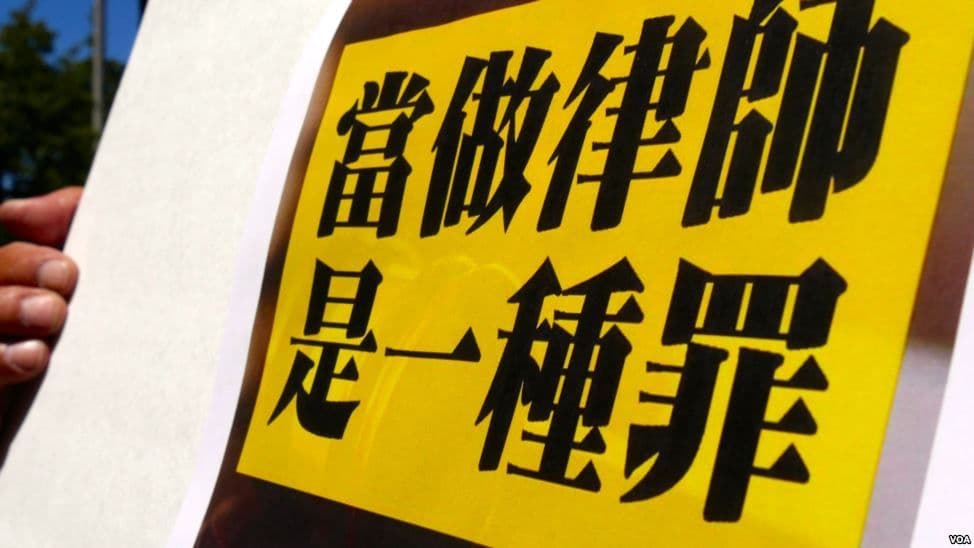
From 9 July 2015 lawyers of the Beijing Fengrui Law Firm, beginning with Wang Yu, were taken away, and hundreds of lawyers, law-firm staff and activists across China were detained or summoned. Officials said they had smashed a criminal gang that used Fengrui to "hype" sensitive cases; between 2016 and 2019 Zhou Shifeng, Hu Shigen, Jiang Tianyong, Wang Quanzhang and others were convicted of subversion or incitement, most pleading guilty in court. Relatives and lawyers alleged torture and secret trials, which officials denied; the US government and international groups criticised a systematic crackdown on the legal profession.
Background
Hualing Fu of the University of Hong Kong divides China's human rights lawyers since 2011 into "rights-protection" (weiquan), "die-hard" (sike) and "public-interest" (gongyi) lawyers, arguing that together they challenged authoritarian governance. The Beijing Fengrui Law Firm, directed by Zhou Shifeng, had taken on many high-profile sensitive cases. According to state media, in May 2015 Wu Gan, a Fengrui administrative assistant known online as "Super Vulgar Butcher", was detained after a protest outside the Jiangxi High People's Court and then criminally detained for picking quarrels and defamation.
The Arrests
Fengrui lawyer Wang Yu was taken away on 9 July 2015; over the following days police in many places detained or summoned lawyers, law-firm staff and activists, and searched the offices of Fengrui and others. An open letter signed by the International Commission of Jurists and other groups said that by 19 July a total of 233 people had been detained, arrested, imprisoned, summoned or temporarily deprived of liberty. In mid-July Xinhua reported that the Ministry of Public Security had directed police to "smash" a "suspected major criminal gang" in which lawyers colluded with "online promoters" and "petitioners" using Fengrui as a platform, naming nine lawyers — Zhou Shifeng, Wang Yu, Li Heping, Xie Yanyi, Sui Muqing, Huang Liqun, Xie Yuandong, Xie Yang and Liu Jianjun — and saying the group had "hyped" more than 40 cases and incidents since July 2012; on 18 July Xinhuanet published Zhou's "confession". Lawyer Wang Quanzhang was taken on 3 August. In January 2016 the arrest of Zhou, Wang Yu and others on suspicion of subversion was approved.
The Trials
From 2 to 5 August 2016 the Tianjin No. 2 Intermediate People's Court convicted four people of subversion: Zhai Yanmin received three years suspended for four, Hu Shigen seven years and six months, Zhou Shifeng seven years, and Gou Hongguo three years suspended for three; Xinhua said all four admitted guilt in court and did not appeal. State media said the cases were tried "in open court" before NPC deputies, CPPCC members and Chinese and foreign journalists, and criticised foreign media for calling the trials "secret" because family members could not attend. Wang Yu had been released on bail in July 2016; in an interview with state media she said she would not accept a human rights award from the American Bar Association and others.
Later trials were mostly closed on "state secrets" grounds: Li Heping was tried on 25 April 2017 and on 28 April sentenced to three years suspended for four; Jiang Tianyong, arrested in late 2016 after visiting Xie Yang's family in Changsha, was sentenced by the Changsha Intermediate People's Court on 21 November 2017 to two years for inciting subversion; and Wang Quanzhang, tried on 26 December 2018, was sentenced by the Tianjin No. 2 Intermediate People's Court on 28 January 2019 to four years and six months for subversion.
Torture Allegations and the Official Response
In January 2017 lawyer Chen Jiangang published transcripts of his and Liu Zhengqing's meetings with Xie Yang, in which Xie said he had been subjected to prolonged coercive interrogation while held under "residential surveillance at a designated location". From 1 March state media including the Global Times reported that Jiang Tianyong had admitted fabricating the torture reports "to cater to Western media", and said interviews with Xie himself, prosecutors and fellow detainees showed he had not been tortured; a Xinhua English report called the coverage "fake news". Jiang's lawyer and his wife Jin Bianling rejected the official accounts, saying both men had long been held incommunicado and there was reason to suspect mistreatment and coercion. After Wang Quanzhang's conviction his wife Li Wenzu issued a statement declaring "Wang Quanzhang is innocent" and accusing the authorities of torturing him and others.
International Reaction
On the first anniversary in July 2016, State Department spokesperson John Kirby said that more than 300 people had been interrogated, detained, arrested, placed under residential surveillance or barred from leaving the country, that the United States was "deeply concerned" about the continued detention of at least 23 lawyers and rights defenders, and that the detentions "violate China's international commitments"; he urged their release and the dropping of charges. Eva Pils of King's College London argues that the crackdown showed the Party-State adopting more public and sophisticated forms of repression in response to smarter human rights advocacy.
Narrative Comparison
| Source | Narrative |
|---|---|
| Xinhua (18 Jul. 2015; 5 Aug. 2016); People's Daily Online (Aug. 2016) | Official accounts frame the case as lawful punishment of a criminal gang and of subversion, not a crackdown on lawyers. Xinhua described Fengrui as a platform where "a few lawyers, online promoters and 'petitioners' colluded" to turn "ordinary cases into hot cases and sensitive cases into political ones"; after the verdicts it said the defendants had "colluded deeply" with "illegal religious organisations" and "foreign anti-China forces" in an attempt "to subvert state power and overthrow the socialist system", linking the case to "colour revolution". People's Daily Online said the trials were open and protected procedural rights, and that Fengrui and its like "do not represent all lawyers practising according to law". |
| VOA Editorial (July 2016, quoting State Department spokesperson John Kirby) | The US government treated it as a systematic crackdown on the legal profession. In his anniversary statement State Department spokesperson John Kirby said more than 300 people had been interrogated, detained, arrested, placed under residential surveillance or barred from leaving, and at least 23 lawyers and rights defenders remained in custody without access to independent counsel; he said this "violates China's international commitments" and "undermines China's development of a judicial system that respects the rule of law", and urged their immediate release and the dropping of charges. |
| Pils, China Law and Society Review 3(1), 2018 (abstract); Fu, Journal of Contemporary China 27(112), 2018 (abstract) | Scholars outside mainland China largely see "709" as a turning point in the shrinking space for legal advocacy. Eva Pils of King's College London (2018) argues the Party-State adopted more public and sophisticated repression in response to smarter rights advocacy, with propaganda "not bounded by rational argument", and that the crackdown signals "a rise of anti-liberal and anti-rationalist conceptions of law and governance". Hualing Fu of the University of Hong Kong (2018) analyses the evolution since 2011 of rights-protection, "die-hard" and public-interest lawyers and their challenge to authoritarian governance, and considers possible futures for rights lawyering. |
| The Paper (1 Aug. 2016); Radio Free Asia (2 Mar. 2017); CNA (28 Apr. 2017; 28 Jan. 2019) | Accounts from those involved and their families diverge from each other and from the official narrative. Wang Yu, after release on bail, told state media she would refuse foreign human rights awards; Zhou Shifeng, Jiang Tianyong and others pleaded guilty in court, which officials cite as proof of fair trials. On the other hand, Xie Yang said in his lawyers' meeting transcripts that he had been subjected to prolonged coercive interrogation; Li Heping's wife Wang Qiaoling said the "secret trial undermined the rule of law"; after Wang Quanzhang's conviction his wife Li Wenzu declared "Wang Quanzhang is innocent; the police, prosecutors and courts are guilty" and accused the authorities of torture; and Jiang Tianyong's wife Jin Bianling questioned whether his televised confession had been recorded under mistreatment and coercion. |
Key Milestones
- Wang Yu taken away
Fengrui lawyer Wang Yu is taken away; lawyers and activists in many places are then detained or summoned.
- Xinhua publishes Zhou Shifeng's "confession"
State media call Fengrui the platform of a "suspected major criminal gang" and publish its director Zhou Shifeng's confession.
- Wang Quanzhang taken away
Lawyer Wang Quanzhang is taken away and long held without contact with his family.
- Zhou Shifeng sentenced to seven years
In trials from 2 to 5 August, the Tianjin No. 2 Intermediate Court convicts four; Zhou Shifeng receives seven years for subversion.
- State media call torture reports "fabricated"
The Global Times and others say Jiang Tianyong admitted fabricating Xie Yang's torture account; lawyers and family deny it.
- Jiang Tianyong sentenced to two years
The Changsha Intermediate Court sentences Jiang Tianyong to two years for inciting subversion.
- Wang Quanzhang sentenced
The Tianjin No. 2 Intermediate Court sentences Wang Quanzhang to four years and six months for subversion.
Last verified:
Cite this page
Chronicles of Modern China. (2026, October 24). The "709" Crackdown on Rights Lawyers. Retrieved October 24, 2026, from https://www.cmcarchive.org/events/709-crackdown-2015
“The "709" Crackdown on Rights Lawyers.” Chronicles of Modern China. Last modified October 24, 2026. Accessed October 24, 2026. https://www.cmcarchive.org/events/709-crackdown-2015.
Chronicles of Modern China. The "709" Crackdown on Rights Lawyers[EB/OL]. (2026-10-24)[2026-10-24]. https://www.cmcarchive.org/events/709-crackdown-2015.